
First Bank Transfer Limit in Nigeria
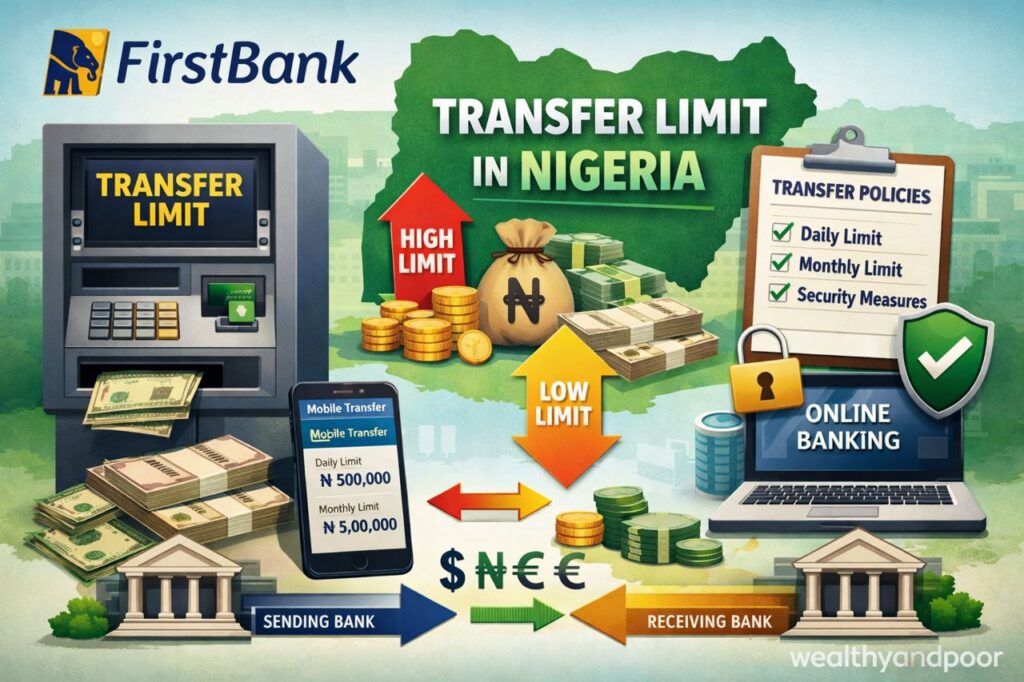

In Nigeria’s rapidly evolving digital banking landscape, transfer limits remain a critical factor shaping how individuals and businesses move money. For customers of First Bank of Nigeria, understanding these limits is essential not just for convenience, but for effective financial planning, security, and transaction efficiency.
This article provides a detailed breakdown of First Bank transfer limits across different channels, what influences these limits, and how customers can increase them when necessary.
Understanding First Bank Transfer Limits
Transfer limits refer to the maximum amount of money a customer can send within a specified period typically daily. These limits vary depending on the banking channel used, the level of account verification, and whether additional security tools (like tokens) are activated.
First Bank, like many Nigerian banks, structures its transfer limits around security protocols and regulatory compliance, particularly guidelines from the Central Bank of Nigeria (CBN). These restrictions are designed to reduce fraud risk while maintaining flexibility for legitimate transactions.
Transfer Limits by Banking Channel
- Mobile Banking Apps (First Mobile & LIT App)
First Bank offers multiple mobile platforms, including First mobile and the LIT App, each with defined transfer thresholds.
- Without token (PIN only): Up to ₦500,000 daily
- With token authentication: Up to ₦10,000,000 daily (or more upon request)
Earlier updates to the First mobile app also established a ₦1 million daily cap for standard users, particularly those not using advanced authentication tools.
This structure reflects a tiered security model basic users have moderate limits, while those with enhanced verification enjoy significantly higher thresholds.
- Internet Banking (Online Transfers)
For customers using First Bank’s internet banking platform:
- Standard daily transfer limit: Around ₦1,000,000
- With token device: Can reach ₦10,000,000 daily or higher
Corporate accounts typically enjoy even higher limits, reflecting their operational needs.
- Debit Card and Web Transactions
For card-based transactions:
- Web (online payments in Nigeria): Up to ₦1,000,000 daily
- POS transactions: Can go as high as ₦3,000,000 daily depending on card type
These limits apply mainly to purchases rather than bank transfers but are relevant for customers who use cards for payments instead of direct transfers.
- USSD Banking (*894# Service)
Although First Bank does not publicly standardize a single universal USSD transfer limit in all documents, industry practice and bank configurations typically align with:
- Lower daily limits compared to mobile apps
- Designed for quick, low-to-mid value transactions
USSD remains popular in Nigeria due to its accessibility, especially in areas with limited internet access.
Why Transfer Limits Exist
Transfer limits are not arbitrary they serve several important purposes:
- Fraud Prevention
Lower limits reduce potential losses in cases of unauthorized access or fraud.
- Regulatory Compliance
Banks must adhere to CBN policies, which often include caps on digital transactions and KYC (Know Your Customer) requirements.
- System Efficiency
Transaction caps help manage banking infrastructure and prevent system overload during peak periods.
How to Increase Your First Bank Transfer Limit
For customers who need to move larger amounts such as business owners or high-net-worth individuals First Bank provides options to increase transfer limits.
Steps to Increase Limit:
- Activate a Token Device or Soft Token
This is the most effective way to unlock higher transfer thresholds.
- Fill a Limit Increase Indemnity Form
Customers can request customized limits beyond default caps.
- Upgrade Account Verification Level
Providing additional identification (BVN, NIN, valid ID, proof of address) can enable higher transaction tiers.
- Visit a Branch (if required)
For very high limits, physical verification may still be necessary.
Comparing First Bank Limits with Industry Standards
Across Nigeria, transaction limits often follow a tiered structure based on account verification levels. For example:
- Entry-level accounts may be capped at ₦300,000–₦500,000 daily
- Fully verified accounts can exceed ₦5 million–₦25 million daily
In this context, First Bank’s ₦10 million daily cap with token authentication positions it competitively among top-tier banks in Nigeria.
Key Takeaways for Customers
- Default limits are moderate (₦500,000 – ₦1,000,000 daily)
- Security tools unlock higher limits (up to ₦10 million or more)
- Different channels have different caps
- Limits can be customized upon request
For everyday users, the default limits are sufficient for routine transfers. However, for business transactions, investments, or large payments, activating higher limits is essential.
Conclusion
As digital banking continues to expand in Nigeria, transfer limits will remain a balancing act between convenience and security. First Bank of Nigeria has maintained a flexible system that caters to both casual users and high-volume customers.
For users, the key lies in understanding how these limits work and proactively upgrading their accounts or security settings to match their financial needs.












Comments