
Kuda Savings Interest in Nigeria
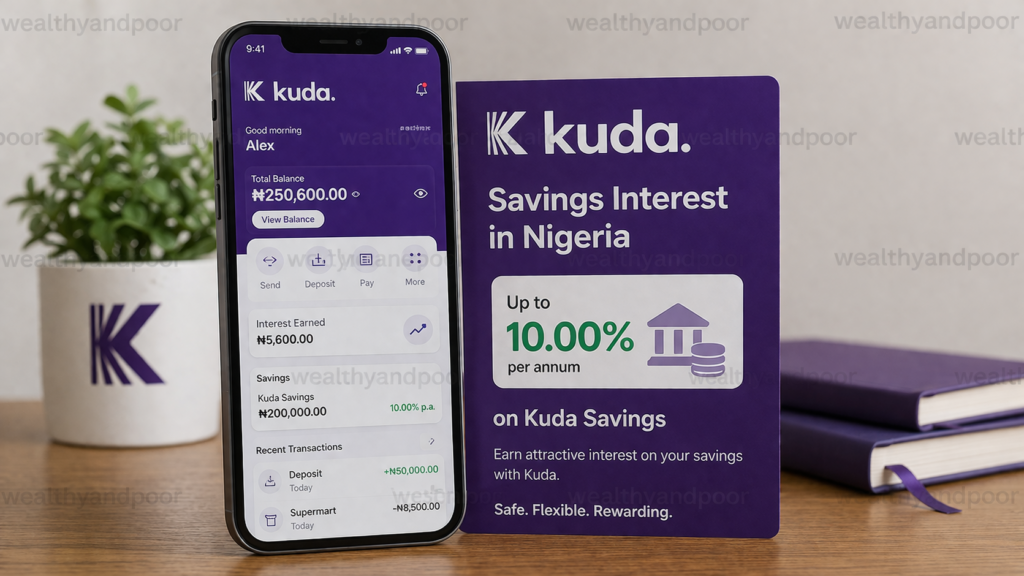

In recent years, Nigeria’s financial landscape has undergone a quiet transformation. Traditional banks are no longer the only custodians of savings. Digital-first institutions like Kuda Microfinance Bank have stepped in, promising transparency, convenience, and perhaps most importantly competitive interest rates.
But how attractive is Kuda’s savings interest in reality? And how does it compare within Nigeria’s broader savings ecosystem? This article breaks down the structure, rates, and practical implications of saving with Kuda in Nigeria today.
Understanding Kuda’s Savings Structure
Unlike conventional banks where interest is typically tied to a standard savings account, Kuda separates spending from saving. Your main account earns no interest; instead, interest is tied to specific savings products within the app.
Kuda offers four primary savings options:
- As You Want (Flexible Wallet) – No interest
- Spend+Save – Automated savings from transactions, no interest
- Save Frequently (Flexible Savings) – Interest-bearing
- Fixed Savings (Fixed Deposit) – Interest-bearing
This structure is intentional. It encourages disciplined saving rather than passive account balances. As noted by Wealthy & Poor, interest on Kuda is “primarily tied to its Save feature, not your regular spending account.”
Interest Rates: What Kuda Actually Offers
- Kuda’s most advertised rate is tied to its fixed savings product.
- Up to 12% per annum on Fixed Savings
- Flexible savings rates vary and are shown in-app before you commit
This headline figure 12% positions Kuda above many traditional Nigerian banks. For context, data from the Central Bank of Nigeria shows that most commercial banks offer savings interest rates around 8% annually.
At face value, Kuda appears more rewarding. However, the reality is more nuanced.
The Catch: Conditions Attached to Kuda Interest
Kuda’s higher interest rates come with strict conditions:
- Lock-In Period (Tenor)
To earn interest, you must commit your money for a fixed duration. Withdrawing early means forfeiting all accrued interest.
- Withdrawal Restrictions
Even in flexible savings plans, withdrawing more than 20% before maturity results in losing your interest entirely.
- Tax Deductions
Interest earnings are subject to a 10% withholding tax, in line with Nigerian regulations.
- No Interest on Everyday Savings
Unlike some banks that pay small interest on savings accounts, Kuda pays zero interest on your main account balance.
Why Kuda’s Model Appeals to Nigerians
Despite the conditions, Kuda’s savings product has gained traction, particularly among younger Nigerians. The reasons are clear:
- Higher Potential Returns
With inflation eroding purchasing power, Nigerians are increasingly searching for better yields. Kuda’s 12% fixed rate stands out in a market where many accounts offer less.
- Behavioral Design
Features like Spend+Save and automated deposits promote financial discipline. Even though some options don’t earn interest, they help users build saving habits.
- Transparency
Kuda displays interest rates upfront within the app before users commit funds, removing the ambiguity often associated with traditional banks.
- Digital Convenience
Everything from setting savings goals to tracking interest is handled in-app, eliminating paperwork and branch visits.
The Bigger Picture: Inflation vs Returns
While Kuda’s rates look attractive, Nigeria’s economic environment complicates the story.
Inflation in Nigeria has remained persistently high, often exceeding 20% in recent years. This means that even a 12% return may not fully preserve purchasing power.
In simple terms:
- A 12% return sounds strong
- But if inflation is 20%+, your real value still declines
This is a critical consideration for savers relying solely on naira-denominated savings products.
Kuda clearly wins on headline rates and digital experience. However, traditional banks may appeal to conservative savers who prefer liquidity and fewer penalties.
Who Should Use Kuda Savings?
Kuda savings is best suited for:
- Disciplined savers who can commit funds for a fixed period
- Young professionals building structured savings habits
- Users comfortable with digital-only banking
It may not be ideal for:
- Individuals needing frequent access to funds
- Those seeking inflation-beating investments
- Savers who prefer guaranteed, penalty-free liquidity
Conclusion
Kuda has successfully redefined how many Nigerians approach saving. By separating spending from saving and attaching meaningful rewards to discipline, it offers a modern alternative to traditional banking.
However, the promise of high interest comes with trade-offs mainly in the form of restrictions and real economic pressures like inflation.
For Nigerian savers, the takeaway is simple: Kuda is a powerful tool but only when used strategically. Understanding the rules behind the interest is just as important as the rate itself.












Comments