
Sterling Bank Transfer Limit in Nigeria
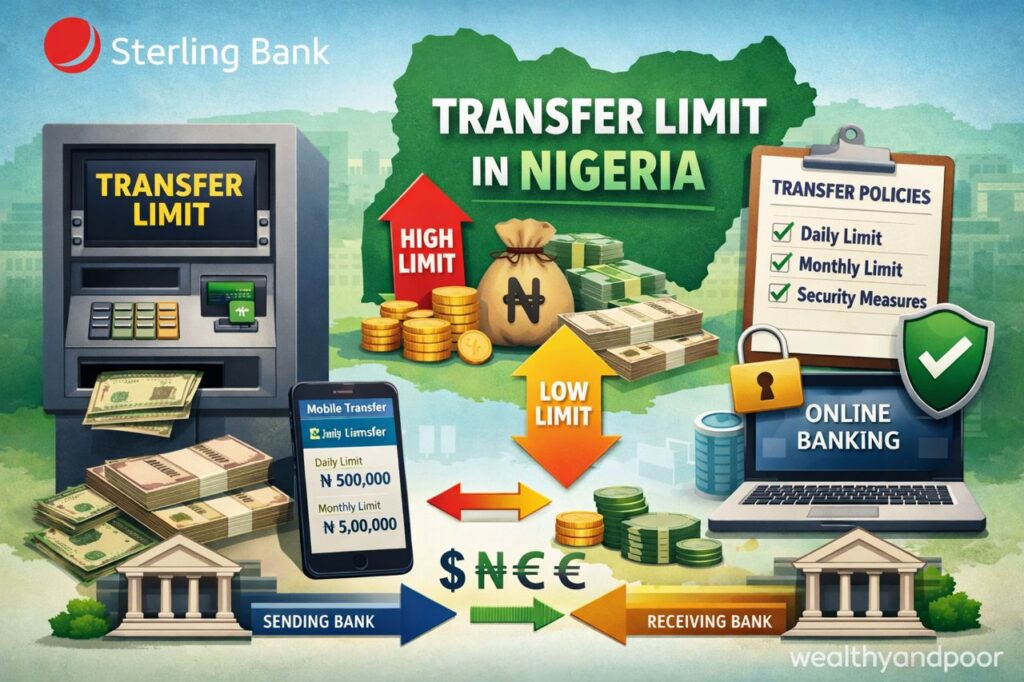

In Nigeria’s fast-evolving digital banking landscape, transfer limits remain one of the most important yet often misunderstood aspects of everyday banking. For customers of Sterling Bank, understanding these limits is essential for managing transactions efficiently whether for personal payments, business transfers, or emergency funds movement.
This article provides a clear, structured breakdown of Sterling Bank transfer limits in Nigeria, covering USSD banking, mobile app transactions, and practical insights for users.
Overview of Sterling Bank Transfer Channels
Sterling Bank offers multiple channels for transferring money, each with its own limits and conditions:
- *USSD Banking (822#) – Ideal for quick transfers without internet
- Mobile App (One bank) – Designed for higher-value transactions and flexibility
- Internet Banking & Branch Transfers – Used for larger or more complex transactions
Each of these channels comes with different transaction ceilings, reflecting security protocols and user verification levels.
Sterling Bank USSD Transfer Limit
The USSD banking service (*822#) remains one of the most widely used channels in Nigeria, especially for customers without consistent internet access.
Key Limits:
- Per Transaction Limit: ₦20,000 (default)
- Daily Transfer Limit: ₦100,000
Customers can increase the per-transaction limit up to ₦100,000 by setting up an additional security PIN linked to their debit card.
This tiered structure reflects a balance between convenience and fraud prevention. Lower limits reduce exposure in case of unauthorized access, while optional upgrades give flexibility to users who need higher limits.
Sterling Bank Mobile App (One bank) Transfer Limit
For customers using the One bank mobile app, the limits are significantly higher due to stronger authentication methods such as biometric verification and secure login systems.
Default and Maximum Limits:
- Default Daily Limit: ₦500,000
- Maximum Limit (Full KYC Accounts): Up to ₦25,000,000 daily
Users can increase their transfer limits directly within the app by completing additional verification steps, including debit card authentication or facial recognition.
This makes the mobile app the preferred option for:
- Business transactions
- High-value personal transfers
- Bulk payments
- Transfer Fees and Industry Disruption
In a notable shift within Nigeria’s banking sector, Sterling Bank has taken a bold stance on transaction costs.
The bank announced the removal of transfer fees on its digital platform, particularly through the One bank app, positioning itself as a customer-centric alternative in a competitive market.
This move:
- Reduces the cost of frequent transactions
- Encourages digital banking adoption
- Sets a precedent for other Nigerian banks
However, it is important to note that:
- Fee waivers typically apply to app-based transfers
- Third-party charges (like VAT or network fees) may still apply in some cases
Why Transfer Limits Exist
Transfer limits are not arbitrary they are a critical component of banking security and regulatory compliance.
Key Reasons:
- Fraud Prevention
Limits help minimize losses in case of unauthorized access or scams.
- Regulatory Compliance
Nigerian banks operate under guidelines set by the Central Bank of Nigeria (CBN), which emphasize transaction monitoring.
- Risk Management
Tiered limits allow banks to differentiate between low-risk and high-risk transactions.
- Customer Protection
In the event of mistaken transfers a growing issue in Nigeria’s digital economy limits reduce the potential financial impact.
How to Increase Your Sterling Bank Transfer Limit
Customers who need higher transaction capacity can upgrade their limits using the following methods:
- For USSD Users:
Create a secondary PIN using your debit card
This increases the per-transaction cap up to ₦100,000
- For Mobile App Users:
Log into One bank
Navigate to “Transaction Limits”
Upgrade using:
- Debit card verification
- Biometric authentication
Higher limits are typically granted to fully verified (KYC- compliant) accounts.
Choosing the Right Channel for Your Needs
Understanding which platform to use can save time and prevent failed transactions.
For example, attempting to send ₦500,000 via USSD will fail due to daily caps, while the same transaction can be completed through the mobile app.
Conclusion
Sterling Bank’s transfer limits reflect a broader trend in Nigeria’s financial ecosystem one that balances security, accessibility, and digital innovation.
While USSD banking remains accessible and reliable for everyday users, the One bank app offers the scalability required for modern financial needs. The bank’s decision to eliminate transfer fees on digital transactions further strengthens its appeal, especially in a cost-sensitive economy.
For customers, the key takeaway is simple:
choose the right channel, understand your limits, and upgrade your account when necessary.











Comments