
Transfer Reversed but Not Received
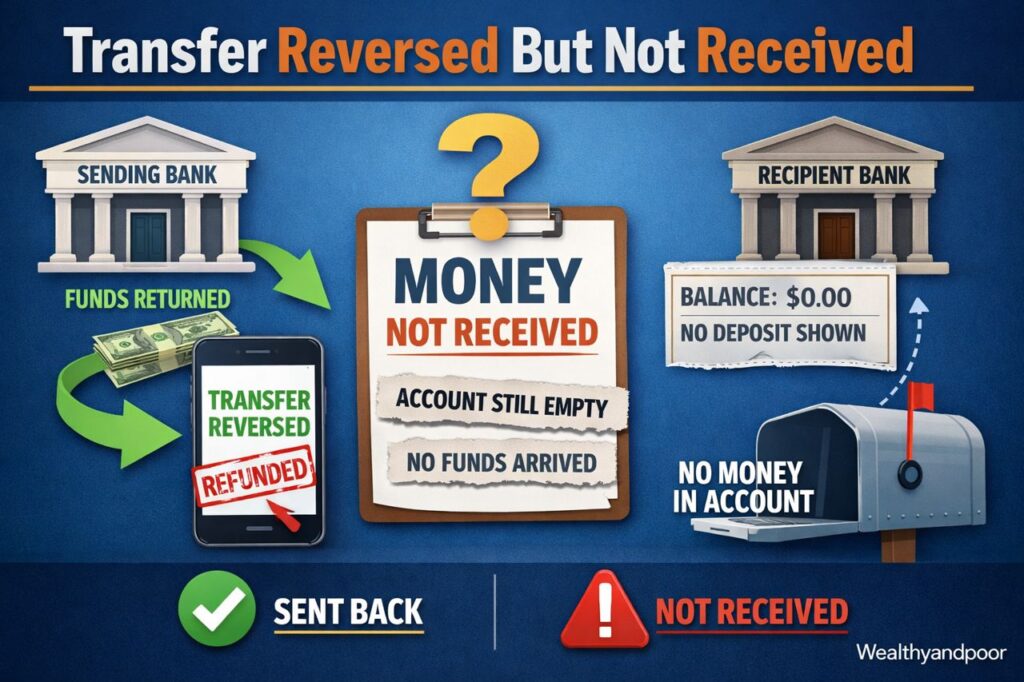

In Nigeria’s fast-growing digital banking ecosystem, few situations frustrate customers more than seeing a transaction marked as “reversed” yet the money is nowhere to be found. For many users of mobile apps, USSD banking, and POS systems, this experience creates confusion, panic, and in some cases, financial distress.
But while it may feel like your money has disappeared, the reality is often more complex. A “reversal” does not always mean the funds have instantly returned to your account. Understanding how reversals work and what steps to take can make the difference between a quick resolution and a prolonged dispute.
Does “Transfer Reversed” Really Mean?
A transaction reversal simply means a transfer has been cancelled or undone, and the funds are supposed to return to the sender’s account.
In theory, this should be straightforward. But in practice, banking transactions in Nigeria pass through multiple systems including your bank, the recipient’s bank, and central switching platforms. When any part of that chain experiences delays or errors, the reversal process can become complicated.
This explains why you might see:
“Reversed” on your transaction history
No credit in the recipient’s account
And still no refund in your own account
Why a Reversal May Not Reflect Immediately
Several underlying issues can cause a delay between a reversal notice and actual refund:
- Interbank Settlement Delays
Transfers between different banks often require reconciliation before funds are returned. This process can take longer than expected, especially during weekends or public holidays.
- Network or System Failures
Banking infrastructure in Nigeria relies on shared payment systems. When these systems experience congestion or downtime, transactions may fail midway leaving funds temporarily “in transit.”
- Pending Transaction Status
Sometimes what appears as a reversal is actually a pending transaction that hasn’t been fully resolved. In such cases, the money is neither with the sender nor the recipient yet.
- Batch Processing by Banks
Contrary to popular belief, not all reversals happen instantly. Some banks process refunds in batches, especially for interbank transactions, which can delay credit for hours or even days.
How Long Should a Reversal Take?
Timelines vary depending on the type of transaction:
- Same bank transfers: Often reversed within minutes to a few hours
- Interbank transfers: Typically within 24 hours
- Weekends/holidays: May extend to the next working day
However, delays beyond 24–48 hours are not uncommon, especially when manual verification or dispute resolution is required.
What You Should Do Immediately
If your transfer shows “reversed” but you haven’t received the money, take the following steps:
- Don’t Panic Wait Briefly
Many reversals resolve automatically within minutes or a few hours. Refresh your banking app or check your account balance again. - Confirm the Transaction Details
Double-check:
Transaction reference number
Date and time
Amount
Recipient details
Errors in any of these can affect how the reversal is processed. - Contact Your Bank
Reach out to your bank’s customer support with full transaction details. Banks can trace transactions using a unique reference or session ID.
Make sure to:
Request a transaction trace
Ask for confirmation of the reversal status - Contact the Recipient Bank (If Necessary)
If your bank confirms the funds have left their system, the delay may be on the receiving bank’s end. In such cases, both banks must reconcile the transaction before releasing the funds. - File a Formal Complaint
If the issue persists beyond 24–48 hours:
Log an official complaint with your bank
Request a dispute ticket or case ID
In Nigeria, unresolved cases can be escalated to regulatory bodies if necessary.
When the Situation Becomes More Serious
In some cases, especially with wrong transfers, reversals are not automatic. Once a transfer is successfully credited to another account, banks cannot simply retrieve the money without the recipient’s consent or legal backing.
Banks may:
- Place a restriction (Post No Debit) on the recipient’s account
- Contact the recipient for approval
- Initiate legal recovery processes if needed . This is why acting quickly is critical.
The Bigger Picture: Why These Issues Persist
Despite the promise of “instant transfers,” Nigeria’s payment ecosystem is still evolving. Transactions move through multiple intermediaries, including central switches and settlement systems that banks do not fully control.
As transaction volumes increase especially during peak periods delays, reversals, and pending transactions are becoming more common.
The key takeaway: a delayed reversal is usually a processing issue, not a loss of funds.
How to Prevent This in the Future
While not all failures are avoidable, you can reduce your risk by:
- Double-checking account details before sending money
- Avoiding transfers during peak hours or system downtimes
- Keeping transaction receipts and reference numbers
- Using stable internet connections
Conclusion
A “transfer reversed but not received” situation can feel alarming, but in most cases, the money is not lost it is simply delayed within the banking system.
Understanding how reversals work, knowing the expected timelines, and taking prompt action can significantly improve your chances of a quick resolution.
The most important rule: act fast, keep records, and follow up persistently.












Comments