
Which Bank Has the Lowest Charges in Nigeria? (Updated 2026 Guide)
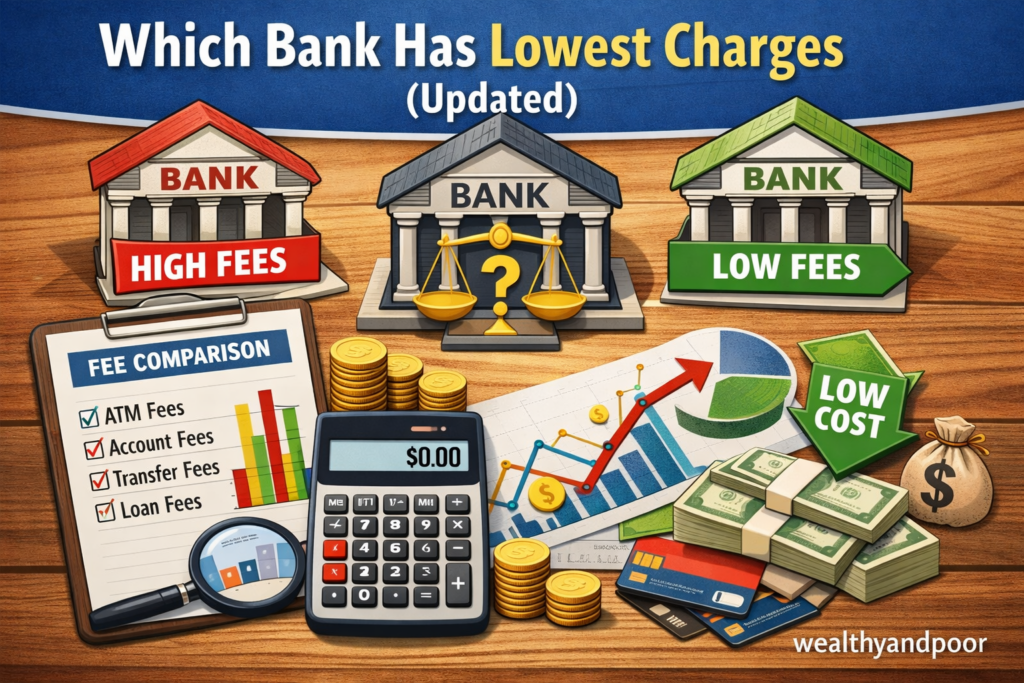

In Nigeria’s evolving banking sector, one question continues to dominate everyday conversations: which bank actually has the lowest charges? While banks often advertise “free transfers” or “low fees,” the reality is more layered. Charges are influenced by regulation, transaction type, and hidden add-ons like VAT, stamp duties, and SMS alerts.
So, instead of a simple “cheapest bank,” what really matters is understanding which banks consistently maintain lower overall fee burdens across services such as transfers, account maintenance, USSD, and digital banking.
Understanding Bank Charges in Nigeria (2026 Reality)
Before comparing banks, it’s important to know what customers are actually paying for.
Today, most Nigerian bank charges include:
- Electronic transfer fees (online, mobile, USSD)
- Account maintenance charges (CAM/ledger fees)
- SMS alert fees
- VAT (7.5% on service fees)
₦50 stamp duty on eligible transfers
Cybersecurity levy on transactions
These layered deductions mean that even “small” fees accumulate significantly over time.
A major insight from recent industry data shows that Nigerian banks collectively generate hundreds of billions annually from these charges, proving how central fees have become to banking revenue.
So, Which Banks Are Generally the Cheapest?
While exact fees can vary by account type and usage, Nigerian banking data and fee structures consistently show patterns.
Based on fee income trends and customer-friendly account offerings, here are the banks often considered lowest in overall charges:
- Wema Bank (Including ALAT Digital Banking)
Wema Bank is frequently highlighted as one of the most affordable traditional banks in Nigeria.
Why it ranks low on charges:
- Strong focus on digital banking via ALAT
- Reduced maintenance fees on digital accounts
- Lower friction on basic transactions compared to tier-1 banks
Industry comparisons often place Wema among the cheapest due to its relatively low fee income structure compared to larger competitors.
Best for: Students, freelancers, and digital-first users
- Stanbic IBTC Bank
Stanbic IBTC stands out for structured and transparent pricing rather than hidden deductions.
Why it ranks low:
- Conditional zero or reduced maintenance accounts
- Clear fee disclosures
- Less aggressive transaction
- monetisation compared to tier-1 banks
This makes it more predictable for users trying to avoid surprise charges.
Best for: Salaried workers and professionals who maintain minimum balances
- FCMB (First City Monument Bank)
FCMB is another mid-tier bank known for relatively moderate fees.
Why it is considered affordable:
- Lower account maintenance compared to major banks
- Competitive digital banking charges
- Flexible account types for different income groups
Best for: Everyday banking and SMEs
- Tier-1 Banks (GTBank, Zenith, Access, UBA, First Bank)
This category includes Nigeria’s largest banks but they are not the cheapest.
Recent financial reports show that these banks generate massive income from account maintenance and digital charges.
Key reality:
- Transfers may be fast and reliable
But fee accumulation is higher over time - SMS alerts, maintenance fees, and hidden deductions are more common
For example, large banks collectively earned hundreds of billions from electronic banking fees in a single year.
Best for: Reliability, nationwide access not low charges
- Digital and Fintech-Linked Accounts (Honourable Mention)
While not traditional banks, digital first platforms integrated with banking services often offer the lowest day-to-day transaction costs.
Typical advantages:
- Free or near-zero transfer fees
- No account maintenance charges in many cases
- Lower USSD reliance
However, they may lack the full-service structure of traditional banks.
Hidden Charges That Affect “Cheapest Bank” Ranking
Even if a bank advertises low fees, Nigerians often end up paying for:
- SMS alert charges (monthly deductions)
- Stamp duty on transfers above ₦10,000
- ATM withdrawal fees outside network
- USSD session charges
- Debit card maintenance fees
This is why two customers in the same bank may experience very different total costs.
Key Insight: There Is No Single “Cheapest Bank”
The truth is that Nigeria does not have one universally cheapest bank. Instead:
- Wema Bank / ALAT → lowest overall digital banking cost
- Stanbic IBTC → most structured and transparent fees
- FCMB → balanced affordability
Tier-1 banks → highest fees but strongest infrastructure
So the “cheapest bank” depends on how you bank, not just where you bank.
How to Reduce Bank Charges in 2026
Regardless of your bank, you can cut costs using simple strategies:
- Use mobile apps instead of USSD
- Disable SMS alerts and switch to email alerts
- Avoid frequent small transfers (they attract multiple fees)
- Maintain minimum balances where required
- Consolidate transactions instead of multiple transfers
Small changes in behavior can reduce yearly charges significantly.
Conclusion
If your priority is lowest charges, then digital focused banks like Wema (ALAT) and mid tier banks like Stanbic IBTC generally offer better value.
But if you value speed, stability, and nationwide access, tier-1 banks still dominate just not at the lowest cost.
In Nigeria’s banking system today, the smartest choice is not just picking a bank it is choosing a fee structure that matches your financial habits.











Comments