
Why Nigerians Prefer USSD Over Banking Apps
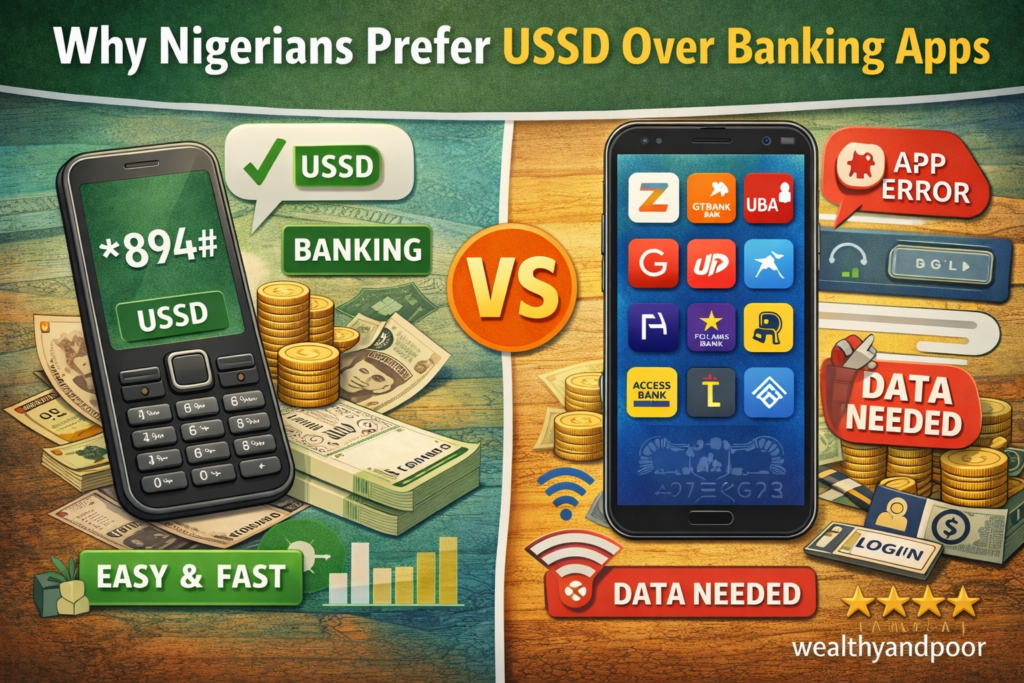

In Nigeria’s fast evolving financial ecosystem, mobile banking has become part of everyday life. Yet, despite the rise of sophisticated mobile banking apps, a significant number of Nigerians still rely more on USSD (Unstructured Supplementary Service Data) codes for their daily transactions. From transferring money to buying airtime or paying bills, the simple “*737#” or similar codes remain deeply embedded in how people interact with banks.
So why is USSD still winning over mobile banking apps in a smartphone driven era? The answer lies in a mix of accessibility, reliability, trust, and Nigeria’s unique digital environment.
- USSD Works Without Internet
One of the strongest reasons Nigerians prefer USSD is its independence from internet connectivity. Unlike banking apps that require mobile data or Wi-Fi, USSD runs on any mobile phone even the most basic feature phones.
This is especially important in areas where internet coverage is weak, expensive, or unstable. Many rural and semi urban users simply cannot rely on apps that require constant connectivity. USSD fills that gap by offering a stable, universal alternative.
For millions of Nigerians, this makes USSD not just convenient but necessary.
- It Works on Any Phone, Not Just Smartphones
While smartphone usage in Nigeria has increased significantly, a large segment of the population still uses basic or low cost phones. Mobile banking apps exclude these users by design.
USSD, however, works on every GSM enabled phone. This inclusivity makes it the most accessible digital banking tool in the country, especially for traders, artisans, and rural dwellers who may not prioritize smartphone ownership.
- Faster and Simpler Transactions
USSD is designed for speed. A few short codes can complete transfers, airtime purchases, or balance checks within seconds. There is no need to log in, wait for app loading, or navigate multiple menus.
This simplicity is a major reason many Nigerians still prefer it for routine transactions. In fast-paced environments like markets or transport hubs, speed matters more than interface design.
- Frequent Issues with Banking Apps
Despite improvements in fintech, banking apps in Nigeria still face performance challenges. Users regularly report issues such as:
- Failed or delayed transfers
- App crashes or login problems
- Pending transactions without immediate resolution
- Network related downtime during peak periods
These issues become more frustrating during high traffic periods such as salary days or festive seasons.
As a result, many users fall back to USSD, which is perceived as more stable under pressure.
- Trust and Familiarity
USSD has been around for years, long before mobile banking apps became mainstream. Over time, Nigerians have developed familiarity and trust in the system.
When financial transactions are involved, trust becomes more important than design. Many users feel USSD is “simpler and safer” because it does not require passwords, app installations, or internet logins.
Even though banking apps offer advanced security features like biometrics and encryption, perception often outweighs technical reality.
- Works Better During Network or App Failures
Nigeria’s banking ecosystem is highly dependent on telecom infrastructure. During network congestion, banking apps often struggle to function properly.
USSD, on the other hand, consumes very little bandwidth and continues to work even when internet-based services are unstable. This makes it a reliable backup system when apps fail unexpectedly.
There have been several instances where both apps and USSD experience disruptions during peak financial activity, reinforcing the need for multiple transaction channels.
- Lower Data Cost Concerns
For many Nigerians, data costs are still a consideration. Banking apps consume mobile data, especially when loading balances, transaction histories, or updates.
USSD does not require data bundles, making it more cost effective for frequent users, especially those managing small daily transactions.
- Built for Financial Inclusion
USSD plays a major role in Nigeria’s push toward financial inclusion. It allows people without smartphones, stable internet, or advanced digital literacy to participate in the formal financial system.
This is why it remains a core banking channel despite the rise of fintech apps. It bridges the gap between modern digital banking and traditional cash based economies.
- Banking Apps Are Still Growing, But Not Replacing USSD
It is important to note that banking apps are not failing they are simply serving a different segment of the market. Urban professionals, tech-savvy users, and businesses increasingly rely on apps for advanced financial services like budgeting tools, investments, and multi-account management.
However, rather than replacing USSD, apps are complementing it.
Nigeria’s financial ecosystem is therefore not shifting away from USSD but expanding alongside it.
Conclusion
Nigerians prefer USSD over banking apps not because apps are inferior, but because USSD fits the realities of everyday life: limited internet access, device diversity, network instability, and the need for fast, reliable transactions.
While mobile banking apps represent the future of digital finance, USSD remains the present backbone of financial inclusion in Nigeria.
In a country where financial transactions must be fast, simple, and dependable, USSD continues to prove that sometimes, the simplest technology is still the most powerful.









Comments