
How to Spot Fake Investment Apps

In today’s fast growing digital economy, investment apps have become a popular gateway for Nigerians seeking to grow their wealth. From cryptocurrency platforms to stock trading apps, the promise of financial freedom is now just a few taps away. But beneath this convenience lies a dangerous reality: fake investment apps are on the rise, and they are becoming increasingly sophisticated.
Recent fraud reports show billions of naira lost annually to digital scams, with many victims lured through convincing mobile applications and online platforms. These fake apps are designed to look legitimate, operate smoothly at first, and ultimately drain users of their money or personal data. Knowing how to identify them is no longer optional it is essential.
The Rise of Fake Investment Apps
The explosion of fintech adoption in Nigeria has created fertile ground for scammers. As more people embrace digital banking and online investments, fraudsters exploit gaps in awareness and regulation.
Fake investment apps often mimic legitimate platforms, complete with professional interfaces, dashboards, and even fake profit tracking systems. Some go as far as showing users imaginary returns to build trust before eventually blocking withdrawals or demanding additional fees.
Globally, authorities have also warned about scams promoted through social media, often involving fake apps and deepfake endorsements from celebrities.
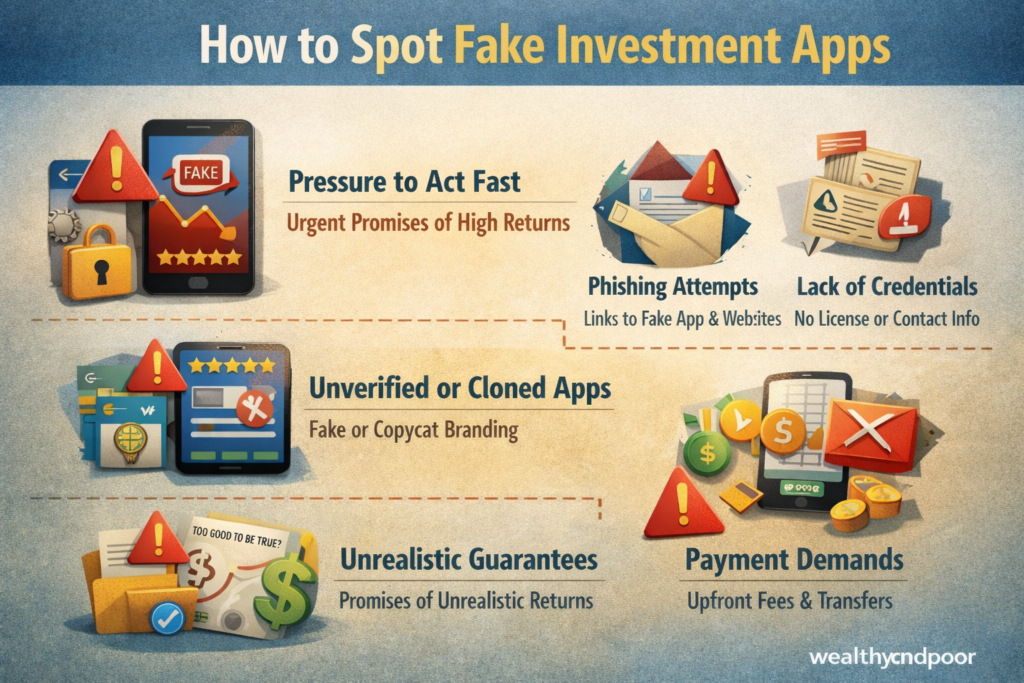
Common Red Flags to Watch Out For
- Unrealistic Returns
One of the most obvious warning signs is the promise of guaranteed or extremely high profits with little or no risk. Legitimate investments always carry some level of risk.
If an app claims you can double your money in days or earn “steady daily profits,” it is almost certainly a scam.
- Pressure to Act Quickly
Scammers thrive on urgency. They may tell you that a “limited opportunity” is about to close or that you must invest immediately to secure your spot.
This tactic is designed to prevent you from thinking critically or conducting proper research.
- Download Links Outside Official Stores
Many fake investment apps are not available on trusted platforms like Google Play Store or Apple App Store. Instead, they are distributed via:
- WhatsApp links
- Telegram groups
- SMS promotions
- Fake websites
Downloading apps from unofficial sources exposes your device to malware and data theft.
- Suspicious Developer Information
Always check the developer’s name before installing any app. Fake apps often use names that closely resemble legitimate companies but contain slight spelling differences or unusual wording.
A credible investment app should be published by a recognized financial institution or company.
- Poor Reviews or Fake Testimonials
While scammers can manipulate positive reviews, negative feedback often reveals the truth. Look out for complaints such as:
- “I can’t withdraw my money”
- “The app stopped working after deposit”
- “Customer service is unreachable”
Fake platforms also rely heavily on fabricated testimonials and influencer promotions to appear trustworthy.
- Lack of Regulation or Licensing
In Nigeria, legitimate investment platforms should be registered with the Securities and Exchange Commission (SEC) or relevant authorities.
If an app cannot provide verifiable licensing information, it is a major red flag.
- Requests for Sensitive Permissions
Be cautious if an investment app asks for unnecessary access to:
- SMS messages
- Contacts
- Camera or microphone
Such permissions may be used to steal personal data or compromise your financial security.
- Difficulty Withdrawing Funds
A classic sign of a fake investment app is when withdrawals become complicated.
Scammers may:
- Delay withdrawal requests
- Ask for additional “processing fees”
- Require new deposits before releasing funds
- In many cases, the displayed profits are entirely fake.
How Fake Investment Apps Operate
Most fake investment apps follow a predictable pattern:
- Attraction – Users are lured through ads, social media, or referrals.
- Trust Building – The app shows fake profits or allows small withdrawals.
- Escalation – Users are encouraged to invest larger amounts.
- Extraction – Withdrawals are blocked, and additional fees are demanded.
- Disappearance – The platform shuts down or becomes unreachable.
This model is similar to Ponzi schemes, where funds from new users are used to pay earlier participants until the system collapses.
Practical Steps to Stay Safe
- Verify Before You Invest
Always research the platform thoroughly. Check official websites, regulatory databases, and independent reviews.
- Use Only Trusted App Stores
Download investment apps exclusively from verified sources like Google Play Store or Apple App Store.
- Start Small
If you are unsure about a platform, test it with a small amount and attempt a withdrawal before committing more funds.
- Avoid Social Media Investment Offers
Many scams originate from social media ads or unsolicited messages. Treat such offers with skepticism.
- Enable Security Features
Use two factor authentication (2FA), keep your device updated, and install security software where necessary.
Conclusion
Fake investment apps are becoming more advanced, leveraging technology, psychology, and social engineering to deceive users. They often look professional, feel legitimate, and promise life-changing returns but their goal is simple: to take your money.
The best defense is awareness. If an investment opportunity feels too good to be true, it probably is. By staying cautious, verifying every platform, and resisting pressure tactics, you can protect yourself from falling victim to these increasingly common scams.










Comments