
Dangote Refinery Increases Petrol Price to ₦874 from ₦774
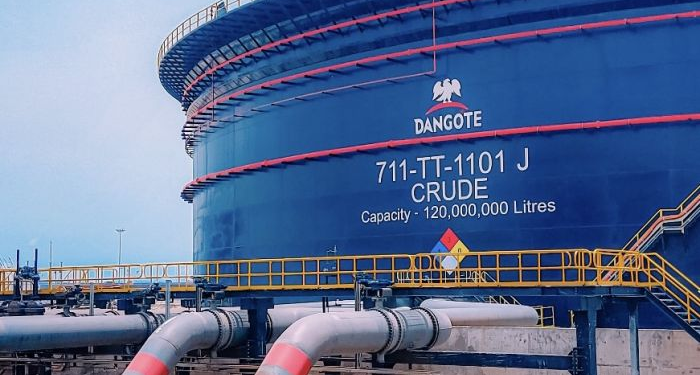

Dangote Petroleum Refinery has stunned Nigeria’s downstream petroleum market with a fresh increase in the ex-depot price of Premium Motor Spirit (PMS), commonly known as petrol, raising the gantry rate by ₦100 from ₦774 to ₦874 per litre.
The price adjustment, confirmed by refinery officials on Monday, reflects mounting pressure from volatile global crude oil markets and rising replacement costs, signalling that fuel cost escalation may now be entrenched in the domestic market.
The new ₦874 per litre ex-depot price has already been implemented, according to industry price trackers, and is expected to cascade through the downstream sector to retail pump prices nationwide.
This development marks a sharp pivot from earlier months when the refinery temporarily lowered its ex-depot price to ₦774 per litre in an effort to stimulate supply and ease cost pressures after previous global price shocks.
Officials at Dangote Refinery emphasized that the revision became necessary due to changing fundamentals in the international crude oil market and higher replacement costs associated with sourcing feedstock and refined products.
The move underscores how closely Nigeria’s deregulated petrol pricing regime is now tied to international oil price dynamics, even with significant local refining capacity.
Market reactions to the price change have been swift. Several private depot owners reportedly paused PMS sales, choosing to avoid offloading products at prices below prevailing replacement costs, highlighting the cautious stance traders are adopting amid uncertain crude price trends. Meanwhile, diesel loading operations continue without disruption.
For consumers, the implication is an almost inevitable rise in pump prices. Across major cities, retail petrol has already been trading between roughly ₦824 and ₦880 per litre, depending on logistics costs and individual marketers’ pricing strategies. The refinery’s gantry price revision is likely to push these figures higher in the coming days as marketers adjust to the new cost base.
The broader context for this adjustment lies in the oscillating global crude oil market, shaped by geopolitical developments, supply-demand imbalances and shifts in international energy prices.
Nigeria’s transition to a deregulated petroleum pricing framework means that domestic fuel prices are exposed to these global forces more than ever before.
Dangote Petroleum Refinery, one of the world’s largest single-train refineries with capacity to process about 650,000 barrels per day, has been pivotal in reshaping Nigeria’s fuel supply landscape. Designed to reduce dependence on imports and stabilize fuel availability, the refinery’s pricing decisions now have outsized influence on national petrol pricing benchmarks.
Analysts warn that unless global crude prices stabilize, or additional refining capacity comes online to ease supply bottlenecks and cost pressures, fuel price volatility may persist, with potential ripple effects on transportation costs, inflation and broader economic conditions.
As the industry and consumers absorb this latest shift, all eyes will be on how quickly pump prices adjust, how regulatory authorities respond, and whether further refiners enter the market to temper the impact of global oil price volatility







Comments