
FG Appoints Verheijen to Head Technical Panel on Direct Oil Revenue Remittances Enforcement


The Federal Government of Nigeria has taken a decisive step to strengthen the management and accountability of the nation’s crucial oil and gas revenues with the operational rollout of Executive Order 9 of 2026, and in a bold move has entrusted Mrs. Olu Arowolo Verheijen, Special Adviser to the President on Energy, with the leadership of a newly established Technical Subcommittee tasked with driving detailed implementation of direct oil revenue remittances.
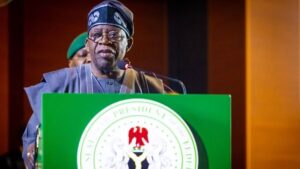
At its core, Executive Order 9 signed by President Bola Ahmed Tinubu on February 13, 2026 seeks to overhaul how payments from Nigeria’s petroleum sector are handled, mandating that key revenue components such as profit oil, royalty oil and tax oil be paid directly into the Federation Account Allocation Committee (FAAC) as constitutionally intended.
During the inaugural meeting of the Presidential Implementation Committee on February 26, 2026, chaired by Mr. Wale Edun, Minister of Finance and Coordinating Minister of the Economy, the government laid out its roadmap for execution balancing fiscal reform with protections for existing contractual frameworks within the oil sector.
Verheijen’s Technical Subcommittee has been given a three-week mandate to draft comprehensive operational guidelines for the new remittance regime.
This includes not just the logistical mechanics of direct payments into the federation account, but also a review of the Petroleum Industry Act (PIA) to identify and address structural and fiscal loopholes that have historically undermined revenue flows to the national treasury.
Nigeria’s oil revenue system has long been criticized for complexity and opacity, with significant sums historically accruing outside constitutional remittance pathways.
The government’s move to suspend certain deductions such as the 30 per cent management fee and frontier exploration fund under Production Sharing Contracts (PSCs) and halt remittances of gas flare penalties into dedicated infrastructure funds underscores a broader commitment to tighten revenue streams and increase transparency.
While the transition to direct remittances represents a foundational shift, the Implementation Committee has approved a defined transition period to prevent disruption of ongoing contractual and financing arrangements, reassure investors, and allow for orderly operational change. During this time, contractors will continue remitting under existing frameworks until the detailed guidelines are issued.
The establishment of the Technical Subcommittee brings together senior officials from critical institutions — including the Office of the Solicitor-General of the Federation, the Federal Ministry of Justice, the Nigeria Revenue Service, the Forum of Commissioners of Finance, and representatives of the Minister of State for Petroleum Resources (Oil) with the Budget Office of the Federation serving as secretariat.
This multi-agency composition is designed to deliver a framework that is legally sound, fiscally robust and administratively workable.
The reform has also garnered support from transparency advocates. The Nigeria Extractive Industries Transparency Initiative (NEITI) welcomed the executive order as consistent with its long-standing recommendations for constitutional compliance and transparency in the oil sector, noting that non-remitted revenues had previously contributed to fiscal shortfalls.
In sectors driven by both domestic policy and global energy markets, clarity and predictability in revenue structures are vital. The Technical Subcommittee under Verheijen’s leadership represents a critical vehicle for translating presidential directives into practical, enforceable policies that could redefine how Nigeria harnesses its oil wealth for national benefit.







Comments