
Tier 3 Account Requirements ( All Banks)
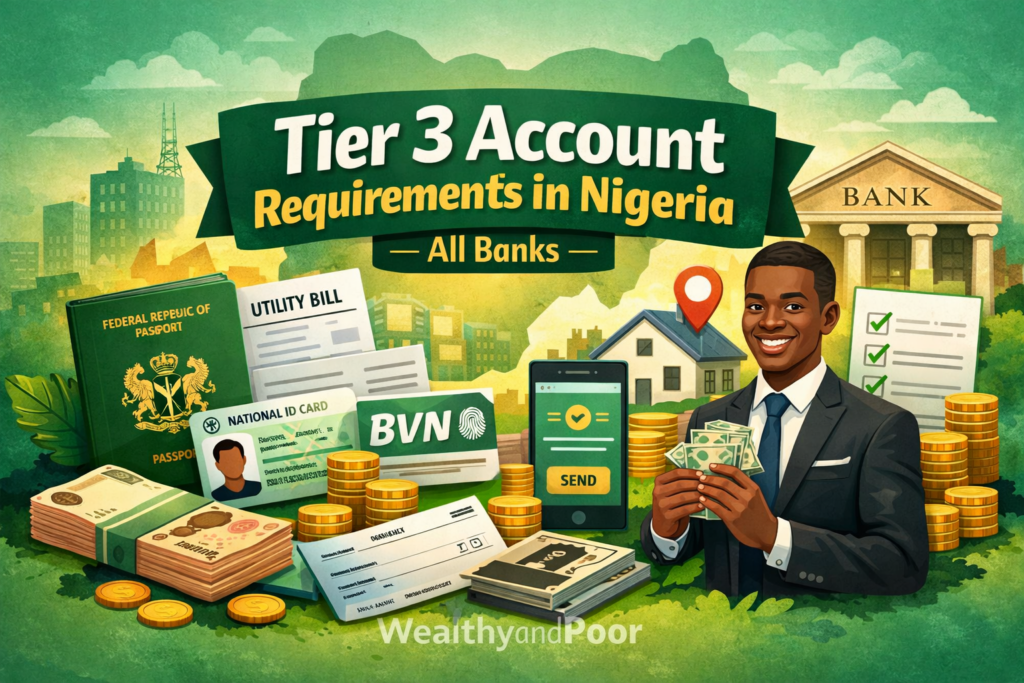

In Nigeria today, opening a bank account is no longer just about having somewhere to keep your money. With increasing financial regulations, anti-fraud measures, and Central Bank of Nigeria (CBN) policies, banks now operate a tiered account system. Among these tiers, Tier 3 accounts stand out as the most comprehensive, fully verified, and flexible type of personal bank account available to individuals.
Whether you are a salary earner, business owner, freelancer, or someone who simply wants unrestricted access to banking services, understanding Tier 3 account requirements in Nigeria is very important.
Unlike Tier 1 and Tier 2 accounts, Tier 3 accounts require complete documentation, including verified identity and residential address. Once approved, the account operates like a traditional full-service bank account.
However, Tier 3 accounts are important because they remove most of the limitations attached to lower-tier accounts. With rising digital transactions, stricter fraud monitoring, and increasing transfer volumes, banks are now more likely to restrict or flag low-tier accounts.
With a Tier 3 account, you get:
- High or unlimited daily transaction limits
- Full access to mobile banking, internet banking, and USSD
- Fewer transaction declines
- Better trust rating with banks
- Easier access to loans, overdrafts, and credit facilities
For many Nigerians, upgrading to Tier 3 is no longer optional , it is necessary.
While the exact limits may vary slightly from bank to bank, Tier 3 accounts generally enjoy:
- Daily transfer limit: ₦5 million and above (some banks offer unlimited transfers)
- Cash withdrawal limit: Very high or unlimited, subject to banking rules
- POS and online payments: No practical restriction
These limits make Tier 3 accounts ideal for professionals, traders, and business owners

General Tier 3 Account Requirements
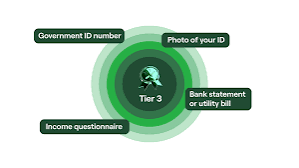
Below are the standard documents required to open or upgrade to a Tier 3 account in Nigeria:
- Valid Means of Identification
This is compulsory. The ID must be government-issued, valid, and clearly show your full name, photograph, and date of birth.
Accepted IDs include:
- National Identity Card (NIN slip or plastic card)
- International Passport
- Permanent Voter’s Card (PVC)
- Nigerian Driver’s License
Most banks now prioritize NIN, and some will not process Tier 3 upgrades without it.
2. Bank Verification Number (BVN)
- Your BVN is mandatory for Tier 3 accounts.
- The BVN must match your name and date of birth
- It must be active and verifiable
- Any discrepancy can delay approval
BVN helps banks track identity across the financial system and reduce fraud.
3. Proof of Residential Address
This is one of the most important requirements for Tier 3 accounts.
Accepted documents include:
- Utility bill (electricity, water, waste, or internet bill)
- Tenancy agreement
- Government-issued letter showing address
- Bank statement with verified address (in some banks)
Key points to note:
- The document should not be older than 3 months
- The name or address must reasonably match your records
Some banks accept utility bills in a close relative’s name with additional confirmation.
4. Physical Address Verification
Beyond submitting documents, many banks now conduct physical address verification.
This involve:
- A bank agent visiting your residence
- Digital address verification using third-party services
- GPS-based location confirmation.
If the address cannot be verified, the Tier 3 upgrade will be rejected.
5. Completed Account Upgrade or KYC Form
Customers are required to fill out:
- Tier 3 upgrade form
- KYC update form
- Account information confirmation form
This can be done:
- In-branch
- Via the bank’s mobile app (for some banks)
- Through customer service request
6. Passport Photograph
Most banks request:
- One or two recent passport photographs
- Clear background
- No cap
For online upgrades, banks may capture your image digitally.
7. Signature
Your signature is collected for:
- Cheque processing
- Identity confirmation
- Legal documentation
This is usually done physically at the bank branch.
Banks-Specific Requirements : While the core requirements are the same, here are a few general practices across Nigerian banks:
- GTBank: Strong emphasis on NIN and address verification
- Access Bank: Utility bill or digital address verification required
- Zenith Bank: Physical branch visit usually mandatory
- UBA: Allows partial digital submission but final approval is manual
- First Bank: Strict KYC checks and address confirmation
- Fidelity, FCMB, Sterling, Union Bank: Similar documentation with slight process differences
Despite these differences, the documents required remain the same.
Common Reasons Tier 3 Upgrade Gets Delayed
Many Nigerians experience delays not because Tier 3 is difficult, but because of small issues such as:
- Name mismatch between BVN and ID
- Old or unclear utility bill
- Unverifiable address
- Incomplete forms
- Inconsistent signature
Fixing these issues early makes the process smoother.
Benefits of Having a Tier 3 Account
- Higher transaction confidence
- Reduced risk of sudden account restrictions
- Access to credit facilities
- Easier international transactions
- Better customer support priority
It also improves your credibility with banks and financial institutions.
Conclusion
Understanding Tier 3 account requirements in Nigeria helps you avoid unnecessary banking stress. While the documentation may seem demanding, it exists to protect both customers and the financial system.
Across all Nigerian banks, Tier 3 requirements are largely the same — valid ID, BVN, proof of address, and proper verification. Once completed, you gain access to the full benefits of modern banking without limitations.
For salary earners, business owners, freelancers, POS operators, and anyone handling frequent or high-value transactions, upgrading to Tier 3 is one of the smartest financial moves you can make. It reduces the risk of account disruptions, improves your credibility with banks, and positions you better for future opportunities such as loans, overdrafts, and international transactions.
If you frequently experience transfer failures, low limits, or account restrictions, upgrading to Tier 3 might be the smartest financial decision you make this year.











Comments