
Why Your Bank Deducts VAT & How It Works

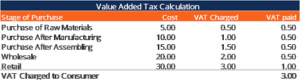
In recent years, many bank customers have noticed repeated small deductions on their bank statements labelled as VAT, charges, services fees. Value Added Tax (VAT) is a consumption tax charged on goods and services regulated by the Federal Inland Revenue Service (FIRS) and currently stands at 7.5%. Banks deduct VAT not because they want to, but because Nigeria tax laws require VAT to be charged on eligible banking services. Bank act as tax -collecting agents for the government and remit the VAT they collect to the appropriate authorities. It is important to understand that VAT is not deducted on your money itself. Instead, it is charged on the services the bank provides to you.
How VAT Appears On Your Bank Statement: VAT deductions are usually shown in one of two ways:
- Separately, where you see a service charge and an additional VAT line.
- Inclusive, where the charge narration states that VAT is included.
For example, if your bank charges ₦1000 for a service, VAT of ₦75 may appear separately or be embedded in the total amount deducted.
- Account maintenance or services fees
- Card issuance and card maintenance fees
- Certain transfer or transaction services charges
- Teller-asserted services
- SMS alert services (in some cases)
- Commission on transactions
If a bank charges you for a service, VAT is often added at 7.5% of that charge.
- A flat charge, not a percentage
- Applied only to transfers ₦10,000 and above
- Deducted once per qualifying transaction
Unlike VAT, which is charged on services, EMTL is a government levy on electronic transfers. The two charges are completely backed by separate regulations.
Do SMS Alert Charges Attract VAT?: Banks usually deduct a small amount for SMS notifications that inform customers of transactions on their accounts. Depending on how the bank structures the service:
- The SMS fee may attract VAT, or
- The bank may pass the telecom charge directly to the customer
This is why SMS charges can vary between banks and may charge over time. Customers who rely more on mobile apps or email alerts may consider disabling paid SMS alerts where allowed.
ATM Withdrawal Charges And VAT : ATM withdrawal can attract services charges when:
- You exceed the free monthly withdrawal limit
- You use another bank’s ATM
Where a charge applies, VAT may be added to the services fee, not to the cash withdrawn. This is why ATM-related deductions sometimes appear slightly higher than expected.
Card Maintenance Fees And VAT: Most Nigerian banks charge card maintenance fees for debit cards. These fees are usually deducted monthly or quarterly. Because card maintenance is considered a service, VAT is typically applied. This explains why card-related deductions may appear consistently on your statement. Comparing card maintenance fees across banks is on e effective way to reduce overall charges.
- Maintenance fees
- Notification fees
- Commission on transfers
- Manual transaction fees
VAT is often embedded in these deductions, making them appear larger than base charge.
How To Reduce VAT And Bank Charges Legally: While VAT itself cannot be avoided on taxable services, customers can reduce the charges that attract VAT by:
- Choosing low-fee or zero maintenance account types
- Using digital banking instead of teller services
- comparing banks before opening accounts
- Disabling optional paid services
- Monitoring statement regularly
Reducing the service charge automatically reduces the VAT applied.
What To Do If You Notice Wrong or Excessive VAT Deduction: If you suspect an incorrect deduction:
- Request a full breakdown from your bank
- Escalate through the bank’s customer service channels
- File a complaint with the CBN Consumer Protection Department if resolved
Banks are required to explain all charges clearly.
In Conclusion: VAT deductions by banks are not arbitrary. They are a result of tax laws governing banking services in Nigeria. However, VAT is just one part of deductions customers see alongside stamp duty, SMS Charges, ATM fees, and card maintenance costs.
By understanding how VAT works, recognizing the difference between charges, and choosing smarter banking options, customers can take control of their finances and avoid unnecessary losses.
Being informed is the first step toward smarter banking.











Comments