
Complete Guide To Failed Bank Transactions In Nigeria

Failed bank transactions are a common issues affecting Nigerian bank customers you attempt a transfer, withdraw cash from an ATM, pay with POS, or use USSD, only to see your account debited while the transaction fails or remains pending. With increasing reliance on digital banking, understanding why bank transactions fail, how reversal works, and the correct steps to recover debited funds has become essential for every Nigerian bank user. A failed bank transaction occurs when a payment does not complete successfully, your account is debited or the transaction remains unresolved. This can happen across different channels, including bank transfers, ATM withdrawals, POS payments, USSD transactions, and mobile banking apps. In most cases, the money is not lost; it is either reversed automatically or requires a formal complaint before refund.
What the law & regulator say about reversal timelines
The CBN requires banks to process instant reversals for “on-us” ATM failures where possible; where instant reversal fails, manual reversal should not exceed 24 hours. For transactions on other banks’ ATMs, or more complex cases, the guideline gives specific short windows (typically up to 48 hours for many failed ATM on-merchant cases). These rules are designed to shorten the time customers go without funds.
Common Causes of Failed Transactions in Nigeria
- Network and System Downtime: Banks rely on shared payment infrastructure such as NIBSS. When networks are slow or unavailable, transactions may fail or remain pending.
- Bank Maintenance and Updates : Many banks carry out system maintenance late at night, on Sundays, or during public holidays. Transactions during these periods may delay or fail.
- Incorrect Transaction Details: Wrong account numbers, incorrect bank selection, or invalid beneficiary details often lead to failed or reversed transfers.
- USSD Session Timeout: USSD transactions may fail if the session times out due to poor network coverage or delayed user response.
- ATM and POS Errors: ATM dispense errors (debited without cash) and POS terminal failures are common, especially during high traffic periods.
- BVN or KYC Issues: Unlinked or mismatched BVN details can restrict transactions or cause app and transfer failures.

Failed Transactions by Channel
- Bank Transfers (Mobile App & Internet Banking): Transfers may show as pending, successful but not received, or failed with debit. Interbank transfers may take longer due to settlement delays.
- USSD Transfers: USSD failures usually occur due to network interruptions. If debited, customers are advised to report immediately using bank complaint channels.
- ATM Transactions: ATM errors include debits without cash dispensed or partial dispensing. Own-bank ATM reversals are often faster than other-bank ATM reversals.
- POS Transactions: POS payments may fail at merchant locations due to terminal or network issues. Reversals often depend on merchant-bank reconciliation timelines.
How Long Should Reversals Take?
- ATM dispense error (same bank): Instant to 24 hours
- ATM dispense error (another bank): Up to 48 hours
- USSD and POS reversals: 24–72 hours
- Interbank transfers: 24–72 hours depending on investigation
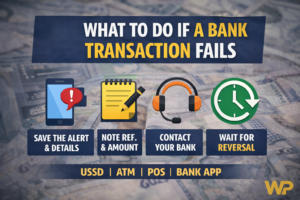
What to Do Immediately After a Failed Transaction
- Save debit alerts, screenshots, and receipts
- Note the transaction reference, amount, date, and channel used
- Report via bank app, USSD complaint code, or customer care
- Request a complaint or ticket number
- Monitor your account within the expected reversal timeframe.
How to Report a Failed Transaction Effectively
When reporting, always include:
- Your full name and account number
- Transaction date and exact time
- Amount involved
- Transaction reference or trace ID
- Channel used (ATM, POS, USSD, App)
Clear and complete information speeds up resolution.
Common Bank Error Codes
Bank error codes are short system-generated messages that explain why a transaction failed. Understanding these codes helps customers respond correctly instead of panicking or repeating failed attempts. While codes vary by bank, most Nigerian banks use them to indicate network issues, authentication problems, insufficient balance, or temporary service disruptions.
These error codes usually appear during high traffic periods, system maintenance, or NIBSS downtime. They indicate that the bank’s system could not complete the transaction at that time. Transactions affected by network-related error codes are often reversed automatically without customer intervention.
When and How to Escalate Complaints
If your bank fails to resolve the issue within the expected timeframe, escalate the complaint through the bank’s official complaint channels. If unresolved, customers can further escalate to regulatory consumer protection units with evidence of prior complaints.
How to Prevent Failed Transactions
- Avoid large transfers during late nights or weekends
- Double-check beneficiary details before confirming
- Keep your BVN and KYC information updated
- Use stable internet connections for app transactions
- Keep records of all transaction alerts
FAQs
- Why do bank transfers fail or remain pending in Nigeria?
Bank transfers in Nigeria usually fail or stay pending due to network downtime, NIBSS settlement delays, incorrect beneficiary details, bank system maintenance, or transaction limits. Transfers made at night, on weekends, or during public holidays are more likely to delay. In most cases, the money is not lost and will either be completed or reversed automatically.
2. What should I do if my USSD, POS, or ATM transaction failed but I was debited?
If your account was debited but the transaction failed, immediately save the debit alert and transaction reference, then report the issue through your bank’s mobile app, USSD complaint code, or customer care. ATM dispense errors are usually reversed within 24–48 hours, while USSD and POS reversals may take longer if interbank reconciliation is involved.
Conclusion; Failed bank transactions in Nigeria are common, but they are rarely permanent losses. Understanding why transactions fail, knowing the correct reversal timelines, and following the right reporting process can save you time, stress, and money. By acting quickly, keeping proper records, and escalating when necessary, customers can successfully recover debited funds. Nigerian banks are guided by regulatory rules on transaction reversals, but customers must also act responsibly by saving transaction alerts, keeping reference numbers, and reporting failed transactions promptly through official channels. When issues remain unresolved proper escalation ensures accountability and faster resolution. As digital banking continues to grow in Nigeria, being informed is your strongest protection. Always verify details before confirming transactions, remain patient during downtimes.












Comments