
Best Banks For Student in Nigeria

Opening a bank account is one of the first real steps into financial independence. Whether it’s receiving school fees from home, managing monthly allowances, saving from a side hustle, or paying for data and subscriptions, banking becomes part of daily student life very quickly. But not all bank accounts work well for students. From experience and from interacting with undergraduates across Nigerian campuses, one thing is clear: students need banking that is simple, affordable, digital, and stress-free, not High charges, rigid balance requirements, or complicated processes for students who are just learning how money works.
This guide breaks down the best banks for students in Nigeria, explaining what makes each option student-friendly and how to choose the one that fits your lifestyle. Whether you’re a fresher opening your first account or a final-year student planning ahead, this article is written to help you make a smart decision.
How to Choose the Best Account
Not just owing an account but evaluating which bank to own as a student.
1. Fees & Charges: Choose accounts with zero or low maintenance fees — these help students keep more of their limited funds.
2. Minimum Balance: Accounts that don’t require a minimum balance allow students to start with little or no deposit.
3. Accessibility: Mobile and USSD banking (like apps or bank codes) make managing allowances and school payments easier.
4.Perks & Rewards: Extra features such as scholarship opportunities, rewards, and financial literacy support can make student life smoother.
5. Interest on Savings: Most Fintech bank accounts pay interest on balances which helps your money grow over the long term.
6. Easy access to debit cards: A student account should come with an affordable or free ATM/debit card for everyday spending.
Best Banks for Students in Nigeria

Traditional banks remain important for students, especially for receiving official payments, scholarships, or dealing with institutions that prefer commercial banks.
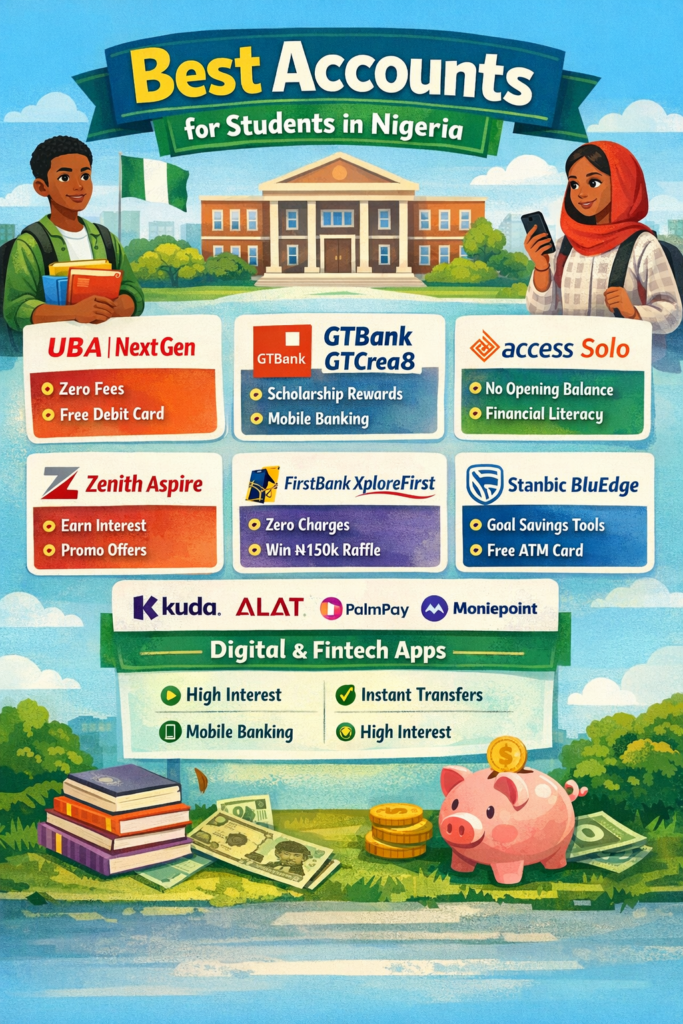
- GTBank – GTCrea8 Account: GTBank’s GTCrea8 account is one of the most widely used student accounts in Nigeria. It is simple, affordable, and designed for young people who want straightforward banking without hidden charges.
Why it works for students:
- No opening balance requirement
- No monthly maintenance fees
- Free debit card
- Reliable mobile and internet banking
- Easy upgrade after graduation
On many Nigerian campuses, GTBank remains a popular choice because it combines simplicity with strong digital performance.
- Access Bank – Solo Student Account: Access Bank’s Solo Account is built specifically for students and young adults. Beyond basic banking, Access Bank has invested heavily in youth engagement and financial education.
Key benefits:
- Zero maintenance fees
- Free debit card
- AccessMore mobile app
- Financial literacy programs and student initiatives
This account suits students who want more than just a place to keep money.
- UBA – Student / NextGen Account: UBA has a strong campus presence across Nigeria and offers student-friendly account options. The bank blends traditional banking reliability with modern digital tools.
- Low or zero charges
- Free debit card
- Mobile banking and chat banking
- Strong branch network
UBA is often a good fit for students who want both online banking and physical support.
- Zenith Bank – Aspire Account: Zenith Bank’s Aspire Account is designed for young Nigerians, including students who prefer structured banking. Despite Zenith’s corporate image, Aspire removes many barriers students usually face.
What stands out
- No minimum balance
- No maintenance fees
- Free debit card
- Interest on savings
- Strong mobile banking platform
- FirstBank – XploreFirst Account: FirstBank’s XploreFirst account is popular largely because of its nationwide reach. For students studying outside major cities, branch and ATM availability still matters.
Why students consider it:
- Low or zero charges
- Free debit card
- Mobile and USSD banking
- Nationwide accessibility
FirstBank remains relevant for students who want dependable access anywhere in Nigeria.
Digital Banks and Fintech: A Growing Student Favorite
While traditional banks are still important, many Nigerian students now rely heavily on digital banks and fintech apps for daily transactions. These platforms are app-based, easy to use, and often cheaper.
Popular Digital Banks Among Students
- Kuda Bank
- ALAT by Wema Bank
- Opay
- Palmpay
Why Students Like Digital Banks
- Zero maintenance fees: Most digital banks charge nothing to maintain an account.
- Higher savings interest: Compared to traditional banks, digital banks often offer better interest rates on savings.
- Fast transfers and payments: Transfers are usually instant, and bill payments are seamless.
- Budgeting and savings tools: Features like automated savings, spending analysis, and goals help students manage money better.
For many students, digital banks are where daily spending happens, while traditional banks handle larger or official transactions.
Read Also: Tier 1 Account Limits In Nigeria ( 2026)
FAQs
Q1. Is a student account different from a regular savings account?
Yes. Student accounts have fewer requirements and lower charges than standard savings accounts.
Q2. What documents are required to open a student account?
A valid ID, passport photograph, and student identification or admission letter are usually required.
Q3. Can a student account be upgraded after graduation?
Yes. Student accounts are designed to be upgraded once income or documentation improves.
Q4. Do student accounts come with ATM cards?
Yes. Most student accounts include a free or low-cost debit card.
Q5.Do student bank accounts attract monthly charges?
Most student accounts have no maintenance fees, provided the account is used within set limits.
Q6.Can a student open a bank account with zero balance?
Yes. Most student accounts in Nigeria allow account opening without an initial deposit.
Conclusion
Banking as a student in Nigeria does not have to be complicated or expensive. The right student account helps you manage money better, avoid unnecessary charges, and develop healthy financial habits early.
Whichever bank you choose, remember this: good banking habits matter more than the bank itself.
Save consistently, track your spending, use digital tools wisely, and upgrade your account when your income grows. By the time you graduate, you won’t just have a certificate — you’ll also have a solid financial foundation.












Comments