
CBN Complaint Portal Explained

Banking problems like failed transfers, unauthorized charges, or poor service are frustrating and sometimes costly.
In Nigeria, the Central Bank of Nigeria (CBN) provides a way for everyday customers to escalate unresolved complaints against banks and other regulated financial institutions.
While many people know the CBN is the apex regulator, not everyone understands the CBN complaint portal and how to use it properly. This guide explains it in clear, practical terms.
What Is the CBN Complaint Portal?
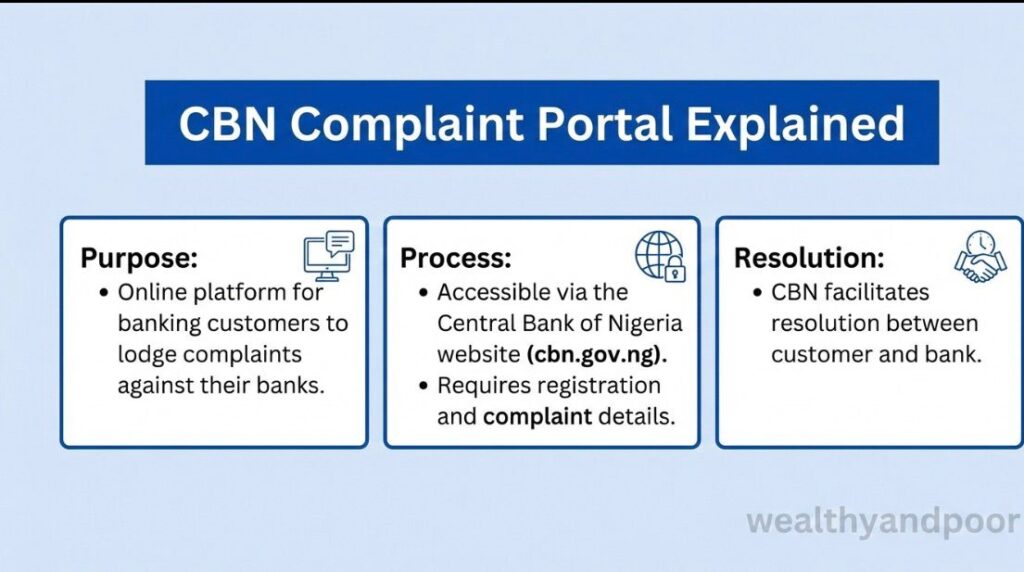
The CBN complaint portal refers to the official process and contact channels provided by the Central Bank of Nigeria that allow consumers to escalate unresolved complaints against banks and other financial institutions under its regulatory oversight.
This is part of the Consumer Protection Framework rules set by the CBN to make sure financial service providers handle customer complaints fairly, transparently, and within a set timeframe.
The portal isn’t just a single form it includes multiple official channels customers can use to lodge complaints if their bank hasn’t resolved an issue within the required period.
These include an online complaints link, official email addresses, and physical mailing addresses.
Who Should Use the CBN Complaint Portal?
Before using the CBN complaint portal, you must first complain to your bank or financial institution. This is a regulatory requirement the CBN only takes up matters after the bank has had a chance to resolve them.
CBN handles complaints only when:
- A bank fails to acknowledge or respond within the expected time, or
- The bank fails to resolve your complaint within the required regulatory timelines.
Examples of valid issues include:
- Failed or unexecuted transactions
- Unauthorized charges or debits
- Excess or hidden fees
- Interest disputes
- Poor customer service or unfair treatment
- Account access problems
These all fall under financial complaints that the CBN may consider once you’ve first taken them to your bank.
Step-by-Step: Using the CBN Complaint Portal
- Contact Your Bank First,
This is essential.
Before turning to the CBN, you must lodge a formal complaint with the bank where the issue began. Many banks require you to: - Visit a branch,
- Use their mobile app or email, or
- Call customer support.
- Keep a tracking number or proof of your complaint. Without this, the CBN may not consider your case.
- Wait for Your Bank to Respond
Under CBN rules:
Banks generally have two weeks (14 days) to resolve most complaints.
For some issues like loan disputes or excess charges, the period may extend up to 30 days.
If your bank does not respond or resolve the issue within these timelines, you now have the right to approach the CBN. - Use the CBN Complaint Portal (Online) :
The CBN provides an official online channel where you can lodge complaints.
You can start here: - CBN Contacts & Complaints page
At this online portal, you’ll be able to: - Fill basic complaint details,
- Provide your contact information,
- Upload supporting documents (like screenshots, bank responses, reference numbers), and
- Submit your grievance digitally.
Most Nigerians find this portal easier than writing physical letters.
Once submitted, your complaint is forwarded to the Consumer Protection Department (CPD).
Tip: Always attach proof of your earlier complaint to the bank and any responses you received this helps the CBN understand your case quickly.
- Email the Consumer Protection Department:
If you prefer email or want to add written detail you can send a direct email to the CBN’s consumer complaint address:
— Consumer Protection Department.
Central Bank of Nigeria
In your email, make sure to include: - Your full name and contact details
- Bank name and account number (no PINs or passwords)
- Date and description of the issue
- Complaint history with your bank (including a tracking number)
- Any supporting documents (screenshots, bank emails, receipts)
- Clear and concise complaints are usually processed more quickly.
- Submit a Written Complaint by Mail or In Person :
If online or email isn’t convenient for you, the CBN also accepts complaints via postal mail or direct delivery to a branch:
Address it to:
The Director, Consumer Protection Department
Central Bank of Nigeria
Central Business District, Garki, Abuja
PMB 0187, Nigeria
Central Bank of Nigeria
You can submit this letter at the CBN headquarters or at any CBN branch nationwide. - Wait for Acknowledgment and Response :
Once your complaint is received by the CBN:
You should get a tracking or reference number.
Acknowledgment usually comes within a few days, depending on the channel used.
The CBN will then review the complaint, contact your bank, and help pursue resolution.
The Consumer Protection Department aims to ensure fairness and prompt resolution, though timelines vary by case.
What Happens After You Submit a Complaint
After the CBN receives your complaint, they may:
- Engage your bank for details and response,
- Ask you for further documentation,
- Mediate between you and your bank, and
- Ensure the bank responds within a regulatory timeframe.
In many cases, unresolved banking issues get resolved through this process without needing court action.
Important Tips for Nigerians Using the CBN Complaint Portal
Keep Evidence: Always keep proof of your initial complaint to your bank track numbers, screenshots, call logs, emails.
- Be Clear and Brief: When submitting online or by email, explain your issue step by step and avoid unnecessary details.
- Attach Documents: Upload all relevant documents this helps the CBN assess your case faster.
- Follow Up: If you don’t hear back in a few weeks, you can follow up using your tracking number.
- Use Official Channels Only: Always use official CBN contacts and the complaint portal not unofficial sites or social media messages.
Conclusion
The CBN complaint portal in Nigeria is a crucial tool for customers who feel their banks haven’t treated them fairly. While you must first contact your bank and wait for a resolution, reaching out to the CBN’s Consumer Protection Department gives you a higher authority to seek redress.
Using the online portal, official emails, or written letters increases your chances of a fair outcome.
Understanding this process empowers Nigerians to assert their rights and hold financial institutions accountable when issues arise.










Comments