
Central Bank Flags Stablecoin Surge as Potential Threat to Monetary Policy Stability


The Central Bank of Nigeria (CBN) has raised a stern warning about the rapid expansion of stablecoins and private digital payment platforms, cautioning that, if left unregulated, these emerging financial technologies could intensify foreign exchange volatility and weaken monetary policy effectiveness in Nigeria and other emerging economies.
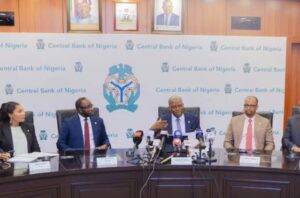
The warning was delivered by CBN Governor Olayemi Cardoso during his keynote address at the Group of 24 (G-24) Technical Group Meetings held in Abuja, where global finance leaders gathered to discuss strategies for sustainable and inclusive economic growth.
Why the CBN Is Raising the Alarm
According to multiple news reports:
- Stablecoins, digital assets typically pegged to major global currencies (often the U.S. dollar), are gaining rapid adoption as payment methods both domestically and cross-border.
- These assets, alongside private digital payment systems, have the potential to bypass traditional banking frameworks, creating new channels for money movement that central banks cannot fully control.
The CBN fears that widespread use of stablecoins could promote currency substitution where Nigerians increasingly hold and transact in stablecoins instead of the Naira undermining demand for the domestic currency and complicating FX market management.
Such adoption may also weaken the transmission of monetary policy, making tools like interest rate adjustments less effective in stabilising prices and controlling inflation.
In these remarks, Governor Cardoso stressed that while digital innovation carries transformative potential, it also introduces macroeconomic risks especially where regulatory frameworks lag behind technological adoption.
Impact on FX Markets and Monetary Policy
Analysts and CBN officials outline several areas of concern:
- Foreign Exchange Volatility
The growing use of stablecoins could divert financial activity away from regulated FX channels, increasing pressure on the Naira and complicating official exchange rate management.
- Weakened Monetary Transmission
When digital assets and payment systems operate outside central bank oversight, traditional monetary policy tools such as adjusting the Monetary Policy Rate or reserve requirements become less effective at influencing market behaviours.
- Regulatory Fragmentation
Without global coordination, digital payment ecosystems can become fragmented, favouring dominant international platforms and currencies, which may erode monetary sovereignty in emerging markets.
- Capital Flow Pressures
Rapid adoption of stablecoins could accelerate unofficial capital flows, exposing small and emerging economies to sudden shifts in liquidity and exchange rates during market stress.
CBN’s Dual Approach: Opportunity & Caution
While emphasising the risks, the CBN has also acknowledged the significant benefits that digital payment innovations could bring:
- Lower remittance costs
Digital payment systems can reduce the time and expense associated with cross-border transfers an important consideration for Nigerian diaspora remittances.
- Increased financial inclusion
Improved access to payment infrastructure can help integrate more households and micro enterprises into formal financial systems.
- Modernised payment infrastructure
Nigeria’s recent rollout of the National Payment Stack and ongoing reforms under the Payment System Vision 2028 aim to strengthen resilience, interoperability, and regulatory oversight across payment channels.
However, according to Cardoso, innovation must be paired with strong regulatory safeguards to protect monetary and financial stability. “Digital payments should be a public good not a source of instability.”
Calls for Coordinated Regulation
The apex bank has called on policymakers, regulators, and international partners including the International Monetary Fund (IMF) and the World Bank to work collaboratively on:
- Harmonised global standards for digital payment systems
- Robust regulatory frameworks to manage systemic risks
- Mechanisms to prevent regulatory arbitrage across jurisdictions
This approach reflects a growing global consensus that digital assets and payment innovations must be integrated responsibly to realise benefits while preserving monetary and financial stability.
Conclusion: A Balancing Act for Nigeria
Nigeria stands at a pivotal moment in the evolution of its financial system. On one hand, digital payment innovations including stablecoins present opportunities for greater efficiency, inclusion, and economic participation. On the other, without proper regulation and oversight, these same technologies could introduce volatility and weaken the effectiveness of central bank policies designed to stabilise the economy.
As Governor Cardoso stated, the challenge ahead is clear: shape the future of global finance not be shaped by it.











Comments