
How Long Bank Transfers Take in Nigeria
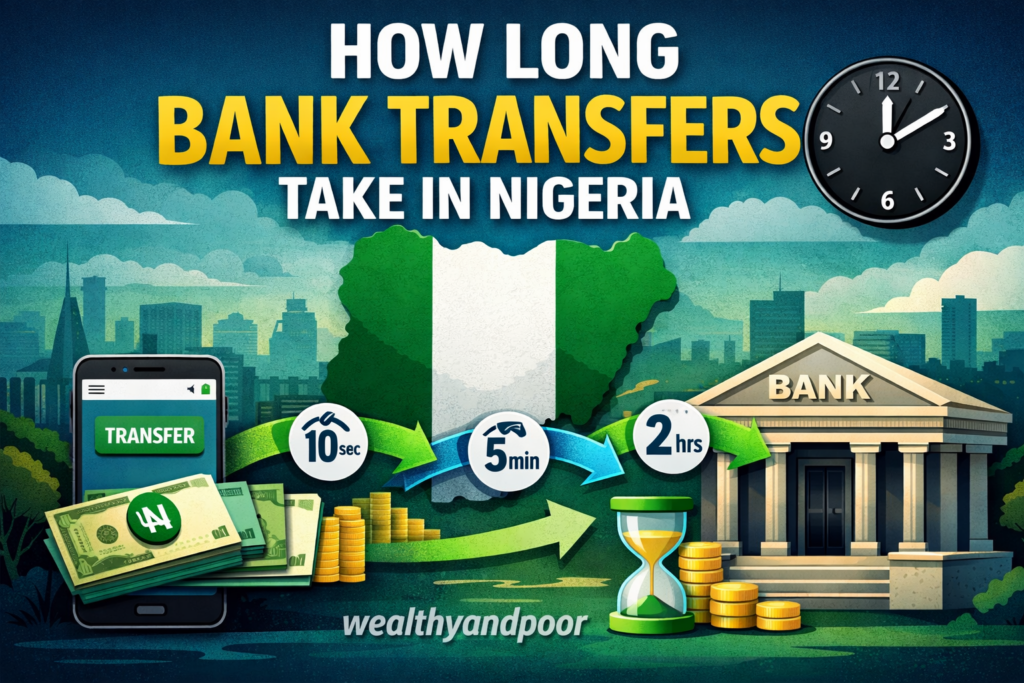

Bank transfers in Nigeria have evolved into a fast and efficient process, driven by improvements in digital banking infrastructure and real-time payment systems managed by the Nigeria Inter-Bank Settlement System. Today, most transfers whether done via mobile banking apps, USSD codes, or internet banking are completed almost instantly, making it easier for individuals and businesses to move money seamlessly.
In most cases, a standard bank transfer in Nigeria is processed within seconds to a few minutes. This is made possible by the NIBSS Instant Payment (NIP) system, which facilitates real-time interbank transfers. Once a transaction is initiated, the funds are typically debited from the sender’s account and credited to the recipient immediately, with little to no waiting time under normal network conditions.
Despite this speed, transfer times are not always perfectly consistent. Delays can occur due to factors such as network congestion, temporary system outages, or high transaction volumes. Periods like weekends, public holiday, or peak business hours often experience heavier traffic, which may slow down processing times. In such situations, a transfer that usually takes seconds could take several minutes or, in rare cases, a few hours to reflect in the recipient’s account.
The type of transfer also plays a role in how long it takes. While instant transfers dominate the system, some transactions are processed using batch systems, which may take longer to complete. These can take a few hours or up to one business day, depending on the processing schedule. Additionally, transfers initiated late at night or during system maintenance windows may be delayed until normal operations resume.
Another key factor is the performance of the banks involved. If either the sending or receiving bank is experiencing technical issues, transactions may be delayed even after the sender’s account has been debited. In such cases, financial regulations ensure that failed transactions are typically reversed within 24 hours, helping to protect customers from permanent loss of funds.
It is also important to note that transfers within the same bank are usually faster than interbank transfers. Since they do not rely on external switching systems, intrabank transfers are often completed instantly without any delay.
Understanding how long bank transfers take in Nigeria is essential for better financial planning. While the system is largely efficient and reliable, occasional delays can still happen. To reduce the chances of issues, users are advised to double-check account details before sending money, avoid repeated transactions during delays, and use trusted banking channels.
Overall, bank transfers in Nigeria are designed to be fast and convenient, with most transactions completed instantly. However, depending on network conditions, transaction type, and system performance, transfers may sometimes take a few minutes to several hours to fully process.












Comments