
How Long Interbank Transfers Take in Nigeria
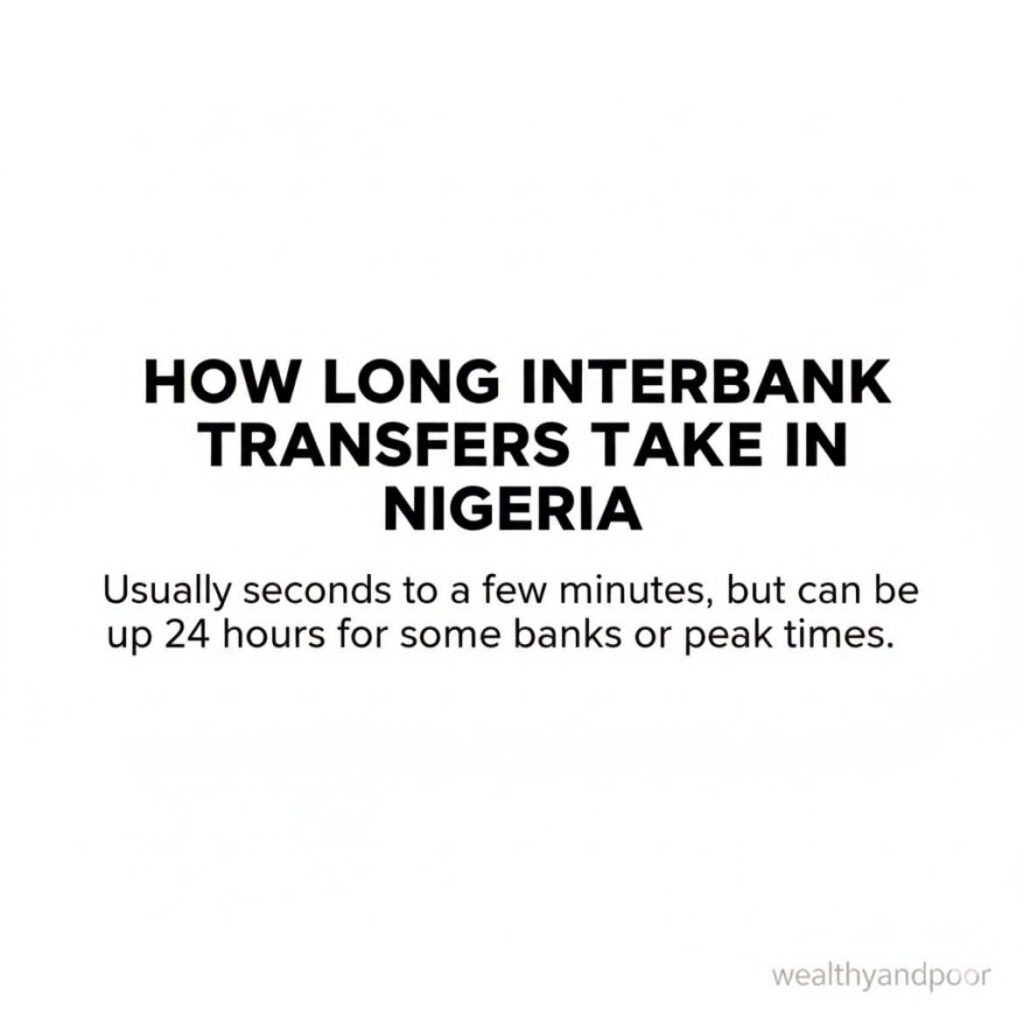

If you’ve ever sent money from your account in one Nigerian bank to another maybe paying rent, splitting bills with friends, or transferring business funds, you’ve likely asked the same question millions of Nigerians ask daily:
- “Why isn’t the money showing up yet?”
- “Did it go through?”
- “How long should this take?”
The answer isn’t a single number it depends on how the transfer is processed, the technology behind it, and even when you initiate the transaction. To understand the timelines, we need to look at both the modern systems driving interbank transfers in Nigeria and how they actually affect users.
Nigeria Has Modern Infrastructure But It Still Matters How You Transfer
The Backbone:
NIBSS and NIP
In Nigeria, most interbank transfers are executed through the Nigeria Inter-Bank Settlement System (NIBSS) and, specifically, its NIP (NIBSS Instant Payments) platform. This system serves as the central switch, connecting all commercial banks, microfinance banks, mobile money operators, and other financial institutions in the country.
Under the NIP mechanism:
Transactions are recorded instantly, When you hit “send,” the system debits your bank and credits the beneficiary’s bank’s ledger practically right away.
Banks then settle their positions later via batch processes with the Central Bank of Nigeria (CBN).
Key point : the money arrives fast from the user perspective, while settlement between banks happens behind the scenes.
What “How Long It Takes” Really Means
When people talk about transfer times, there are three distinct phases you experience:
- Authorization and Recording — Super Fast
As soon as you confirm the transfer:
Most interbank payments show as sent within seconds or a few minutes in the recipient’s account.
Nigeria’s NIP platform has reduced delays so dramatically that long waiting times are no longer the norm.
Today, thanks to ISO 20022, messaging standards and upgraded payment rails, these ledger updates can happen in milliseconds.
That’s why, for most everyday transfers, users see funds instantly or within minutes.
- Final Settlement Among Banks — A Bit Slower
Even though customers see the funds quickly, the actual settlement between banks (when banks square up their positions with the Central Bank) works differently:
Payments are cleared and settled through mechanisms such as the deferred net settlement and Real-Time Gross Settlement (RTGS) systems.
These systems run at scheduled intervals during the day often several times to manage risk and liquidity.
This settlement process commonly happens in the background, with no visible delay to customers but it is important for banks’ bookkeeping and compliance.
- Exceptions and Edge Cases When Transfers Take Longer:
While many transfers are instantaneous, practical experience shows some exceptions:
- “Pending” Transfers : Some transfers, especially around weekends or bank cut-off times, may stay in a “pending” or “processing” status for a few hours before hitting the recipient’s account.
- Methods Other than NIP — If the transfer uses older systems like NEFT (NIBSS Electronic Funds Transfer), money may take up to 24 hours or more, especially if initiated late in the banking day.
- Disputes or Investigations If banks flag a transfer for review (e.g., suspected fraud or incorrect details), resolution — including refunds can take 1 to 3 business days, and sometimes 3–5 business days in more complex cases.
- International Transfers Sending money into or out of Nigeria through SWIFT or correspondent banks typically takes 1–5 business days, due to multiple intermediaries and compliance checks.
Real Life Timelines Nigerians Experience
Based on bank support guides, customer experiences, and system behaviour:
Type of Transfer
- Instant Interbank (NIP)
Seconds to minutes
- Pending / delayed transfers
Up to a few hours
- Transfers requiring manual review
1-3 business days
- NEFT or non-instant transfers
Up to 24 hours
- International transfers
1-5 business days
Why Things Sometimes Feel Slow
Even with advanced systems, there are everyday reasons transfers don’t land immediately:
- Cut-off times
Many banks stop processing certain transfers late in the day, pushing them to the next business cycle.
- Weekends and Holidays
Banks don’t settle with the CBN outside working days — which can delay settlement reconciliations.
- Security Checks
If a transaction triggers a fraud system or anti-money-laundering check, human review may delay posting.
- System Congestion
High volumes like on payday or holidays can temporarily spike processing times.
Practical Tips for Users
Here’s what everyday Nigerians should know:
- Most transfers are instant, and if you see debit confirmation, the money usually reaches the recipient quickly.
- Keep your transfer receipt/reference code that’s crucial if you need support.
- If it hasn’t arrived in 24 hours, reach out to customer service with screenshots and reference numbers.
- Avoid initiating transfers late in the day doing it before bank cut-off times increases speed.
Conclusion
The days when interbank transfers in Nigeria lagged by days are mostly behind us. Thanks to modern payment platforms like NIBSS Instant Payments and upgrades such as ISO 20022 messaging, most transfers between banks now post in seconds or minutes.
However like any real-world system occasional delays happen. Banking cut-offs, security checks, and system batch processes mean that most transfers complete within the same business day, with the rare exceptions taking longer.











Comments