
Proof of Address Alternatives That Work
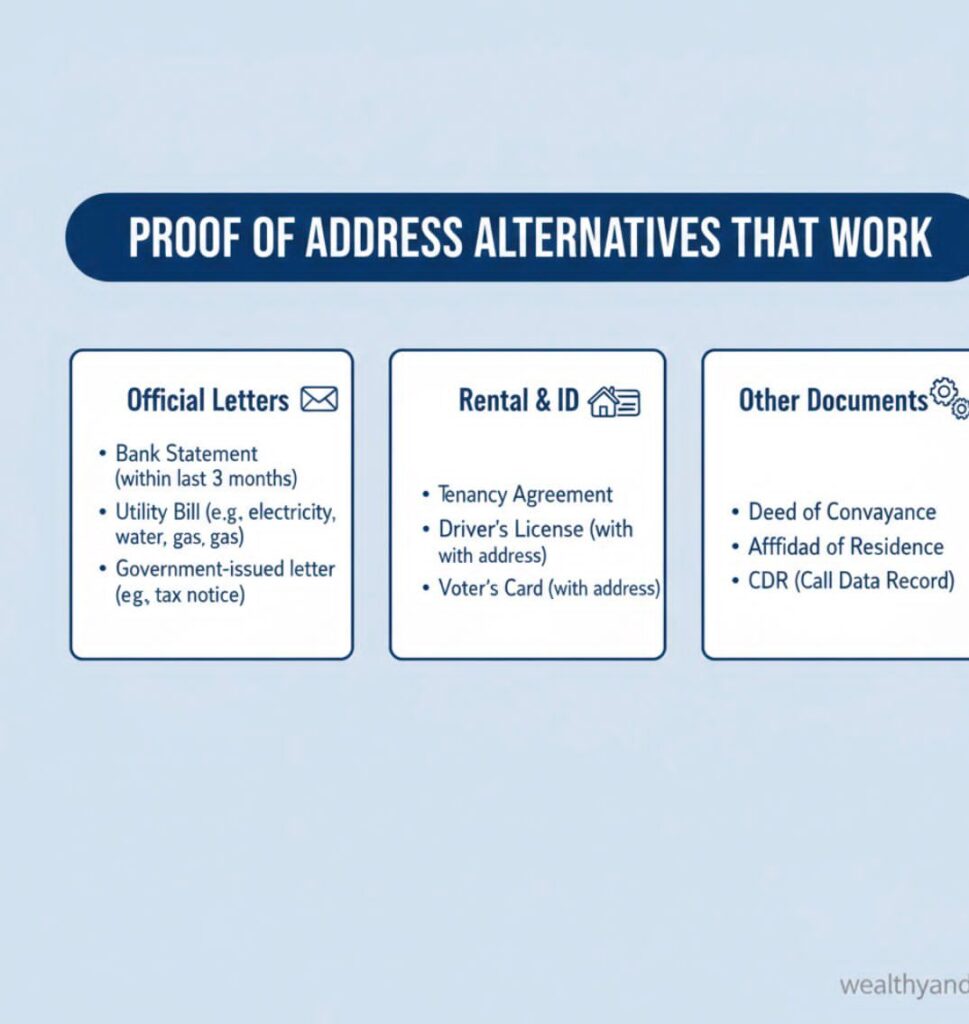

Imagine that you walk into a bank, excited to open an account, apply for a SIM card, or register for a service only to be told you need a proof of address.
You reach into your bag and all you have is a writer’s electricity bill from six months ago, and a friend’s name on the rental agreement. Suddenly, what should be simple becomes frustrating, confusing, even discouraging.
This moment is familiar to many people especially students, young professionals, renters, and anyone living in shared or informal housing. But here’s the good news: there are many legitimate alternatives to traditional proofs of address that work and they’re accepted by banks, government agencies, and service providers when presented correctly.
In this article, we’ll explore those alternatives, explain why they matter, and guide you on how to use them effectively.
What Is Proof of Address and Why Is It Required?
Before we dive into alternatives, let’s be clear on why proof of address is asked for in the first place.
A proof of address is a document that shows where you live. It helps organizations:
- Verify your identity
- Ensure accurate contact information
- Prevent fraud and identity theft
- Comply with regulations (like Know Your Customer rules in banks)
Traditional proofs include utility bills (electricity, water), tenancy agreements, or a government letter addressed to you. But not everyone has these.
So, what other documents work and under what conditions?
Bank Statements
Why They Work
Bank statements are among the most widely accepted alternatives because:
- They are official documents issued by a recognized institution.
- They show your name and address clearly.
- They are often authenticated by the bank.
How to Use Them
- Ensure the statement is recent usually within the last 3 months.
- Print it on official bank letterhead or export a PDF from your bank app.
- Highlight your address if it isn’t prominent.
Tip: If your bank allows it, request that they send the statement to your email with the bank’s digital signature for stronger validity.
Letter from Employer
Why It Works
An official letter from your workplace can serve as proof if it:
- Is on company letterhead
- Includes your full name and address
- Has a company stamp or signature
When It’s Accepted
Banks in Nigeria and many government institutions accept employer letters, especially when applicants don’t have utility bills.
It’s particularly useful for employees who live in employer-provided or informal housing.
Example:
A letter from HR confirming your residential address, signed and stamped.
Government-Issued Documents
Types of Acceptable Documents
Depending on your country and agency, these may include:
- National Identity Card with address information
- Voter’s Registration Card showing residence
- National Health Insurance (or equivalent) correspondence
- Tax documents that include your address
Why This Works
Government documents are typically seen as high-trust since they originate from official registries.
Note: Not all government IDs show current address, so make sure it clearly displays it before using it.
Letter from Local Authority or Traditional Ruler
In many parts of the world especially where formal bills aren’t common a signed letter from a local authority (e.g., village head, traditional ruler, community leader) can be used.
This is especially true in Nigeria where:
Many people live in rented or informal settlements
Traditional leaders are respected community representatives
What It Should Include
- Your full name
- Your address (written clearly)
- Signature, stamp, and official seal of the authority
- Date and purpose of the letter
Tip: Pair this with a secondary document (like ID) for stronger acceptance.
Tenancy or Rental Agreement
- Formal Rental Document
- A rental agreement is an excellent proof of address when:
- It’s signed by both landlord and tenant
- Includes address details, rental period, and signatures
- Ideally stamped or witnessed
When This Works
Most banks and official bodies accept this as legal evidence of residence.
If your rental agreement doesn’t have an address spelled out clearly, request that the landlord include it in writing.
School or University Letters
- For Students
Students without utility bills can use:
- Admission letters with residential address
- Letters from school housing offices
- Letters from department heads
Important: Make sure the letter is on official school letterhead and includes your address.
This alternative is widely accepted by banks and service providers when students prove they have no other bills.
- Digital Bills and Statements
In a Connected World
Many utilities offer digital statements that can be:
- Downloaded from an app
- Printed with official headers
- Accompanied by reference or account numbers
What Works Best
- Internet service bills
- Mobile contract bills
- Cable TV subscription statements
Some banks accept these as long as they’re official and dated within the last three months.
Utility Deposit Receipts
- When Bills Are Not Available
If you’ve just moved in and haven’t received your first bill yet, you may use:
- A recent utility deposit receipt
- A service connection letter
This works when paired with:
- A signed landlord declaration
- A secondary ID
Banks and authorities often accept this as proof of imminent or current residence.
Insurance Documents
- Accepted in Some Cases
Insurance policies health, property, auto that show your address can be used, provided:
- Your name and address are clearly visible
- The document is not expired
This is particularly useful when you have multiple valid proofs from different areas.
How to Make These Alternatives Work for You
Follow These Tips
- Always ensure the document is recent (usually within 3 months)
- Use official letterhead or digital formats with metadata
- If the document lacks an address, request an updated version
- Pair one alternative with at least one secondary ID
- Carry an original and a clear copy
When Organizations May Still Reject Documents
Even valid documents can sometimes be rejected if:
- The address isn’t clear
- The document has no official logo or signature
- It’s too old or outdated
- The issuer isn’t recognized by the requesting institution
In such cases, politely ask:
“What other proof of address will you accept?” Many institutions have published lists or alternatives.
Final Thoughts
Proof of Address Is Flexible (If You Present It Right)
Proof of address isn’t about having one magic bill. It’s about showing where you live in a clear, verifiable way. The good news is that there are many acceptable alternatives from bank statements to employer letters, school letters to local authority verification.
The key is to:
Know what the requesting institution accepts
Be ready with multiple supporting documents
Ensure everything is current, legible, and official
With the right preparation, you can turn a frustrating situation into a smooth verification process.












Comments