
Why BVN Problems Cause Bank Transfer Failures
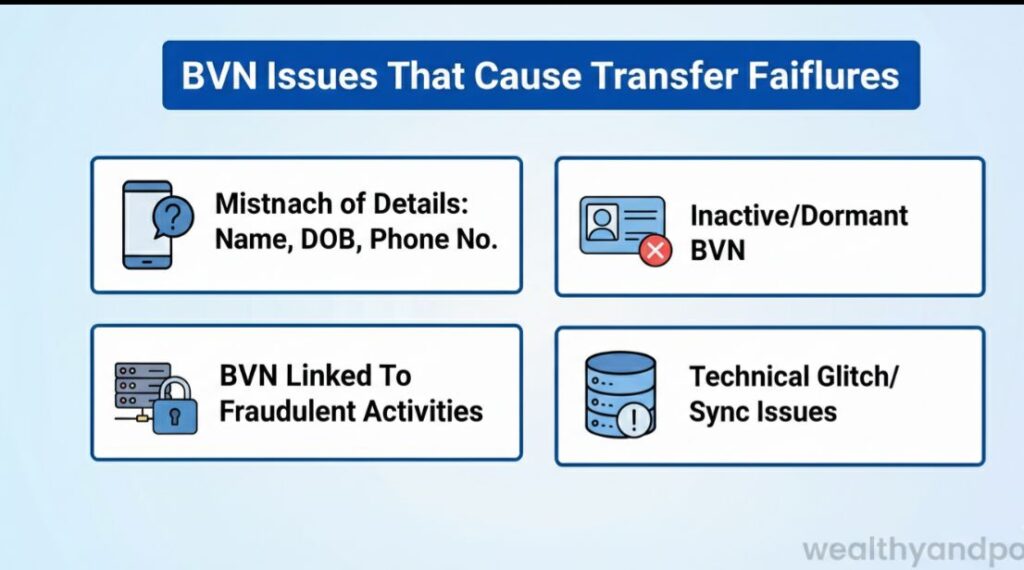

Bank Verification Number (BVN) issues are one of the most frustrating reasons Nigerians experience failed transfers, blocked accounts, or denied access to financial services.
While many Nigerians know BVN is important, fewer understand why BVN errors stop money from moving and how to correct them.
This article explains the causes, effects, and practical solutions to BVN related transfer failures in the Nigerian banking system. It also highlights how the regulatory environment and technical challenges contribute to the problem.
What Is a BVN and Why It Matters
A Bank Verification Number (BVN) is a unique 11 digit identifier issued to every bank customer in Nigeria. It was introduced by the Central Bank of Nigeria (CBN) and the Nigeria Inter-Bank Settlement System (NIBSS) to reduce fraud, protect identities, and unify banking records across institutions. Each person can only have one BVN linked to all their bank accounts and digital wallets.
Without a properly connected BVN, many banking functions including transfers above certain limits, loans, and even account activation can fail or be restricted.
Common BVN Issues That Cause Transfer Failures
Below are the main reasons BVN problems result in failed or blocked transfers in Nigeria:
- Incorrect or Mismatched Personal Details
One of the most frequent causes of BVN verification failure is when the name, date of birth, or spelling in the bank’s record doesn’t match the BVN database. Even a minor typo like a missing middle name or swapped names can lead to a failure during BVN checks.
For example:
A customer’s BVN shows Oluwaseun Adeyemi but the bank record shows O. Adeyemi.
The date of birth differs because one system recorded 05/04/1995, while another shows 04/05/1995.
These mismatches often block transfers, especially in automated systems that cross check BVN data before allowing transactions.
- BVN Not Linked to the Bank Account
Another common problem is that a customer’s BVN isn’t properly linked to one or more of their bank accounts. This often happens when accounts are opened without BVN submission, during mobile registrations, or when a BVN is registered at one bank but not updated at another.
When this linkage is absent:
The account may appear incomplete on the NIBSS or bank’s system.
Services like internet banking, mobile transfers, and high value transactions may be blocked.
- Missing or Incorrect NIN Linkage
In recent years, the CBN has mandated that bank accounts must be linked to both a BVN and a National Identification Number (NIN). Many Nigerians struggle with this because NIN registration and verification can take time, or because the name on the NIN doesn’t match the BVN. When this happens, banks may freeze transactions, including transfers.
Customers have reported long lines in banks trying to link NIN to BVN, which delays many transaction processes.
- Technical Errors and System Downtime
Sometimes BVN verification fails simply because of technical issues:
- Bank servers or the BVN database may be down
- Networks can time out due to poor internet
- Fintech apps might not connect properly to verification APIs
These glitches can show error messages like “cannot verify at this time”, or “BVN service unavailable”.
Blacklisted or Flagged BVN Status
In rare but serious cases, a BVN may be flagged or blacklisted due to suspected fraud, loan defaults, or other regulatory concerns. A blacklisted BVN might block account activity entirely, including transfers.
If this happens, the account holder usually must visit their bank to clarify the reason and request removal from the flagged list.
Phone Number Linked to BVN Issues
BVN verification often sends one time passwords (OTPs) to the phone number registered in the system. If that number has changed, been lost, or was entered incorrectly during registration, banks may not be able to send verification codes which blocks digital confirmations and transfers.
Real World Impact of BVN Related Transfer Failures
Here are a few examples of how BVN issues affect everyday life in Nigeria:
Government Payments: In Jigawa State, conditional cash transfers to pregnant women were delayed because many beneficiaries lacked BVN linkage.
Bank Crowds and Delays:
Customers have overcrowded banks, seeking help to link NIN to BVN after regulatory changes froze accounts without proper verification.
Failed Transfers and Reversals:
BVN or KYC issues are regularly cited among reasons transfers fail or are reversed in Nigeria’s banking system.
How to Fix BVN Transfer Issues: Practical Steps
Here are practical actions Nigerians can take to fix BVN problems causing transfer failures:
- Verify and Correct Your Details
- Visit your bank with valid ID (passport, national ID) and request a correction form if the BVN details are incorrect.
- Ask the bank to update the BVN database so all fields name, birth date, address, phone match exactly.
- Ensure BVN Is Linked to All Active Accounts
- Check with customer service whether your BVN is linked to each of your bank accounts and fintech wallets. Often, simply resubmitting the BVN at the branch or via mobile app fixes the issue.
- Link Your BVN to Your NIN
Make sure your BVN and NIN are linked. If you haven’t already registered for NIN, visit a NIMC center or an approved agent to get one, then provide it to your bank. - Update Your Phone Number on BVN Records
If your phone number changed since BVN enrolment, update your BVN details at your bank so OTPs and verification messages go to the right line. - Address Technical Errors Promptly
If the BVN system is down or the bank’s platform is experiencing issues, wait and retry later or contact customer support. Many problems are temporary and resolved within hours.
Conclusion
BVN issues are more than just a cosmetic inconvenience they actively prevent financial transactions from completing. Whether the fault lies in mismatched names, missing linkage to accounts and NIN, outdated phone numbers, or system glitches, the result is the same: delayed or failed transfers.
The good news is that in most cases these problems are fixable with the right documents, patience, and support from your bank. And with Nigeria’s continued push to strengthen identity verification in banking, awareness of BVN requirements will help customers avoid these pitfalls in the future.











Comments