
Why Fintech Apps Restrict Accounts
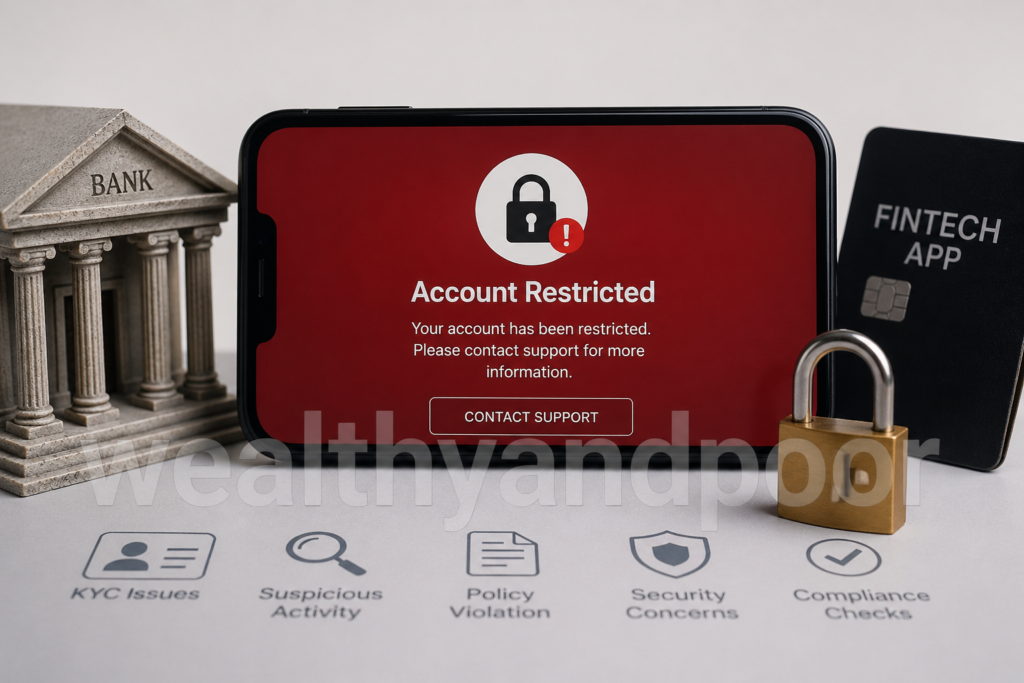

In recent years, fintech applications have transformed how millions of Nigerians send, receive, and manage money. From instant transfers to digital savings and lending, these platforms offer speed and convenience that traditional banking once struggled to match. Yet, for many users, that convenience is occasionally interrupted by an unsettling experience:
account restrictions
A fintech account may suddenly be limited, placed under review, or even temporarily frozen often with little explanation. While this can feel frustrating or unfair, these restrictions are rarely random. They are typically the result of a complex mix of regulatory requirements, risk management systems, and security protocols designed to protect both users and the broader financial system.
This article explores the real reasons fintech apps restrict accounts, especially within the Nigerian financial ecosystem.
- Regulatory Compliance and KYC Requirements
At the heart of most account restrictions lies regulation. In Nigeria, fintech companies operate under the oversight of the Central Bank of Nigeria (CBN) and other regulatory bodies. These institutions require strict adherence to Know Your Customer (KYC) and Anti Money Laundering (AML) rules.
Fintech platforms must verify user identities, monitor transactions, and ensure that accounts are not used for illegal activities. When these standards are not fully met or when additional verification becomes necessary accounts may be restricted.
For example, regulators have recently pushed for stronger identity verification measures, including biometric checks and tighter controls around phone numbers linked to accounts.
In some cases, fintech companies are even instructed to halt certain activities, such as onboarding new users, until they meet updated compliance standards.
This means that even legitimate users may face restrictions if their accounts do not meet evolving regulatory expectations.
- Fraud Prevention and Security Concerns
As fintech adoption grows, so does the risk of fraud. Nigeria’s digital payment ecosystem processes billions of naira daily, making it a prime target for cybercriminals.
To combat this, fintech apps deploy sophisticated monitoring systems that track user behavior in real time. If an account shows unusual activity such as sudden large transfers, login attempts from unfamiliar devices, or rapid transaction patterns it may be flagged automatically.
Once flagged, the safest response for the platform is often to restrict the account temporarily while investigations are carried out. This “freeze first, investigate later” approach helps prevent financial losses, even if it sometimes affects innocent users.
Recent regulatory moves, such as limiting fintech apps to a single registered device per user, are also aimed at reducing unauthorized access and account takeovers.
- Transaction Monitoring and Risk Algorithms
Unlike traditional banks that rely heavily on manual reviews, fintech companies use algorithms to assess risk at scale. These systems analyze patterns such as:
- Frequency of transactions
- Size of transfers
- Geographic location
- Account history
If a user’s behavior deviates from their usual pattern, the system may interpret it as suspicious. For instance, an account that typically handles small transfers but suddenly processes a large sum may trigger a restriction.
While efficient, these systems are not perfect. False positives where legitimate users are flagged are a known issue across the industry. However, fintech firms often accept this trade off because the cost of missing fraudulent activity is far higher.
- Incomplete or Outdated User Information
Another common reason for account restriction is incomplete or outdated user data. Fintech platforms are required to maintain accurate records of their customers at all times.
If your identification documents expire, your phone number changes, or your personal details become inconsistent with official records, your account may be flagged for re verification.
Regulators increasingly require continuous KYC, meaning verification is not a one-time process. Accounts may be reviewed periodically, especially as transaction volumes increase or regulatory rules change.
- Breach of Terms and Conditions
Every fintech app operates under a set of terms and conditions that users agree to during sign up. Violating these terms can lead to account restrictions.
Common violations include:
- Using the account for prohibited business activities
- Engaging in suspicious trading or arbitrage
- Allowing third parties to operate your account
- Attempting to bypass transaction limits
Even unintentional breaches can trigger restrictions, particularly if they resemble patterns associated with fraud or abuse.
- Regulatory Pressure and Industry-Wide Crackdowns
Sometimes, restrictions are not about individual users but about broader regulatory actions. Nigerian authorities periodically review fintech operations and may impose temporary measures on companies that fail to meet compliance standards.
These actions can affect thousands of users at once. For example, fintech firms have previously been directed to suspend certain services or tighten onboarding processes as part of system wide reforms.
While disruptive, these interventions are designed to strengthen trust in the financial system and protect consumers from risks such as data breaches and predatory practices.
- Data Protection and Privacy Safeguards
Fintech apps handle sensitive financial and personal data. Any suspicion of data misuse, unauthorized access, or system vulnerability can lead to immediate restrictions.
Research has shown that some digital lending apps have previously misused user data, prompting stricter enforcement and monitoring across the sector.
To avoid similar risks, legitimate fintech companies act quickly when anomalies are detected even if it means temporarily inconveniencing users.
Conclusion: Protection vs. Experience
Account restrictions in fintech apps often feel abrupt and poorly explained. However, they are usually rooted in a broader effort to balance security, compliance, and user protection.
The reality is that fintech platforms operate in a high risk environment where mistakes can lead to financial loss, regulatory penalties, or reputational damage. As a result, they tend to prioritize caution sometimes at the expense of user experience.
For users, the best way to avoid restrictions is to:
Keep personal information updated
Complete all verification requirements
Avoid unusual or high risk transaction patterns
Follow the app’s terms of service
As Nigeria’s fintech ecosystem continues to evolve, clearer communication and better user education will be essential. Until then, account restrictions remain an unavoidable part of a system designed to keep digital finance safe.











Comments