
What Causes Bank System Upgrades
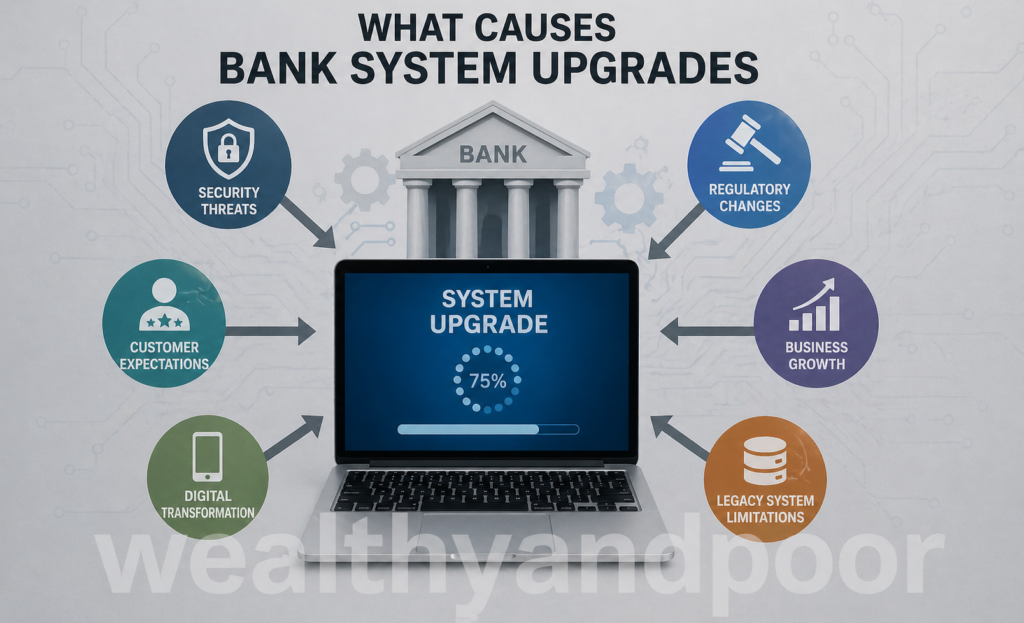

In today’s fast moving financial environment, bank system upgrades are no longer occasional technical events they are a constant necessity. From mobile banking apps to real time transfers, modern banking depends heavily on complex digital infrastructure. When these systems fall behind, banks are forced to upgrade, often leading to temporary service disruptions but long term improvements.
Understanding what causes these upgrades helps explain why customers sometimes experience delays, failed transactions, or temporary outages.
The Backbone of Modern Banking
At the heart of every bank is what experts call a core banking system the software that manages accounts, processes transactions, and stores customer data. These systems are responsible for everything from ATM withdrawals to online transfers.
Over time, however, these systems become outdated, inefficient, or unable to handle modern demands. This is where upgrades come in.
- Outdated Technology (Legacy Systems)
One of the biggest drivers of system upgrades is aging technology. Many banks still operate on systems developed decades ago, sometimes dating back to the 1970s or 1980s.
These legacy systems often:
- Struggle with modern applications
- Require manual workarounds
- Are difficult to integrate with new digital tools
As technology evolves, maintaining such systems becomes expensive and risky. Upgrading becomes the only viable option to remain competitive.
- Rising Customer Expectations
Today’s customers expect fast, seamless, and 24/7 banking services. Mobile apps, instant transfers, and real-time notifications are now standard expectations.
Banks upgrade their systems to:
- Enable real time transaction processing
- Improve mobile and internet banking performance
- Deliver better user experiences
In markets like Nigeria, the rapid growth of digital payments has intensified this pressure, forcing banks to modernize quickly to keep up with demand.
- Increasing Transaction Volumes
As more people rely on digital banking, transaction volumes have surged dramatically. Systems designed for smaller workloads can become overwhelmed.
Older systems often:
- Process transactions in batches instead of real time
- Slow down during peak periods
- Experience outages under heavy load
Upgrades help banks scale their systems to handle millions of transactions efficiently without failure.
- Security Risks and Cyber Threats
Cybersecurity is another major reason banks upgrade their systems. Older platforms are more vulnerable to attacks because they lack modern security features.
Outdated systems can expose banks to:
- Data breaches
- Fraud
- Unauthorized access
Upgrading allows banks to implement stronger encryption, better authentication systems, and improved monitoring tools, reducing overall risk.
- Regulatory and Compliance Requirements
Banks operate in a highly regulated environment. Financial authorities frequently introduce new rules related to:
- Data protection
- Transaction monitoring
- Anti-money laundering (AML)
- Customer identification (KYC)
When regulations change, banks must update their systems to comply. Failure to do so can result in fines, sanctions, or operational restrictions.
- Need for Operational Efficiency
Older systems often rely on manual processes and fragmented tools, leading to inefficiencies and higher costs.
Modern systems:
- Automate routine operations
- Reduce human error
- Improve processing speed
Upgrades help banks streamline operations, cut costs, and improve overall productivity.
- Integration with New Technologies
The financial industry is evolving rapidly with the rise of:
- Fintech platforms
- APIs (Application Programming Interfaces)
- Cloud computing
- Artificial intelligence
Legacy systems are often incompatible with these technologies. Upgrading allows banks to:
- Connect with fintech services
- Launch new products faster
- Offer innovative features
Without upgrades, banks risk falling behind more agile competitors.
- System Instability and Failures
Frequent system crashes, delays, or inconsistent performance are clear warning signs that an upgrade is needed.
Older systems may:
- Respond slowly to requests
- Fail during high traffic
- Struggle with complex operations
Such instability can damage a bank’s reputation and erode customer trust, making upgrades unavoidable.
- Cost of Maintenance
Maintaining outdated systems can be more expensive than replacing them. These systems often:
- Require specialized skills to manage
- Need constant patching and fixes
- Depend on shrinking pools of experienced engineers
Over time, the cost of maintaining legacy infrastructure outweighs the cost of upgrading, pushing banks toward modernization.
- Business Growth and Expansion
As banks grow, they introduce new products, enter new markets, and serve more customers. Older systems may not support this expansion.
Upgrades enable:
- Scalability
- Flexibility for new services
- Better data management across multiple channels
Without system upgrades, growth becomes limited and inefficient.
Why Upgrades Often Cause Disruptions
While upgrades are necessary, they are complex and high risk operations. Banks must:
- Migrate massive amounts of data
- Integrate new systems with existing ones
- Ensure uninterrupted service
Even small errors can lead to temporary service failures, which is why customers sometimes experience delays during upgrade periods.
However, these short term inconveniences are usually the trade-off for long-term improvements in speed, security, and reliability.
Conclusion
Bank system upgrades are not random they are driven by a combination of technological, operational, and regulatory pressures. From outdated systems and rising customer expectations to cybersecurity risks and rapid digital growth, banks must continuously evolve their infrastructure.
For customers, understanding these causes provides useful context: when a banking app goes down or a transfer is delayed, it is often part of a larger effort to build a faster, safer, and more efficient financial system.












Comments