₦58.472tn Spending Plan Under Scrutiny as Senate Questions Oil Revenue Assumptions
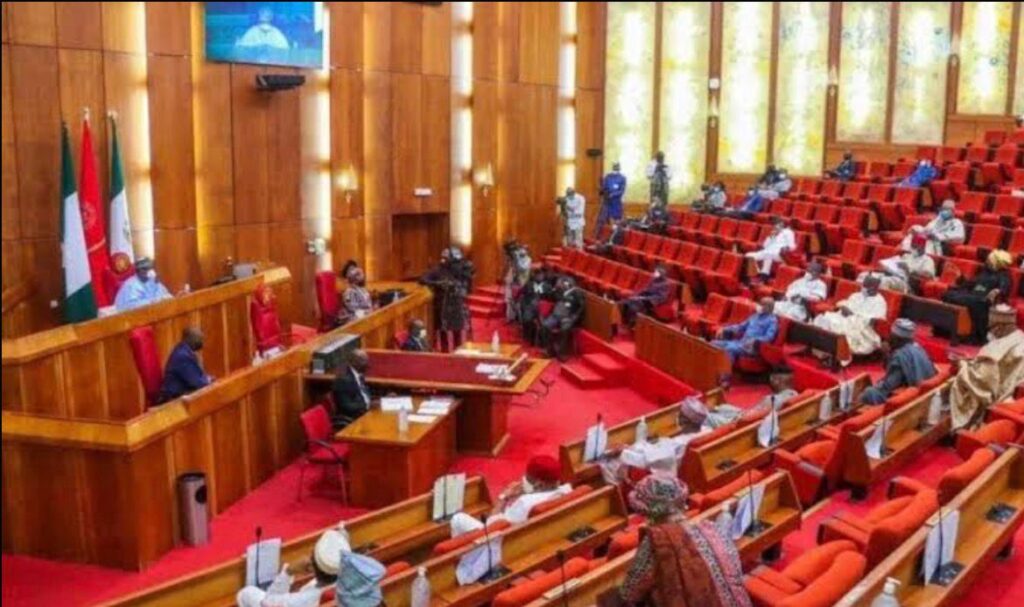

Nigeria’s Senate has signalled serious resistance to the federal government’s proposed ₦58.472 trillion 2026 Appropriation Bill, raising concerns that key assumptions underpinning the spending plan are unrealistic and could deepen fiscal strain if left unchanged.
Major criticisms centre on inflated revenue forecasts, weak oil revenue projections, rising debt costs, and persistent implementation failures prompting lawmakers to warn that parts of the budget may be trimmed or revised before approval.
Key Issues Driving the Senate’s Position
- Unrealistic Revenue Assumptions
The Senate Committee on Appropriations, led by Senator Solomon Olamilekan Adeola, has repeatedly challenged the credibility of projected revenues underpinning the 2026 budget. Lawmakers highlighted a widening gap between projected and realised oil revenue figures, with past performance far below expectations.
Senator Adeola noted that actual oil revenue performance sometimes reached only 18 % in one year, yet projections have been set at 36.5 % in the 2026 framework figures that many legislators deem overly optimistic given historical patterns.
- Poor Budget Implementation Track Record
In the interactive session with the federal economic team, lawmakers pressed officials on chronic delays and low releases of capital funds to Ministries, Departments and Agencies (MDAs). Persistent slow capital spending has weakened confidence in the government’s ability to execute ambitious plans embedded in the new budget.
The Senate emphasised that implementation issues in the 2024 and 2025 budgets many still unresolved cast doubt on the feasibility of the larger 2026 plan. The Committee set a deadline of March 31, 2026 for completion of remaining capital releases from previous budgets.
- Debt Burden and Fiscal Sustainability
Beyond revenues, senators expressed deep concern about Nigeria’s rising public debt estimated at around ₦152 trillion and the growing share of government revenue consumed by debt servicing. Lawmakers warned that approving a large budget with “stretch”revenue assumptions could worsen fiscal pressures, especially if borrowing remains necessary to bridge gaps.
Reactions from the Economic Team
- Finance Ministry’s Defence
The Minister of Finance and Coordinating Minister of the Economy, Wale Edun, defended the assumptions, describing some targets such as the 1.84 million barrels per day oil production benchmark as “stretch targets” meant to incentivise performance improvements rather than guaranteed outcomes.
Edun also pointed to positive economic signals including moderate GDP growth and renewed investor interest as reasons for optimism, though these were not enough to fully reassure sceptical senators.
Revenue Service Acknowledges Implementation Constraints
The Chairman of the Nigeria Revenue Service (NRS), Dr. Zacch Adedeji, agreed with lawmakers that unrealistic forecasts are a major factor hindering effective implementation. He argued that budget efficiency lies not in size but in what can actually be implemented, stressing that planning around inflated figures can distort fiscal execution.
Adedeji also explained that under the Petroleum Industry Act framework, the government now earns revenue primarily from taxes and royalties rather than gross oil sales an important distinction that affects how oil revenue is realised in practice.
Assurances on Capital Spending
The Minister of State for Finance, Dr. Doris Uzoka-Anite, assured the Senate that the outstanding 30 % capital components for the 2024 and 2025 budgets will be completed by the end of March 2026, and directed MDAs to upload cash plans to trigger disbursements.
What This Means for the 2026 Budget Outlook
Faced with these criticisms, Senate leaders have not agreed to approve the budget as presented. Instead, they are considering revisions that would align spending plans with realistic revenue projections, credible implementation mechanisms, and long-term fiscal sustainability.
Several senators suggested options such as:
- Trimming the overall budget size to align with more conservative revenue outlooks.
- Selling strategic assets to reduce debt pressure and borrowing costs.
- Strengthening execution frameworks to ensure capital funds are spent effectively.
Conclusion
The Senate’s pushback against the proposed ₦58.472 trillion 2026 budget reflects growing concern among lawmakers about Nigeria’s fiscal trajectory. With questions over revenue assumptions, implementation record, and debt sustainability, the legislature is asserting its role in ensuring that national budgets are credible, realistic, and implementable. The coming weeks are likely to see further negotiations and possible adjustments before the budget is finally passed into law.







Comments