Breaking: FG Approves ₦367.9bn Loan for Lafia–9th Mile–Makurdi Road
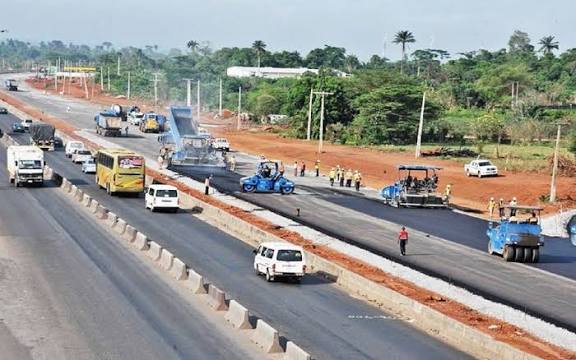

In a clear signal of renewed fiscal focus on critical infrastructure, the Federal Government has earmarked a N367.9 billion multilateral and bilateral loan in the proposed 2026 Appropriation Bill to accelerate the construction and dualisation of the Lafia Road and 9th Mile–Otukpo–Makurdi corridor. The allocation stands as one of the largest externally financed line items in the Federal Ministry of Works’ budgetary profile for the year.
The details, outlined in the budget document submitted alongside President Bola Tinubu’s N58.47 trillion national budget proposal, describe the financing as tied to lenders outside Nigeria, reflecting a strategy that blends domestic allocation with external borrowing for capital-intensive highway projects.
Strategic Importance of the Lafia–Makurdi Corridor
The road project, coded ERGP12234171, links Lafia, the capital of Nasarawa State, to the 9th Mile–Otukpo–Makurdi route — a key transit corridor connecting the North-Central and South-East regions. Covering a strategic stretch of highway that supports trade flows across multiple states, the route has long been highlighted by transport economists, traders, and logistics operators as crucial for reducing travel time and transport costs between major agricultural and industrial zones.
The allocation’s size also marks a shift from previous budget practices that struggled to match ambitious infrastructure targets with limited domestic funding. In contrast, the 2026 Ministry of Works capital allocation itself totals N3.49 trillion, with N3.44 trillion directed towards capital projects nationwide — a figure that dwarfs previous years’ provisions and underscores the priority placed on road assets.
A senior official within the Ministry of Works, who spoke on condition of anonymity, said:
“The external funding component for this project allows us to fast-track the dualisation of the corridor without necessarily diverting huge sums from other priority sectors. Our revenues simply cannot meet all the needs this year.”
Complementary Road Investments in 2026
While the Lafia–Makurdi allocation commands attention due to its scale, it is one among many significant road infrastructure commitments in the 2026 budget. Other major corridors funded through the Ministry of Works include:
- Dualisation of the Kano–Katsina Road (Phase II) – N52.5 billion
- Phase I of Kano–Katsina dualisation – N23.8 billion
- Kano–Maiduguri Road (Section I) – N13.3 billion
- Reconstruction of the Ikorodu–Itokin Road in Lagos – N12.6 billion
- Reconstruction of the Abuja–Lokoja Road (Zuba–Abaji) – N7.7 billion
Independent estimates suggest the 2026 road sector funding could reach N3.23 trillion, a near-threefold increase over 2025 allocations, reflecting growing prioritisation of transport networks as key drivers of economic performance.
Economic and Social Impacts
Economists and transport experts generally agree that improved roads have multiplier effects on the economy: lowering freight costs, stimulating agricultural market access, attracting private investment, and enhancing mobility for citizens. The Lafia–Makurdi dualisation, once completed, is expected to reduce travel times substantially, bolster trade traffic between north and south, and support local industries that depend on efficient supply chains.
Outlook and Implementation Challenges
As the budget awaits legislative approval, stakeholders across industry, civil society, and government will watch closely how the Lafia–Makurdi corridor project is financed and implemented. Given its scale and strategic importance, successful execution could set a precedent for similar loan-backed infrastructure initiatives in future fiscal years.
With Nigeria’s broader strategy focused on expanding its $1 trillion economy target and enhancing ward-based development, transportation infrastructure like the Lafia–Makurdi dualisation remains central to achieving sustainable economic transformation.





Comments