
FT Investigation Exposes $90bn Russian Oil Smuggling Network Tied to Nearly 50 Entities
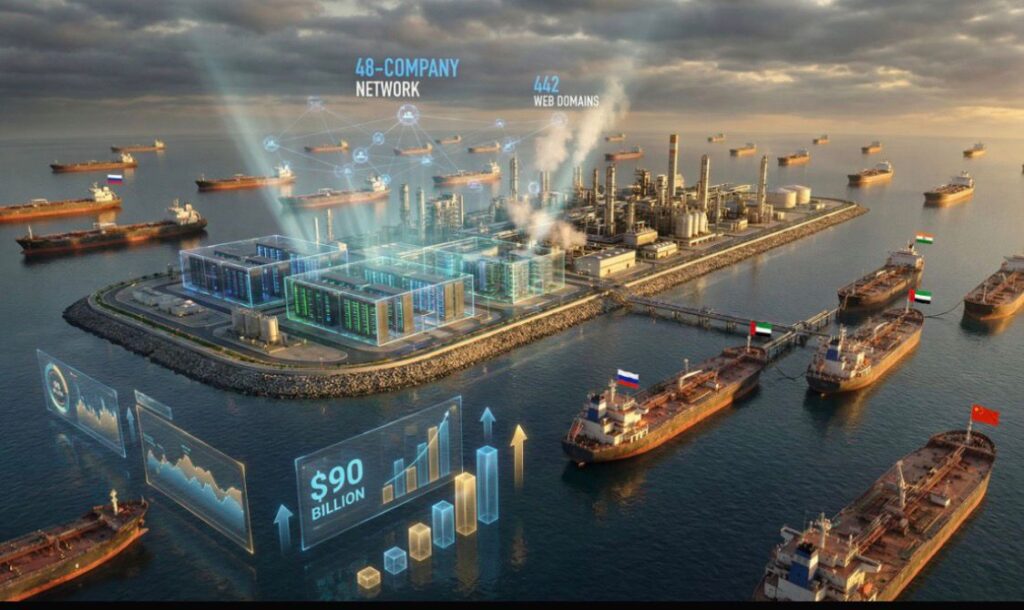

In a landmark investigative report, Financial Times (FT) has uncovered a sprawling $90 billion Russian oil smuggling network involving almost 50 seemingly independent companies that helped disguise the origin of Russian crude and evade international sanctions.
This revelation has aroused global concern among policymakers, financial regulators, and energy markets watchers, given the size, sophistication and implications of the operation on energy security and sanctions effectiveness.
How the Smuggling Network Was Uncovered
According to the FT investigation, an IT error involving the use of a shared private email server tipped investigators to a hidden network of traders working in concert to obscure the true origin of Russian oil exports.
The key breakthrough came when FT analysts identified 442 web domains linked to the same email infrastructure, “mx.phoenixtrading.ltd,” despite the companies being registered at different addresses and appearing unrelated on the surface.
By matching domain names to firms appearing in both Russian and Indian customs records, FT was able to trace 48 companies that collectively handled at least $90 billion of Russian crude oil exports a figure that is likely conservative given incomplete filings.
Players, Structures and Geography
The companies in the network are spread across multiple jurisdictions many based in the United Arab Emirates and were often short lived, existing only for a few months before being dissolved and replaced by new entities.
Notable named entities include:
- Redwood Global Supply FZ LLC – identified as the largest exporter within the network after major Russian producers were sanctioned.
- Foxton FZCO – a Dubai entity shown in customs filings as handling billions in oil exports.
- Advan Alliance – linked with $1.5 billion in crude exported to India.
Azerbaijani businessmen with historic ties to Russia’s state-controlled oil giant Rosneft were also revealed to be central figures in the network, operating trading companies such as Coral Energy.
Sanctions, Evasion and the “Shadow Fleet”
The network became particularly active after Western sanctions on Rosneft and Lukoil (Russia’s two largest oil exporters) were imposed in October 2025.
By routing crude through third-party entities, traders made it extremely difficult for authorities to measure true transaction prices or trace the oil’s origin effectively undermining sanctions regimes and oil price caps designed to curb Russian revenue streams.
The network was also associated with what analysts call a “shadow fleet” privately controlled oil tankers used to ferry sanctioned crude across the globe in ways that avoid typical maritime tracking.
Policy Implications and Global Response
Officials from the UK and European Union have already added several of the network’s companies and individuals to their sanctions lists.
European and UK authorities have signaled plans for expanded sanctions and enforcement measures, given that these entities have made it “nearly impossible” to enforce existing price controls on Russian crude.
A senior EU sanctions envoy told FT that the findings could serve as evidence to support further penalties a sign that global cooperation on financial and trade enforcement may intensify.
What This Means for Global Energy Markets
This network’s exposure shows how sophisticated trade and finance mechanisms can be used to undermine sanctions, shifting oil flows around the globe while obscuring origin, ownership and pricing. The scale nearly $90 billion in exports suggests that sanctioned oil may still be reaching major markets, potentially stabilizing Russian revenues despite punitive measures.
For Nigeria and other oil producing nations, the case highlights broader vulnerabilities in global energy markets where illegal or opaque channels can distort pricing, supplies, and enforcement of international rules.
Conclusion
The FT’s investigation into this intricate and opaque oil network marks a significant moment in global energy journalism and sanctions enforcement. As policymakers and regulators digest these findings, the coming months may see fresh legal actions, expanded sanctions, and more stringent cross border cooperation aimed at preventing similar schemes from subverting global finance and trade norms.




Comments