
Lagos State Engages Firms to Drive Multi-Billion Naira Infrastructure Asset Valuation


Lagos State has taken a decisive step to professionalize and modernize how it accounts for and manages its public infrastructure by appointing a team of seven consultancy firms to undertake a comprehensive valuation of its government-owned assets across the state. The Lagos State Government, through the Lagos State Valuation Office (LASVO), formally received the lead consultant and the wider consulting team in its Alausa headquarters, signalling the launch of a major exercise that reflects a deepening commitment to international financial reporting standards.
The valuation initiative forms part of the eighth phase of Lagos’ long-running implementation of the International Public Sector Accounting Standards (IPSAS) on an accrual basis — a reform the state has pursued consistently since 2016. Under an accrual accounting regime, assets must be recognized on the balance sheet and valued in accordance with global best practices, a departure from traditional cash-based reporting that has often obscured the true scale and condition of public holdings.
By undertaking this valuation, Lagos is positioning itself at the forefront of fiscal transparency and public financial management among sub-national governments in Nigeria.
According to Dr. Adekunle Awolaja, Director of LASVO, the exercise will meticulously identify, measure, document and report on all public infrastructure assets owned by the state. Data collected will not only be used for accounting purposes but will be uploaded into a centralized government assets database, ensuring that every road, bridge, jetty, canal and other critical infrastructure can be easily monitored, managed and leveraged for strategic planning.
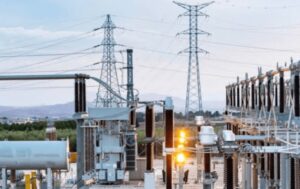
The scale of the assignment is significant. Lagos has hundreds of kilometres of roads at various stages of construction, numerous transport facilities overseen by agencies such as the Lagos Metropolitan Area Transport Authority (LAMATA), and critical infrastructure spanning energy, waterfront development and more. By establishing a clear and accurate valuation of these assets, the state aims to enhance its capacity for financial planning and strengthen its negotiating position with insurers, investors and development partners.
Crucially, the valuation process sits against a broader fiscal agenda in Lagos aimed at expanding internally generated revenue and monetizing public assets. The state government has outlined ambitions to unlock significant revenue streams by documenting and integrating previously unrecorded assets into the formal economic system. Recent reporting indicates that Lagos is targeting revenues in excess of N4 trillion for its 2026 budget through improved asset management and monetisation, with infrastructure valuation playing a core role in achieving these targets.
Beyond revenue projection, the valuation also promises to improve accountability and investor confidence. Assigning transparent and internationally recognized values to public infrastructure will support public sector borrowing, negotiating credit facilities, and partnering with the private sector on public-private initiatives.
It will also enable better maintenance planning, reduce the risk of asset deterioration, and provide policymakers with reliable baseline data for future capital budgeting cycles.
The inclusion of multiple ministries, departments and agencies in the exercise underscores its inter-agency complexity.
Collaboration between infrastructure, transport, energy and planning authorities ensures that assets of diverse types and uses are captured comprehensively. This multi-sectoral engagement reflects an understanding that accurate asset valuation is key to integrated urban development planning and sustainable service delivery across a megacity that continues to grow rapidly.
By embarking on this extensive valuation, Lagos State is reinforcing its reputation as a trailblazer in public sector financial reform. The initiative not only aligns Lagos with international accounting standards but also provides a blueprint for other states in Nigeria seeking to modernise their financial reporting, strengthen governance and unlock the full economic potential of public assets.










Comments