
NCS Responds to Rate Speculation: Central Bank Sole Authority on Cargo Valuation Exchange Rate


The Nigeria Customs Service (NCS) has issued a definitive clarification on the process for determining foreign exchange rates used in cargo clearance and valuation, dismissing widespread speculation that the agency independently sets or manipulates these rates.
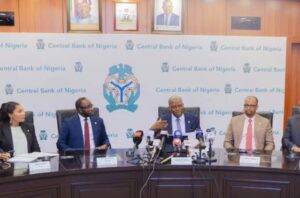
According to the official statement, the Central Bank of Nigeria (CBN) remains the sole authority responsible for fixing the exchange rates applied to cargo duty and tariff calculations across Nigerian ports.
This clarification comes amid growing public debate and confusion after a widely circulated figure ₦1,451.63 per US dollar was being referenced in trader discussions as the rate used by Customs to assess import duties on February 6, 2026. The NCS said that figure did not originate from its systems and stressed that all applicable rates come directly from the Central Bank.

Official Statement from Nigeria Customs
In a statement issued on Monday, 17 February 2026, the NCS, through its National Public Relations Officer, Abdullahi Maiwada, clarified that:
The Service does not independently determine, generate, or modify foreign exchange rates used in cargo valuation.
All exchange rates applied in its digital clearance platform known as B’Odogwu are electronically transmitted by the Central Bank of Nigeria.
The NCS emphasised that the B’Odogwu system, a Unified Customs Management System, receives official exchange rate feeds directly from the CBN, which are then automatically applied nationwide without manual intervention.
“For the avoidance of doubt, the Nigeria Customs Service does not independently determine, generate, alter, or apply margins to foreign exchange rates used for import and export valuation,” the statement said.
Why This Matters for Importers and Traders
The clarification is significant because the choice of exchange rate directly affects:
- Customs duty calculation
- Cargo clearance costs
- Import pricing and supply chain planning
In recent weeks, some traders and industry commentators mistakenly linked shifts in forex values to Customs actions, creating unnecessary uncertainty and complaints. With the NCS restating that it does not “fix” or adjust rates, market participants can now rely on the official CBN determined figures as the basis for duty and tariff expectations.
About the B’Odogwu Platform
B’Odogwu is the official digital system used by the NCS for declarations, valuation, and cargo clearance. Designed to modernise operations and reduce manual errors, the platform ensures that all data input including forex rates adheres to statutory requirements and national monetary policy.
The NCS said it is also working with the CBN to enhance real time data integration via API linkages, which will further improve operational reliability and transparency in Forex rate transmission.
Addressing Misleading Figures and Legacy Systems
Customs clarified that the ₦1,451.63/US$ figure widely circulated in online discussions came from trade.gov.ng, a public trade portal that does not provide real time Customs processing data. The Service stressed that its official systems do not source data from that legacy portal.
It also pointed out that the National Integrated Customs Information System (NICIS) is not used for live clearance and valuation data, reinforcing that B’Odogwu is the single source of truth for modern Customs operations.
What Industry Stakeholders Should Know
- The Central Bank of Nigeria (CBN) is responsible for setting and transmitting the official foreign exchange rates.
- The Nigeria Customs Service (NCS) applies these CBN-determined rates automatically within the B’Odogwu system.
- Customs cannot and does not modify or apply margins to forex figures for import and export valuation.
- Users of outdated portals or legacy systems may encounter inaccurate figures that do not reflect actual customs valuation practices.










Comments