
Nigeria’s Capital Inflow Mix Raises Red Flags Over Structural Economic Risks


The Centre for the Promotion of Private Enterprise (C .P .P. E) has raised a stark warning that the current structure of capital flows into Nigeria’s economy remains fragile and exposes the country to significant economic risks, even as headline figures show improving investor confidence.
According to the latest analysis by the think tank, the surge in capital importation recorded in the third quarter of 2025 rising to US$6.01 billion masks underlying structural vulnerabilities in the quality, distribution and sustainability of these inflows.
Headline Growth, But Risky Composition
Data from the National Bureau of Statistics (NBS) shows that capital importation into Nigeria jumped sharply in Q3 2025, representing a 380% year-on-year increase from the same period in 2024 and a 17% quarter-on-quarter growth.
While this rebound has been welcomed by investors and policymakers as a sign of macroeconomic stabilization following reforms in foreign exchange policy and tighter monetary policy, CPPE insists the quality of inflows is critically important.
The think tank points out that more than 80% of these capital inflows were portfolio investments short-term funds that chase higher returns rather than long-term commitments to real economic activity. Meanwhile, foreign direct investment (FDI) accounted for less than 5% of total inflows.
Structural Weaknesses and Economic Risk
- Portfolio Dominance and Volatility
CPPE highlighted a major concern that portfolio investments, though helpful in providing short term liquidity, are highly volatile and prone to sudden reversals if global interest rates or investor sentiment shift sharply, which could disrupt exchange rate stability and external reserves.
- Weak FDI and Productive Sector Investment
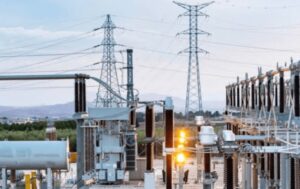
FDI remains low relative to portfolio flows, signalling persistent structural problems such as unreliable power supply, poor infrastructure, weak logistics efficiency, and unpredictable regulatory environments that deter deeper investment in manufacturing, technology, and real production.
According to CPPE, without stronger inflows into production, infrastructure, agro-processing, logistics, and export-oriented industries, Nigeria risks a recovery driven by financial markets alone rather than productive economic expansion.
Concentration Risks in Capital Flows
CPPE also flagged external concentration risks, noting that a large share of foreign investment comes from a few countries, exposing Nigeria to external shocks, geopolitical uncertainty, and policy changes in global markets.
Additionally, most of the capital is intermediated through a limited number of financial institutions, creating potential transmission risks if any key intermediary faces stress or abrupt withdrawal of funds.
Implications for Economic Transformation
Analysts and CPPE leaders argue that the current pattern of capital inflows reflects cyclical financial recovery rather than meaningful structural transformation. Though portfolio inflows have buoyed market activity, they have not translated into job creation, export diversification, or expanded productive capacity essential components of sustainable and inclusive economic growth.
Financial deepening, while important, cannot compensate for a lack of investment in real sectors that generate employment and long-term productivity growth.
Recommended Policy Actions
To mitigate these risks and strengthen Nigeria’s capital flow architecture, CPPE has recommended:
- Strengthening structural reforms aimed at improving power supply, transport, logistics, and regulatory predictability.
- Incentivising long-term investments into manufacturing, agro-processing, infrastructure, and export-oriented sectors.
- Diversifying sources of capital by engaging with Gulf sovereign wealth funds, Asian institutional investors, and intra-African capital under the AfCFTA framework.
CPPE argues that unless portfolio-like inflows are converted into FDI-led industrial expansion, Nigeria’s rebound in capital importation will remain superficial, leaving the economy exposed to volatility and limiting the potential for broad-based growth.
As Nigeria Looks Ahead
The discourse around capital flows underscores a critical policy challenge for Nigeria’s economic managers: balancing short-term liquidity with long-term productive investment. As the nation seeks to consolidate macroeconomic gains, structural reforms and diversified investment strategies will be central to sustainable economic transformation.










Comments