
Nigeria’s Capital Market Surges to N123.93trn, Drives One-Third of GDP
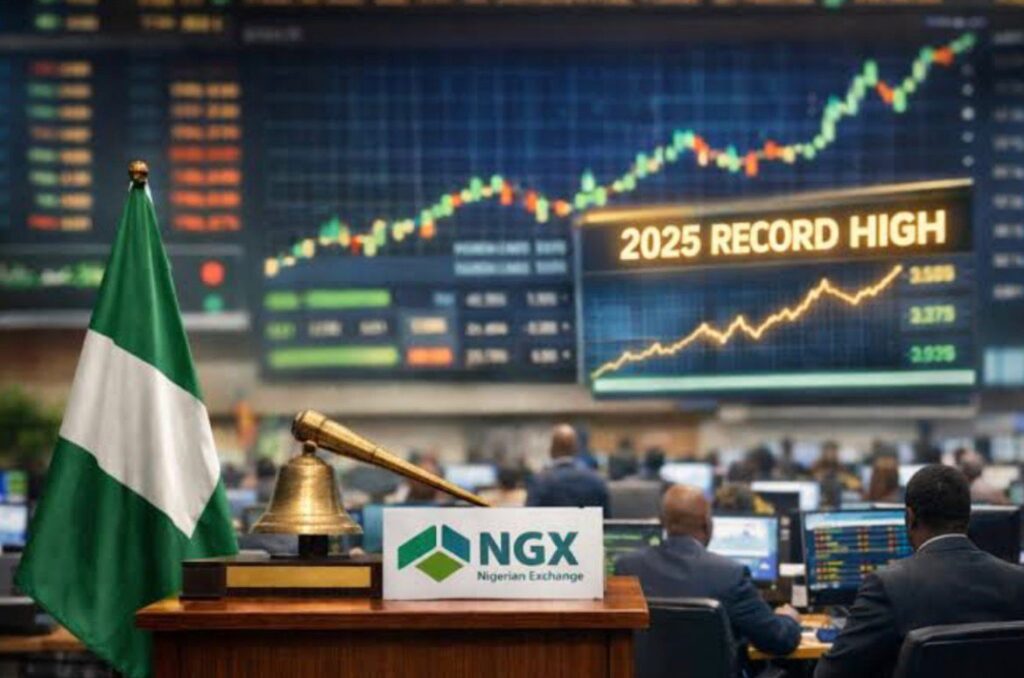

Nigeria’s capital market has achieved an extraordinary milestone, with total market capitalisation surging to N123.93 trillion, driving the sector’s contribution to national economic output to about 33 per cent of Gross Domestic Product (GDP).
The Securities and Exchange Commission (SEC) disclosed the latest figures, noting the remarkable performance reflects renewed investor confidence and market resilience under recent reforms.
Record Jump in Market Capitalisation
Data released by the SEC shows that Nigeria’s total capital market value more than doubled from roughly #55 trillion in April 2024 to over N123.93 trillion representing an impressive 125 per cent growth in market size over a 23- month period.
This surge has translated into a dramatic rise in the capital market’s share of GDP, growing from just 13 per cent to approximately 33 per cent, signalling the market’s expanding role in financing the economy.
What’s Driving the Growth?
According to SEC Director-General Dr. Emomotimi Agama, the recent expansion reflects both domestic and international investor interest and confidence. Speaking at the inauguration of the Capital Market Working Group on Market Liquidity in Lagos, Agama described the figures as historic while cautioning that size alone is not enough.
He explained that while the market’s valuation and GDP contribution showcase strong momentum, deepening liquidity and structural reforms remain crucial if the market is to sustain and build on this growth.
Challenges and Structural Focus
Despite the headline figures, the SEC chief warned that liquidity continues to lag, which could dampen long-term progress if not addressed. Key challenges include:
- High transaction impact costs affecting institutional participation.
- Concentration of trading activity in a handful of highly capitalised stocks.
- Concerns about investors’ ability to exit positions without price distortion.
These issues highlight that although the market is large, it is not yet as deep or efficient as it could be factors that influence overall participation and investor confidence.
Steps Toward Broader Participation
To tackle these structural constraints, the SEC has established a multi stakeholder Working Group composed of market operators including exchanges, custodians, fund managers and dealing members. The group’s mandate focuses on:
- Reviewing trading and settlement infrastructure.
- Identifying technical bottlenecks slowing transaction speed.
- Enhancing liquidity and price discovery mechanisms.
- Proposing strategies to expand retail investor participation.
Part of this push involves onboarding up to 20 million new investors through digital platforms, dematerialised share certificates and partnerships with fintech firms, reflecting the SEC’s ambition to broaden the market base and promote inclusivity.
Regulatory and Product Innovation
The recently enacted Investments and Securities Act (ISA) 2025 has further expanded the SEC’s regulatory oversight to include digital assets, offering opportunities to channel speculative capital into productive and regulated investment avenues.
Dr. Agama underscored that product innovation such as the development of derivatives and new asset classes will be central to boosting liquidity and deepening market participation across investor categories.
Strategic Importance to the Economy
Beyond valuation and GDP share, the capital market plays a vital role in financing infrastructure projects, supporting businesses and creating jobs. Agama described the capital market as more than a trading venue, but “the engine of national development” that underpins long-term economic growth.
This growth milestone comes at a time when Nigeria is seeking to diversify funding sources beyond traditional banking and oil revenues, giving both government and private sectors additional channels for accessing long-term capital.
Looking Ahead
While the 33 per cent GDP contribution and near N124 trillion valuation are strong indicators of progress, stakeholders emphasise that the real test will be how effectively liquidity and structural depth are improved over the medium term.
With reforms underway including infrastructure upgrades, regulatory enhancements and investor expansion strategies the Nigerian capital market is positioning itself to become a deeper, more inclusive and globally competitive investment sphere.










Comments