
Organised Private Sector Welcomes MPR Cut, Urges Government to De-Risk Business Environment


In a significant development for Nigeria’s economy, leaders of the Organised Private Sector (OPS) and key industry stakeholders have welcomed the Central Bank of Nigeria’s (CBN) decision to reduce the Monetary Policy Rate (MPR) while calling on the federal government to strengthen efforts to de-risk the business climate and stimulate growth.
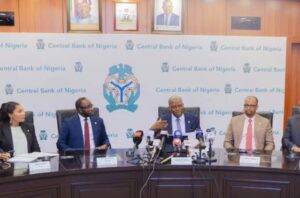
The Monetary Policy Committee (MPC) of the apex bank on Tuesday voted to lower the benchmark MPR by 50 basis points from 27 percent to 26.5 percent at its 304th meeting in Abuja, signalling a cautious shift from prolonged monetary tightening to measured support for economic activity.
A Cautious but Positive Step
Stakeholders across the private sector described the reduction as a welcome signal, reflecting improving macroeconomic fundamentals and growing confidence in Nigeria’s disinflation trajectory. The Nigeria Employers’ Consultative Association (NECA) called the cut “a cautious but noteworthy signal” that authorities are responding to sustained pressures on businesses.
Similarly, the Centre for the Promotion of Private Enterprise (CPPE) applauded the MPR adjustment as growth-supportive and confidence-boosting, noting that it reflects a gradual pivot from aggressive tightening toward an environment that better supports investment and private-sector expansion.
Urgent Call to De-Risk the Economy
While welcoming the rate decision, private-sector leaders emphasised that Nigeria’s business environment still presents significant structural challenges. Analysts and CEOs pressed the government to complement monetary easing with broader reforms aimed at reducing risks to business growth.
Chief among the concerns is the high cost of credit. Despite the MPR reduction, elevated commercial interest rates and high cash reserve requirements could continue to restrict access to affordable financing for manufacturers, SMEs, and exporters. This poses a barrier to scaling operations and creating jobs across key sectors like agro-processing, manufacturing, technology, and logistics.
Private-sector representatives, such as the President of the Abuja Chamber of Commerce and Industry (ACCI), emphasised that improved access to credit is critical for real sector expansion, investment, and sustainable growth.
Broader Reforms Needed
Leaders at organisations like NECA and CPPE stressed that monetary policy alone is not enough. They urged stronger coordination between fiscal and monetary authorities to expand credit flows, enhance infrastructure, and tackle supply-side bottlenecks.
This includes actions such as:
- Improving the ease of doing business through regulatory reforms.
- Boosting investment in critical infrastructure, logistics, and power supply.
- Enhancing policy predictability to attract both domestic and foreign investment.
- Reducing excessive borrowing costs for SMEs and growth-oriented industries.
What This Means for Businesses
For many business owners and investors, the MPR cut sends a confidence signal that Nigeria is gradually transitioning to a more stable and growth-oriented monetary stance. However, stakeholders remain cautious, noting that the full benefits of lower interest rates will only materialise if the government delivers complementary reforms that improve credit availability, address infrastructure deficits, and strengthen economic resilience.
Organisations also highlighted the importance of maintaining a balance between fighting inflation and supporting real-sector growth, stressing that job creation and investment will depend on sustained policy improvements across multiple fronts.
Conclusion
The organised private sector’s reception of the CBN’s MPR reduction reflects a measured optimism. While the rate cut is seen as a positive development in the context of disinflation and stability, business leaders are clear that policy consistency, risk reduction, and structural reforms must follow to unlock Nigeria’s full economic potential.











Comments