
Port Harcourt Refinery Nears Completion at 90%, Set for Possible Restart Within One Week – PENGASSAN
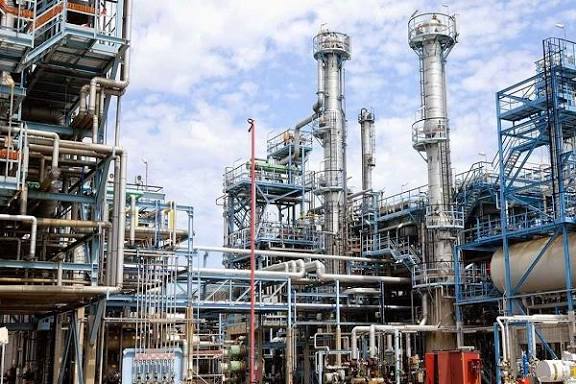

Nigeria’s Port Harcourt Refinery has taken a significant step towards revival, with rehabilitation works now about 90 per cent complete and the facility reportedly ready to restart within one week if the nation’s national oil firm gives the go-ahead, according to the Petroleum and Natural Gas Senior Staff Association of Nigeria (PENGASSAN).
Festus Osifo, PENGASSAN president, disclosed this development during an appearance on Channels Television’s Morning Brief programme on Tuesday, underscoring the plant’s technical readiness even as broader economic questions linger.
The Port Harcourt refinery, one of Nigeria’s longest-standing state-owned petroleum processing facilities, has been beset by operational challenges and periodic shutdowns over the past years. The latest rehabilitation phase, which has pushed the refinery close to full mechanical readiness, reflects ongoing efforts by the Nigerian National Petroleum Company Limited (NNPCL) to restore domestic refining capacity and reduce the country’s reliance on imported fuels.
Osifo stated unequivocally that “as of today, you can start the old Port Harcourt refinery, and it will function,” adding that a decision to resume operations could see the facility brought back to life within the next week.
While the refinery’s technical state is promising, the economics of its operation present a more complex picture. Osifo cautioned that even with the rehabilitation nearing completion, commercial viability remains a major determinant of when operations might actually restart. According to his comments, the cost of crude oil inputs relative to the value of refined products could lead to operating losses.
He illustrated this by explaining that feeding crude worth about $5 million into the plant might yield products valued at only roughly $4.5 million, a scenario that underscores the commercial risks the NNPCL must weigh.
PENGASSAN has nonetheless defended the investment poured into the facility. Osifo emphasized that funds spent on rehabilitation have not been wasted, noting that critical infrastructure such as compressors, control rooms and electrical panels have been replaced, substantially increasing the overall value of the refinery compared to its pre-rehabilitation condition.
He argued that these upgrades position the refinery more favorably for future operations or strategic options, even if immediate profitability remains challenging.
The refinery’s troubled history offers context to the latest developments. After a partial reopening in November 2024, the old Port Harcourt plant was shut down again in May 2025 due to persistent operational issues.
NNPCL leadership, including Group Chief Executive Bayo Ojulari, has previously cited monumental losses as a key reason for shuttering state-owned refineries such as those in Port Harcourt, Warri and Kaduna, signaling that commercial sustainability must be central to any restart decision.
As Nigeria continues to navigate the complex downstream energy landscape, the potential return of the Port Harcourt refinery to active service carries important implications for the country’s fuel supply dynamics, foreign exchange expenditures, and economic policy debates around the role of state-owned versus private-sector participation in refining.
Whether NNPCL will give the green light for a restart within the coming week, and under what commercial framework, remains a story that market watchers and policymakers will be monitoring closely.








Comments