
Treasury Bill, Bond Yields Compress as FMDQ Debt Market Hits ₦99.3trn
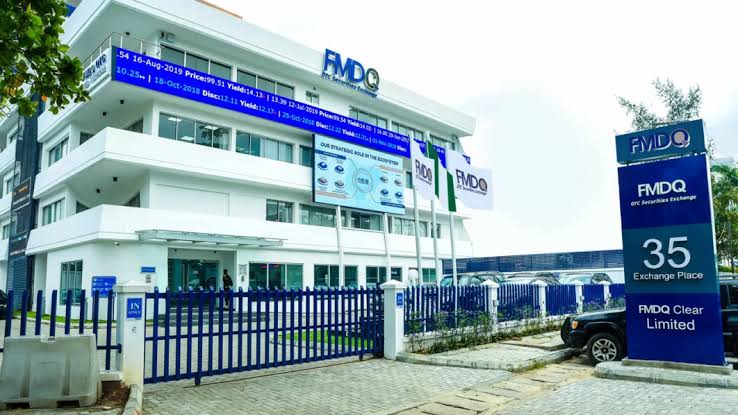

Nigeria’s fixed-income market extended its bullish momentum in early February 2026, with the size of the FMDQ debt market rising to about ₦99.3 trillion as Treasury bill and sovereign bond yields compressed across most maturities, signalling improving liquidity conditions and sustained investor demand for government securities.
Data from the FMDQ Securities Exchange showed that easing system liquidity and a reduced reliance on aggressive short-term borrowing helped moderate yields, even as the Central Bank of Nigeria (CBN) maintained a tight monetary policy stance. Analysts say the development points to a gradual moderation in government borrowing costs driven largely by market dynamics rather than a shift in policy direction.
Market activity reflected resilient demand for government paper, with investors positioning across the yield curve amid liquidity inflows from maturing instruments that outweighed the dampening effect of elevated policy rates. The broad-based decline in yields was most pronounced at the longer end of the Nigerian Treasury Bills curve and around the mid-section of the bond curve, suggesting growing investor confidence in extending duration and locking in returns.
Treasury bills maturing between October and December 2026 recorded some of the sharpest yield declines, while Federal Government bonds with maturities between 2027 and 2035 also closed lower on strong demand. Ultra-long-dated bonds beyond 2040 were largely unchanged, reflecting lingering caution over long-term inflation and fiscal sustainability risks.
Benchmark yields across Treasury bills and bonds closed lower across most tenors, reinforcing the bullish tone in the fixed-income space. Short- and mid-dated instruments attracted the strongest bids as investors sought to balance yield, liquidity, and duration risk.
Benchmark Treasury bill yields for March to June 2026 maturities traded around 15.55% to 16.65%, while July to September maturities traded between 16.29% and 16.74%. Bills maturing between October and December 2026 compressed further to about 16.05% to 16.20%, with January 2027 maturities closing around 16.05%. In the bond market, short-term bonds maturing between 2027 and 2029 traded near 16.04% to 16.11%, mid-tenor bonds between 2031 and 2036 traded around 16.25% to 16.88%, and long-dated bonds between 2037 and 2053 ranged roughly from 14.93% to 16.91%.
Money-market indicators supported the positive sentiment, with interbank rates easing and signalling improved liquidity conditions in the banking system.
The overnight rate moderated to about 22.8%, while the Open Repo Rate closed around 22.5%, largely due to liquidity inflows from maturing CBN Open Market Operations bills and other primary market instruments. FGN bond futures prices also remained firm across key tenors, signalling expectations of near-term yield stability.
Despite the compression in yields, policy rates remain elevated, anchoring returns at relatively high levels by historical standards.
The easing liquidity conditions, supported by significant repayments and inflows into the financial system, have reinforced the bullish sentiment in the fixed-income market and positioned government securities as a core asset class for banks, pension funds, and asset managers navigating Nigeria’s evolving macroeconomic environment.












Comments