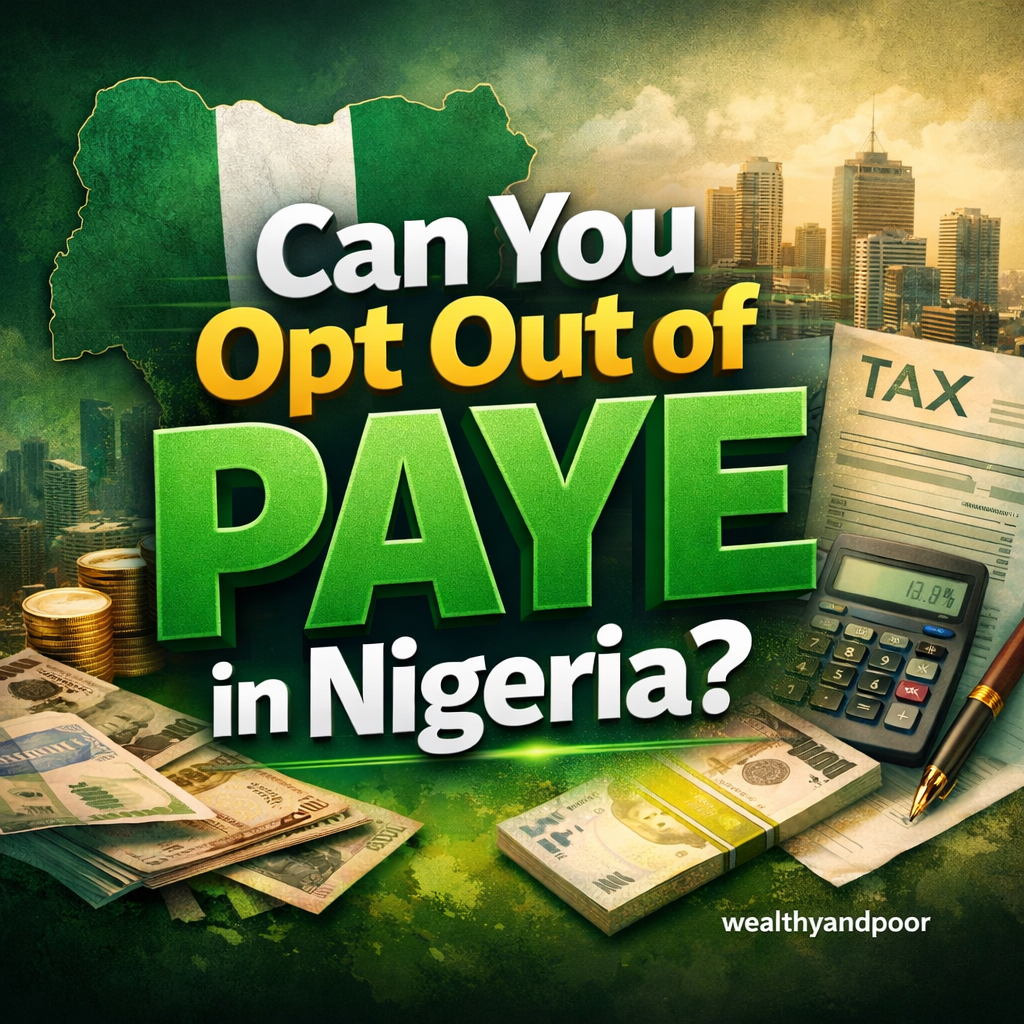
Can You Opt Out of PAYE in Nigeria?

What Is PAYE in Nigeria?
PAYE (Pay-As-You-Earn) is Nigeria’s system of personal income tax where employers deduct tax directly from an employee’s salary and remit it to tax authorities each month. It’s governed by personal income tax laws and has traditionally applied to most formal sector employees.
Under the old regime, most employees automatically paid PAYE based on income bands and rates set by law. There was no legal option to simply “opt out” of the system because it is a statutory obligation under tax law — whether one likes it or not.
Major Shift Under the New Tax Reforms (2026)
- Exemption for Majority of Nigerians: Under the new tax laws signed in 2025 and set to take effect from January 2026, about 97% to 98% of Nigerian workers will either pay no PAYE tax at all or have their tax rate significantly reduced. This was confirmed by Taiwo Oyedele, Chairman of the Presidential Fiscal Policy and Tax Reforms Committee at the 31st Nigerian Economic Summit in Abuja.
- High Earners Still Pay: Only the top 2% or so of high-income earners will continue to pay higher or full rates of personal income tax under the PAYE system. Those in the informal sector are encouraged to formalize their businesses to qualify for exemptions under certain conditions.
Read More: How PAYE is calculated in Nigeria
Does This Mean You Can “Opt Out”?
If You Fall Under the New Exemption Threshold:
- You won’t pay PAYE tax on your salary once the new laws take effect: So while you haven’t “opted out” voluntarily, you are effectively exempted from payment if your income falls within the threshold.
- If You Are a Low-Income Earner: You might be fully exempted from PAYE under the new rules especially if you earn around the minimum wage or below.
- If You Are a High-Income Earner: You cannot avoid PAYE by choice. However, your liability is based on lawfully defined income and tax bands.
Filing Tax Returns Still Required
Even if you see no PAYE deducted or are exempt under the new rules all Nigerian taxpayers still must file tax returns by March 31 each year, according to tax reform officials. This includes individuals whose PAYE was deducted by employers or who pay no PAYE at all.
This ensures proper documentation, verifies income levels, and confirms eligibility for exemptions.
The latest tax reforms in Nigeria represent one of the most significant overhauls of the PAYE system in years. While you can’t “opt out” of PAYE simply by choice, the law now excludes most employees from having to pay it at all — freeing resources for low-income workers and simplifying tax burdens for millions.
For high earners and formal sector employees, compliance still matters both in terms of monthly deductions and annual tax filing obligations.
Read More: Who pays personal income tax










Comments