
TIN Registration Requirements in Nigeria
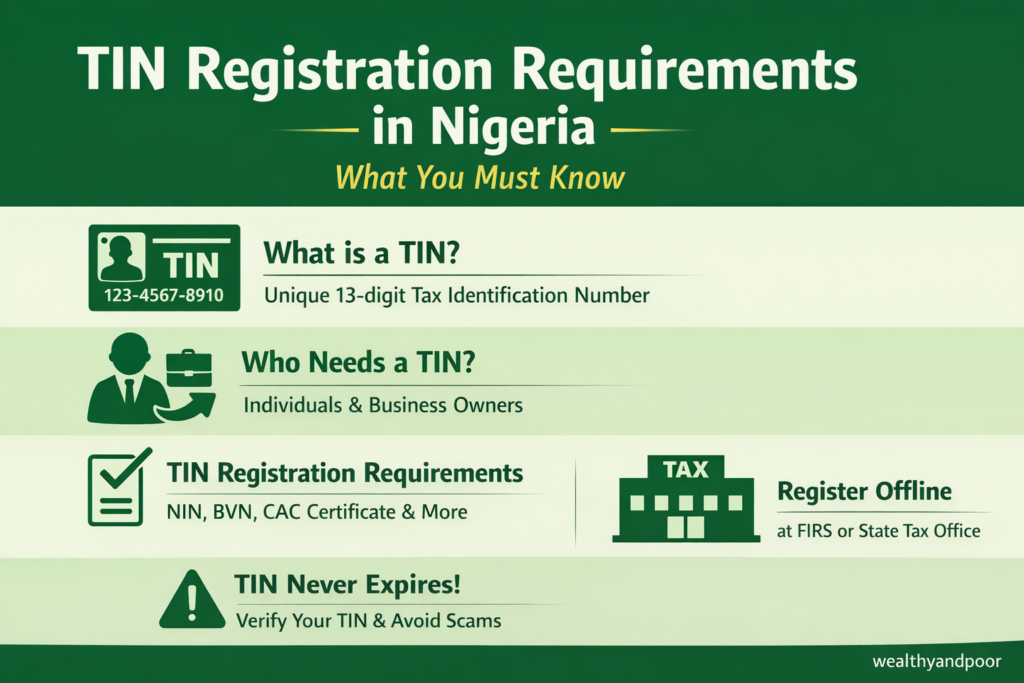

Nigeria tightens tax compliance and expands digital tax services, obtaining a Taxpayer Identification Number (TIN) has become a pivotal requirement for individuals and businesses across the country. Whether you’re a salary earner, self-employed professional, or a company director, having a TIN is now mandatory for formal financial and tax activities.
What Is a TIN and Why It Matters
A Taxpayer Identification Number (TIN) is a unique 13-digit identifier issued to every taxable person or entity in Nigeria. It helps tax authorities track compliance, credit tax payments correctly, and streamline revenue collection nationwide.
Without a TIN:
- You may be unable to open certain bank or corporate accounts.
- Access to government contracts, loans, and tax services could be restricted.
- Filing annual tax returns becomes impossible.
Under evolving regulations, the government also intends to integrate TIN with existing IDs, linking TIN with NIN (for individuals) and CAC registration numbers (for companies).
Who Must Register for a TIN?
TIN registration isn’t optional for income earners. You must have a TIN if you are:
- An employee earning taxable income.
- A freelancer or self-employed professional (lawyers, consultants, artisans, etc.).
- A business owner or corporate entity incorporated with the Corporate Affairs Commission (CAC).
- Anyone engaging in financial or official transactions requiring tax compliance.
Note: How to calculate your tax payable
Key Requirements for TIN Registration
The documents and information you need differ slightly based on whether you’re an individual or a business entity.
For Individuals (Personal TIN)
You’ll typically need:
- National Identification Number (NIN) – primary identity verification.
- Bank Verification Number (BVN) – often used to auto-populate personal data and speed verification.
- Valid phone number and active email address – for notifications and retrieval.
- Accurate date of birth and personal details in the application form.
For Business Owners & Companies
Organisations must provide:
- Certificate of Incorporation / CAC Registration showing the RC number.
- Business name and contact details (email, phone, address).
- Valid identification of directors (BVN or NIN).
Some tax offices may request utility bills or supporting documentation of operations.
Whether online or offline, a correctly completed application form is essential before TIN issuance.
How to Apply: Online vs. Offline

Online Registration
- Choose “Individual” or “Non-Individual” (business).
- Enter required details and submit.
- TIN is usually generated instantly or within 24–72 hours.
This digital process is free Nigerians are advised to avoid intermediaries who charge fees for what is officially a free service.
Offline Registration (Tax Office)
Some applicants opt to visit a Federal Inland Revenue Service (FIRS) or State Internal Revenue Service office to register:
- Bring NIN, ID card, proof of address, and business documents (if applicable).
- Submit your completed form.
- Some tax offices can issue TIN on the same day or within a few days.
Important Notes and Best Practices
- TIN Never Expires: Once issued, your TIN is permanent, but details should be updated if they change.
- Verification Is Crucial: Use the JTB TIN Verification Portal to confirm your TIN and ensure it’s active before tax filing or official use.
- Avoid Scams: Official TIN registration is free. Charges from agents are unnecessary and unofficial.
If you lose or forget your TIN, you can retrieve it using BVN, NIN, or phone number on the portal or through your tax office.
Conclusion
As Nigeria continues to modernize its tax systems, TIN registration remains a fundamental requirement for individuals and businesses alike. By preparing the right documentation and following official registration channels either online or in person taxpayers can enjoy smoother compliance, broader financial access, and uninterrupted engagement with banks, government agencies, and commercial partners.
Stay compliant, stay registered because in Nigeria’s evolving tax landscape, your TIN is your financial identity.











Comments