
2026 budget: FG proposes N102.3billion for Lagos Green Line rail
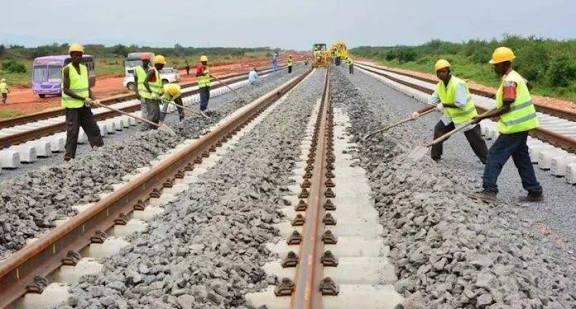

In the recently unveiled 2026 Appropriation Bill, the Federal Government of Nigeria has proposed a ₦102.3 billion allocation as counterpart funding for the Lagos Green Line Metro Rail Project, underscoring continued federal support for large-scale transportation infrastructure.
According to details from the budget document released under the Ministry of Transportation, the ₦102.3 billion provision is specifically earmarked for Phase One of the Lagos Green Line rail. This project forms a central part of Lagos’ expanding urban rail network, designed to enhance intra-city connectivity in Nigeria’s largest city.
The Green Line is planned as a 68-kilometre rail corridor spanning from the Lekki Free Zone to Marina, with stops at major hubs including Victoria Island, Ajah, and Sangotedo. The plan is to integrate modern features such as elevated and at-grade tracks, well-equipped stations, pedestrian bridges, escalators, elevators, and a depot near Sangotedo.
Federal and State Roles in Financing
The budget details indicate that the allocated funds will be transferred to the Ministry of Finance Incorporated (MOFI). MOFI is responsible for managing federal equity stakes, counterpart funding, and structured financing for large infrastructural projects, suggesting a collaborative financing model involving the Federal Government, Lagos State Government, and other financiers.
This allocation reflects a slight reduction from the ₦146.14 billion counterpart funding proposed for the project in the 2025 budget, signaling adjustments as the project moves from planning towards implementation.
Project Background and Expected Impact
The Lagos Green Line Metro Rail is a strategic urban rail initiative aimed at decongesting Lagos roads, reducing travel time, and improving transport efficiency in one of Africa’s most densely populated cities. While construction has not yet begun as of early 2026, extensive feasibility studies and stakeholder engagements along the Lekki-Epe corridor have already been conducted to prepare for groundbreaking.
When completed, the rail line is expected to significantly improve commuter experience by providing a reliable alternative to road transport, which is often hampered by chronic traffic gridlocks. The project’s design anticipates operating modern, high-capacity train sets capable of moving large volumes of passengers across key commercial, residential, and industrial nodes in Lagos State.
Rail Sector Funding in the 2026 Budget
The Lagos Green Line funding forms part of broader federal allocations towards rail infrastructure in the 2026 budget. Additional provisions include:
- ₦29.04 billion for ongoing and planned railway modernisation projects, covering upgrades to intercity rail lines like the Abuja–Kaduna, Lagos–Ibadan, and Itakpe–Ajaokuta corridors. This includes construction of station facilities, track-laying, signalling, and supply of spare parts.
- ₦68.5 billion allocated for consultancy services related to other proposed rail corridors such as the Lekki–Ijebu Ode–Ore–Kajola line and the coastal rail link connecting Badagry, Apapa, and Tin Can Island ports.
The continuation of counterpart funding for the Lagos Green Line, despite fluctuations in the figure from year to year, signals sustained federal commitment to the project. As the government aligns funding with structured financing frameworks and stakeholder partnerships, analysts note that beneficial outcomes will depend on efficient project management, transparency in implementation, and timely release of appropriated funds.




Comments