
Long-Term Investment Plans in Nigeria
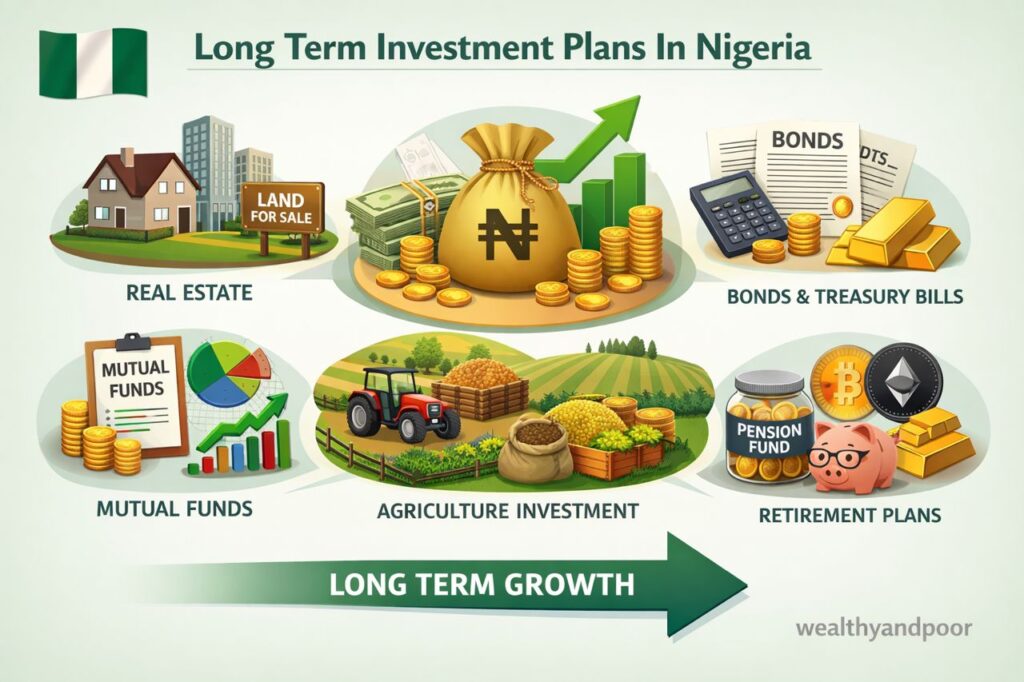

In a country like Nigeria where inflationary pressures, currency fluctuations, and economic reforms constantly reshape financial realities long-term investing is no longer a luxury. It is a necessity. For individuals and institutions alike, the goal is not just to preserve wealth, but to grow it sustainably over time.
Long-term investment planning in Nigeria involves committing capital to assets that can deliver value over several years, often leveraging the power of compounding, capital appreciation, and reinvestment. Unlike short term trading or speculative ventures, long term strategies demand patience, discipline, and a clear understanding of the local financial landscape.
Understanding Long-Term Investment in Nigeria
At its core, long term investing refers to holding assets for years or even decades with the expectation of gradual growth. These investments typically include equities, real estate, government bonds, and diversified funds.
The appeal lies in their potential to outperform inflation and generate real wealth. While short term instruments such as treasury bills provide liquidity and safety, they often fail to deliver meaningful growth over time especially in an economy where inflation can erode purchasing power rapidly.
Key Long-Term Investment Options
Nigeria offers a broad spectrum of investment opportunities suitable for long-term planning. Each comes with its own risk return profile and capital requirements.
- Equities (Stocks)
Investing in the Nigerian stock market remains one of the most effective long-term wealth building strategies. By purchasing shares in companies, investors gain exposure to capital appreciation and dividends. Historically, stocks in Nigeria have delivered annual returns ranging between 12% and 20%, although they come with higher volatility.
The key to success in equities lies in selecting fundamentally strong companies and maintaining a long-term perspective, rather than reacting to short-term market fluctuations.
- Real Estate
Real estate continues to be a cornerstone of long-term investment in Nigeria. Property investments offer dual benefits: rental income and capital appreciation. Over time, real estate can serve as a hedge against inflation while providing consistent cash flow.
However, the high entry cost often starting from millions of naira makes it less accessible for average investors without pooled investment options such as Real Estate Investment Trusts (REITs).
- Government Bonds and Fixed Income Securities
Federal Government of Nigeria (FGN) bonds are widely regarded as one of the safest long-term investment instruments. They provide predictable returns and lower risk compared to equities. In recent years, bond yields have remained attractive, making them appealing to conservative investors seeking stability.
These instruments are particularly useful for balancing risk within a diversified portfolio.
- Mutual Funds and Exchange-Traded Funds (ETFs)
For investors who lack the time or expertise to manage individual assets, mutual funds and ETFs offer diversification and professional management. With relatively low entry points sometimes as little as ₦5,000 they provide exposure to a mix of stocks, bonds, and other securities.
This makes them ideal for beginners and those seeking a hands off approach.
- Agriculture and Alternative Investments
Agriculture, commodities, and private equity are increasingly gaining attention as alternative long term investments. These assets often provide diversification benefits and can deliver strong returns when managed effectively.
With Nigeria’s growing population and food demand, agribusiness in particular presents significant long term potential.
Building a Long-Term Investment Plan
A successful long-term investment strategy in Nigeria is not about choosing a single asset it is about constructing a balanced portfolio tailored to individual goals and risk tolerance.
- Diversification is critical. Spreading investments across multiple asset classes such as stocks, bonds, and real estate reduces overall risk and improves the chances of consistent returns.
- Consistency matters more than timing. Regular investments, even in small amounts, can compound significantly over time. This approach, often referred to as “naira cost averaging,” helps investors navigate market volatility.
- Reinvestment accelerates growth. Dividends, interest payments, and rental income should ideally be reinvested to maximize compounding effects.
- Inflation must be considered. In Nigeria, where inflation frequently exceeds 20%, investments must generate returns above inflation to create real value. This is why growth oriented assets like equities and real estate are essential components of long-term plans.
Challenges Facing Long-Term Investors
Despite its advantages, long-term investing in Nigeria is not without challenges.
- Economic volatility remains a major concern. Currency depreciation and policy shifts can impact returns, especially for foreign-denominated investments.
- Liquidity constraints also affect certain asset classes, particularly real estate and private equity, where funds may be tied up for extended periods.
- Additionally, financial literacy gaps continue to limit participation. Many Nigerians still rely on informal savings or short-term instruments, missing out on the benefits of long-term wealth creation.
Recent data shows that while foreign investors are returning to Nigeria in search of high yields, much of the capital is still concentrated in short-term instruments rather than long-term productive investments. This underscores the need for a stronger culture of long-term investing domestically.
The Way Forward
For Nigeria to unlock its full economic potential, both individuals and policymakers must embrace long term investment thinking. On an individual level, this means moving beyond speculative habits and focusing on disciplined, goal oriented strategies.
Financial institutions and fintech platforms also have a role to play by making investment products more accessible and transparent. Digital platforms are already lowering entry barriers, allowing younger Nigerians to participate in wealth building opportunities.
Conclusion
Long-term investment planning in Nigeria is both a challenge and an opportunity. While the economic environment can be unpredictable, it also offers unique avenues for growth across multiple asset classes.
For investors willing to stay the course, diversify wisely, and think beyond immediate gains, the rewards can be substantial. In a market defined by volatility, patience remains the most valuable asset and time, the most powerful ally.











Comments