
Kuda vs Traditional Banks | Full Comparison
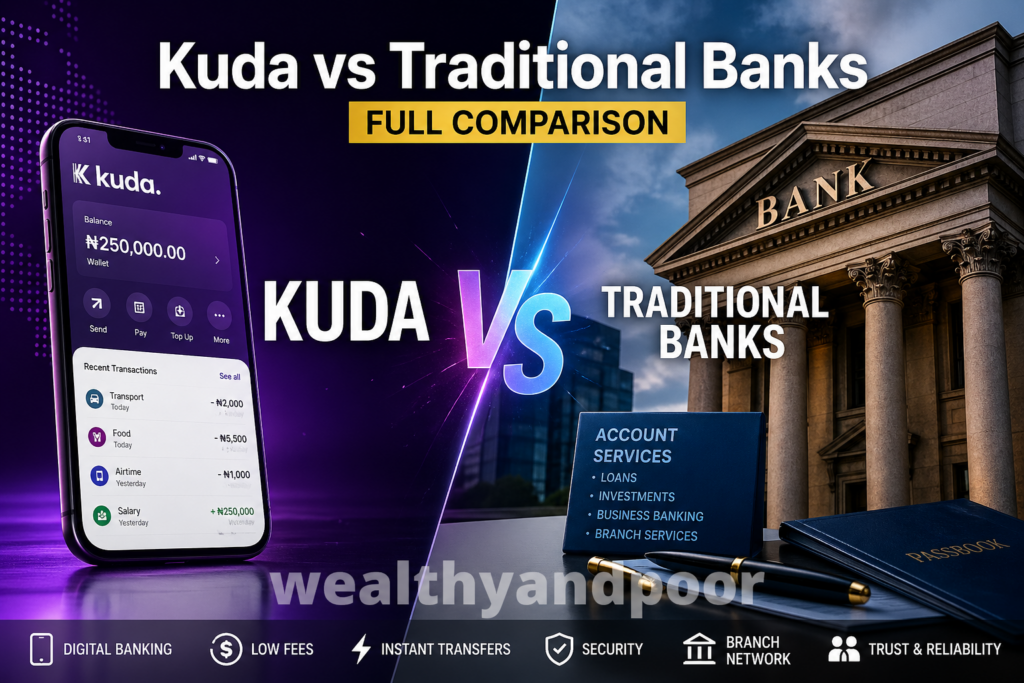

In Nigeria’s rapidly evolving financial landscape, digital banks like Kuda Bank are increasingly competing with established institutions such as Guaranty Trust Bank, Access Bank, and United Bank for Africa. While both offer core banking services, their models, cost structures, and customer experiences differ significantly. This comparison breaks down the key differences to help Nigerians make informed financial decisions.
Digital Innovation vs Institutional Strength
Kuda represents a new generation of “neobanks” fully digital financial institutions operating without physical branches. Licensed by the Central Bank of Nigeria as a microfinance bank, it delivers banking services entirely through a mobile app, allowing users to open accounts, transfer funds, and manage finances seamlessly.
Traditional banks, on the other hand, rely on extensive physical infrastructure, including branches, ATMs, and legacy systems. This gives them a strong institutional presence and broader service coverage, especially for complex financial needs.
The core difference lies in access and experience:
- Kuda Bank offers 24/7 app-based banking, instant account setup, and modern features like spending analytics and automated savings.
- Traditional banks provide in-person services, relationship banking, and a wider range of financial products such as corporate loans, trade finance, and investment services.
In terms of innovation, digital banks move faster deploying updates and features within weeks while traditional banks often take longer due to regulatory processes and legacy systems.
However, when it comes to trust and large-scale financial operations, traditional banks still hold a strong advantage, particularly among businesses and high-net-worth individuals.
Fees, Reliability, and Everyday Banking Experience
One of Kuda’s biggest selling points is its low-cost structure. The bank eliminates many charges common with traditional banks, including account maintenance and SMS alert fees. It also offers up to 25 free transfers monthly, making it attractive for students and salary earners.
By contrast, traditional banks typically charge:
- Account maintenance fees
- Transfer fees on most transactions
- Card maintenance and SMS alert charges
This makes them relatively more expensive for everyday users.
However, the cost advantage of Kuda comes with certain limitations:
- Free transfers are capped, after which charges apply
- Customer support is entirely digital, which can delay issue resolution
- Occasional transaction delays or “processing” issues may occur during interbank transfers
Traditional banks, despite higher fees, often provide:
- More reliable dispute resolution through physical branches
- Stronger infrastructure for high-volume transactions
- Greater stability for business and large financial operations
In terms of savings and returns, digital banks like Kuda often offer higher interest rates and better incentives, appealing to younger users focused on maximizing value.
Conclusion
The choice between Kuda and traditional banks ultimately depends on usage:
- Kuda Bank is ideal for: low-cost daily transactions, budgeting, and digital-first users.
- Traditional banks are better for: business transactions, loan access, and reliability at scale.
In practice, many Nigerians now adopt a hybrid approach using Kuda for everyday transfers and savings, while maintaining accounts with traditional banks for stability and broader financial services.
This shift reflects a broader trend: digital banks are not replacing traditional banks entirely, but reshaping how Nigerians interact with money.












Comments