
Palmpay vs Bank Transfers | Speed Test
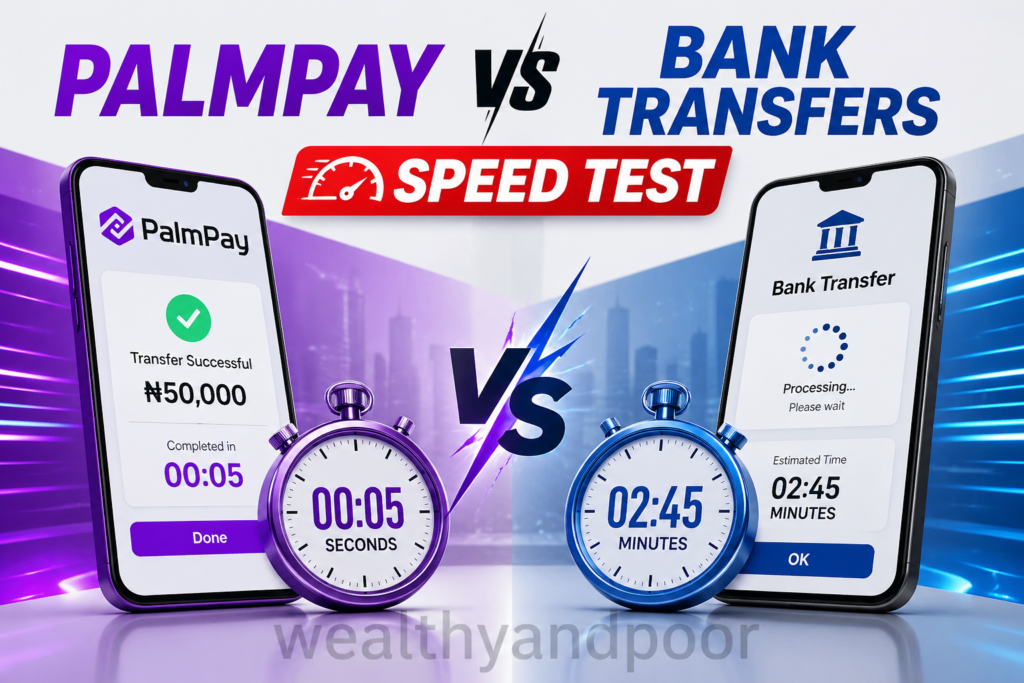

In Nigeria’s fast-evolving digital payments space, transfer speed has become a major deciding factor for users choosing between fintech apps and traditional banks. Platforms like PalmPay promise near-instant transactions, while conventional banks still rely on interbank systems that can sometimes introduce delays. This speed test-style analysis breaks down how both options perform in real-life scenarios.
How Fast Is PalmPay for Transfers?
PalmPay operates as a mobile money wallet, built primarily for speed and everyday transactions. Based on recent reviews and user experiences:
- Instant Transfers: Most PalmPay transactions are completed within seconds, especially wallet-to-bank or wallet-to-wallet transfers.
- Optimized for Low Network Conditions: Users report that transfers often go through even with weak internet connectivity.
- Minimal Processing Layers: Unlike banks, PalmPay bypasses some traditional settlement bottlenecks, enabling faster execution.
Speed Test Verdict (PalmPay)
Average transfer time: 0–10 seconds
Best performance: Small to medium transfers
Weak point: Delayed reversals if a transaction fails
Overall, PalmPay is designed for real-time payments, making it highly efficient for daily use like sending money, paying bills, or buying airtime.
How Fast Are Traditional Bank Transfers?
Traditional Nigerian banks operate through interbank networks such as NIBSS (Nigeria Inter-Bank Settlement System), which affects speed depending on several factors:
- Standard Instant Transfers (NIP): Many bank transfers are labeled “instant,” but delays can still occur due to:
Network congestion
Bank downtime or maintenance
Transaction volume spikes - Typical Processing Time: Best case: Instant (a few seconds to 1 minute)
- Average case: 1–5 minutes
- Worst case (network issues): Hours or delayed reversals
- Reliability Factor: Banks tend to be more structured, but speed can fluctuate during peak periods.
Speed Test Verdict (Banks)
Average transfer time: 30 seconds – 5 minutes
Best performance: Large transfers, corporate transactions
Weak point: Occasional delays and failed transactions during high traffic
Key Factors Affecting Transfer Speed in Nigeria
Regardless of platform, speed depends on:
- Network stability (MTN, Airtel, etc.)
- Bank server uptime
- NIBSS infrastructure performance
- Transaction volume at the time
Fintech apps like PalmPay reduce some of these dependencies, which explains their edge in speed.
PalmPay wins on speed especially for everyday, low-to-medium transactions. Its infrastructure is built for instant payments and user convenience.
Banks remain reliable for large transfers but can lag behind in real-time speed due to system complexity.
Bottom Line: If your priority is speed and convenience, PalmPay is the better option.
If your focus is high-value transfers and formal banking reliability, traditional banks still have the edge.












Comments