
£1 to Naira: Official and Market Exchange Rate Today – March 2, 2026
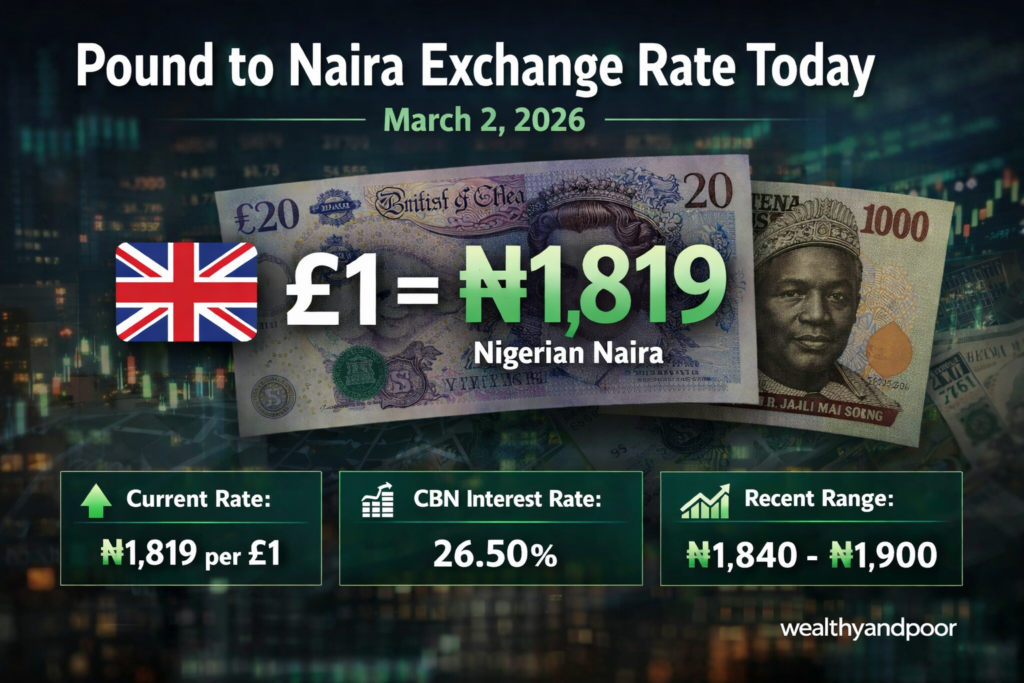

On Monday, March 2, 2026, foreign exchange markets in Nigeria reflected a continued tightening and moderated performance of the naira against the British Pound, driven by broader economic conditions and evolving monetary policy. According to live market pricing at the time of reporting, 1 British Pound (£1) exchanges for approximately ₦1,819 Nigerian Naira (₦) in current cross-currency trading a critical benchmark for businesses, remitters, and individuals dealing with UK-linked expenses or inflows.
FX rates in Nigeria don’t operate in a vacuum; they are influenced by macroeconomic policy and market sentiment. Recent actions by the Central Bank of Nigeria (CBN), including a modest cut in the benchmark interest rate to 26.50 per cent in late February, were aimed at cushioning disinflation while managing currency stability.
That move came after a long period of high rates designed to anchor price growth, and although modest, it signals a cautious shift in monetary stance that can reverberate through exchange markets.
Analysts have noted this adjustment as part of a broader strategy to support liquidity and stave off excessive volatility in the foreign exchange (FX) market.
For everyday Nigerians, the Pound-to-Naira rate has remained elevated compared with levels from earlier in the year. Historical data from currency platforms suggests that in early February, a single Pound was trading close to the ₦1,840–₦1,900 range on average, with occasional swings above that level in certain channels.
These movements reflect demand for foreign exchange for school fees, travel, imports, and investment flows, as well as ongoing foreign reserve dynamics.
Market participants also pay attention to the difference between the official rate published by banks and the rates available through informal channels like bureau de change or parallel markets.
While the official cross-rate anchors pricing for large remittances and trade, parallel market quotations can diverge often trading at a premium especially when FX liquidity is tight or regulatory access is constrained.
Nigeria’s broader economic context feeds into this FX picture. After two years of significant structural reforms targeting subsidy removal, fiscal consolidation, and tax system overhaul, the government recently described the economy as entering a consolidation phase. These measures have helped moderate inflation and strengthen confidence in the naira’s exchange stability.











Comments