
Future of Banking in Nigeria ( Digital vs Traditional)
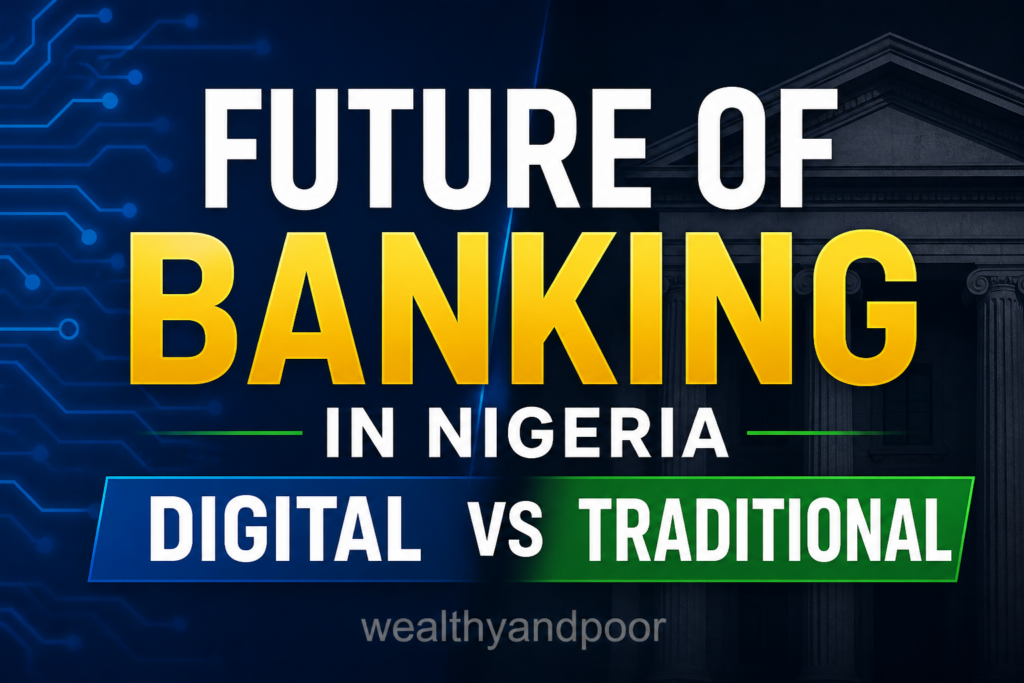

The future of banking in Nigeria is increasingly defined by a structural shift from traditional, branch-based institutions to digitally driven financial ecosystems. This transition is not merely technological but reflects deeper changes in consumer behavior, regulatory direction, and the competitive dynamics of the financial services industry. Across the country, digital banking platforms, fintech startups, and mobile payment systems are rapidly gaining ground, challenging the long-standing dominance of conventional banks while forcing them to rethink their operational models and value propositions.
Recent developments indicate that Nigeria’s banking landscape is undergoing a quiet but profound transformation, with digital platforms outpacing traditional systems in innovation, speed, and accessibility. Established banks, once anchored in physical branches and legacy systems, are struggling to match the agility of digital-first competitors that leverage scalable technologies to deliver faster and more personalized services.
At the same time, consumer expectations are evolving, with a growing preference for convenience, real-time transactions, and 24/7 access to financial services, all of which favor digital channels over traditional banking halls.
The rise of digital banking in Nigeria is closely tied to broader structural factors, including rapid mobile phone penetration, increasing internet access, and a youthful population that is naturally inclined toward technology-driven solutions.
With over 200 million people and a significant proportion under the age of 30, the country presents a fertile ground for digital financial innovation.
This demographic advantage, combined with the growth of fintech companies, has accelerated the adoption of services such as mobile wallets, instant payments, and digital lending platforms, effectively reshaping how Nigerians interact with money.
Regulatory support has also played a critical role in driving this digital shift. The Central Bank of Nigeria has introduced frameworks such as open banking, digital currencies like the eNaira, and real-time payment systems to encourage innovation while maintaining financial stability.
In 2026, policy measures such as stricter cash withdrawal limits further reinforced the country’s push toward a cashless economy, signaling a deliberate move away from traditional cash-dependent banking practices.
These interventions highlight a clear policy direction: digital finance is no longer optional but central to Nigeria’s economic strategy.
Digital banking platforms offer several advantages that position them as the future of the industry. Their lower operating costs due to the absence of physical branches enable them to provide cheaper services and reduced transaction fees. They also excel in speed and efficiency, with instant fund transfers, automated customer service through artificial intelligence, and data-driven financial insights becoming standard features.
Moreover, digital banks are playing a significant role in advancing financial inclusion by reaching underserved populations in rural and remote areas, where traditional banking infrastructure is limited.
However, traditional banks are far from obsolete. Their strengths lie in established trust, regulatory experience, and the ability to handle complex financial services such as corporate banking, large-scale lending, and risk management.
Rather than disappearing, many traditional institutions are undergoing digital transformation, investing heavily in technology, partnerships with fintech firms, and hybrid service models that combine physical presence with digital convenience. This convergence suggests that the future of banking in Nigeria will not be a simple replacement of traditional banks by digital ones, but a blending of both models.
Despite the rapid growth of digital banking, several challenges remain. Cybersecurity risks, data privacy concerns, and infrastructural limitations such as unreliable electricity and internet connectivity continue to hinder seamless adoption.
Additionally, digital literacy gaps and trust issues among certain segments of the population pose barriers to full inclusion. While digital platforms have expanded access, a significant portion of Nigerians remains unbanked, highlighting the need for continued investment in education, infrastructure, and regulatory oversight.
Looking ahead, the next phase of Nigeria’s banking evolution will likely be shaped by deeper integration of advanced technologies such as artificial intelligence, blockchain, and embedded finance. Financial services are expected to become increasingly embedded within everyday platforms, from e-commerce to telecommunications, enabling seamless and invisible banking experiences.
At the same time, the focus will shift from mere digital adoption to digital resilience, emphasizing system stability, security, and sustainable innovation.
In conclusion, the future of banking in Nigeria lies in a dynamic interplay between digital innovation and traditional institutional strength. While digital banking is clearly driving the industry forward, traditional banks remain relevant by adapting and evolving within this new ecosystem.
The defining feature of Nigeria’s banking future will not be a contest between digital and traditional models, but their convergence into a more inclusive, efficient, and technology-driven financial system.











Comments