
Why PiggyVest Locks Funds
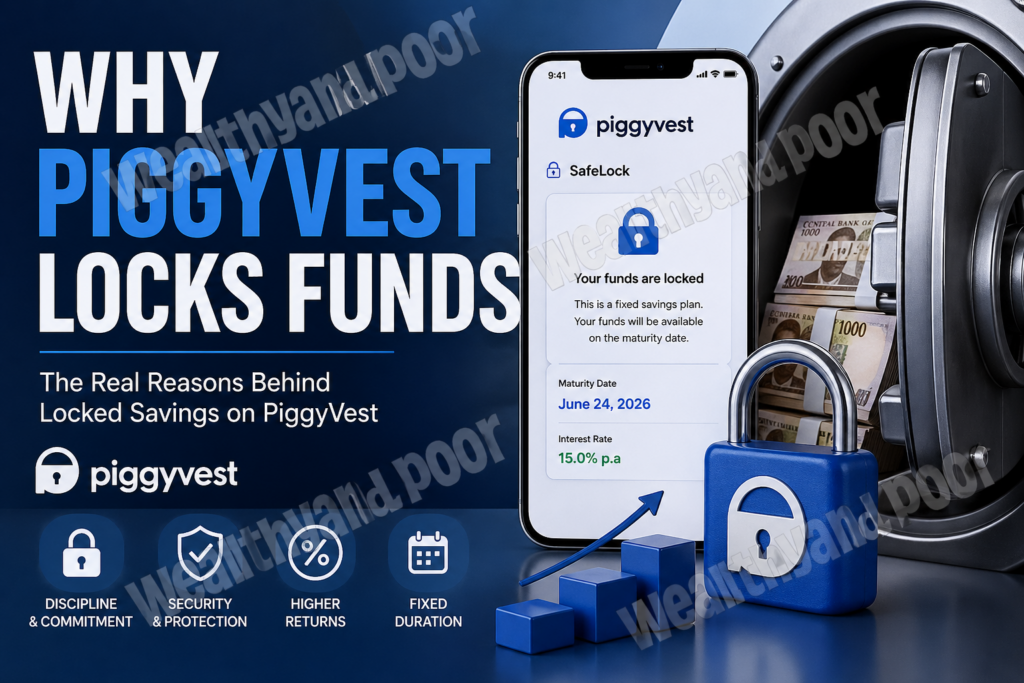

In recent years, PiggyVest has become one of Nigeria’s most popular digital savings platforms, offering users high interest rates and structured savings tools. However, one of the most common concerns among users is why their funds sometimes appear “locked” or inaccessible.
This is not a system error in most cases it is a deliberate feature designed to promote disciplined saving, protect funds, and ensure compliance with financial regulations.
1. Fixed Savings (SafeLock) – Intentional Fund Locking
The primary reason PiggyVest locks funds is due to its SafeLock feature, a fixed savings product.
SafeLock allows users to lock money for a specific period ranging from 10 days to 1,000 days during which withdrawals are completely restricted.
Funds cannot be accessed until the maturity date
The lock is irrevocable once activated
Users earn higher interest rates for committing funds long-term
This model works like a fixed deposit account, where access is sacrificed in exchange for better returns.
In simple terms:
PiggyVest locks your money because you agreed to lock it when creating a SafeLock plan.
2. Discipline and Behavioral Finance Strategy
PiggyVest is built around financial discipline. The lock feature is designed to help users avoid impulsive spending.
- It removes the temptation to withdraw savings prematurely
- Encourages long-term financial planning
- Mimics real-world savings restrictions
According to the platform, locked savings ensure users stay committed to their goals without interruption.
This is why breaking a SafeLock before maturity is typically not allowed.
3. Withdrawal Restrictions and Fixed Withdrawal Dates
Even outside SafeLock, some PiggyVest wallets have controlled withdrawal systems.
For example:
- PiggyBank wallet allows free withdrawals only on specific dates (quarterly or user-set)
- Withdrawals outside these dates may attract penalties
- Some accounts require a minimum saving period before withdrawal customization
This can make funds feel “locked,” even though they are technically accessible under certain conditions.
4. Processing Delays and Banking System IssuesDry
In some cases, users may experience delayed access to funds not because they are locked, but due to:
- Interbank network issues (e.g., NIBSS downtime)
- Bank processing delays
- High transaction volumes
PiggyVest notes that such delays are external and usually resolved within a short time frame.
5. Security or Complaince Measures
PiggyVest may also restrict access to funds for security and regulatory reasons, including:
- Suspicious transactions
- Account verification issues
- Compliance with financial laws
According to its terms, the platform reserves the right to act if it suspects misuse or illegal activity.
This is standard practice across fintech platforms to protect users and the financial system.
6. High-Interest Model Requires Locked Funds
PiggyVest offers significantly higher returns than traditional banks often up to 14%–22% annually.
To sustain these returns:
- Funds are invested or structured over fixed periods
- Liquidity must be controlled
- Locking funds ensures predictable investment cycles
In essence, higher interest comes with reduced flexibility.
Conclusion: PiggyVest does not randomly lock funds—most restrictions are user-initiated or policy-driven.
Key Takeaways:
- SafeLock is the main reason funds are locked
- Withdrawal schedules can limit access temporarily
- Security checks and system delays may also affect access
Locked funds are part of the platform’s strategy to deliver higher returns.
For users, the key is understanding the type of savings plan chosen before depositing money. If flexibility is important, options like flexible savings wallets may be more suitable than fixed lock products.











Comments